


 Iran conflict
Iran conflict: White House says US could achieve ‘Operation Epic Fury’ objectives in 4–6 weeks
Karoline Leavitt, the White House press secretary, has said the United States could achieve its objectives in Operation Epic Fury against Iran within four to six weeks.
Speaking to reporters in Washington, D.C., Leavitt said US forces had already sunk more than 30 Iranian naval vessels, adding that Iran’s navy has now been deemed “combat ineffective.” Her remarks were reported by The Times of Israel.
“Just six days in, the retaliatory ballistic missile strikes from Iran are now down 90 percent,” she said.
Leavitt also claimed that Iran-backed groups in the region were showing limited resistance.
“We’ve seen Hezbollah and the Houthis hardly putting up a fight over the course of the last six days,” she added.
Commenting on Iran’s political future, Leavitt said it would be in Washington’s interest for the country to move away from what she described as a radical regime.
“As for the future of Iran… it’s in the best interest of the United States of America for Iran to no longer be led by a radical terrorist regime,” she said.
Leavitt also said that Donald Trump was taking an interest in the question of Iran’s future leadership.
“President Trump wants to take an interest in pursuing who the next leader of the Iranian country is going to be, and is discussing it,” she said.
Meanwhile, Trump on Friday said no agreement would be reached with Iran except “unconditional surrender” amid the escalating West Asia conflict.
In a post on Truth Social, Trump wrote: “There will be no deal with Iran except UNCONDITIONAL SURRENDER! After that, and the selection of a GREAT & ACCEPTABLE Leader(s), we, and many of our wonderful and very brave allies and partners, will work tirelessly to bring Iran back from the brink of destruction, making it economically bigger, better, and stronger than ever before. IRAN WILL HAVE A GREAT FUTURE. ‘MAKE IRAN GREAT AGAIN (MIGA!).’”
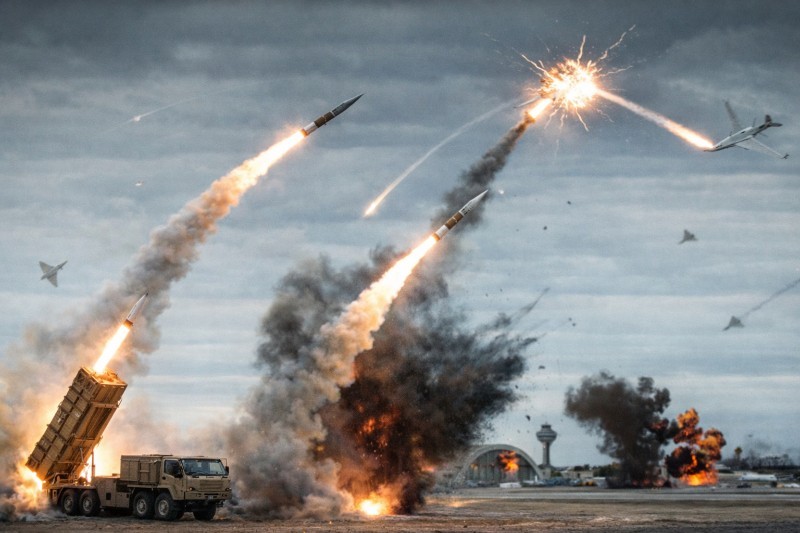
The United States launched a military operation against Iran on February 28, which reportedly resulted in the death of Iran’s Supreme Leader, Ali Khamenei.
In retaliation, Iran carried out missile and drone strikes across several countries in the Middle East, raising fears of a wider regional conflict.
Shipping crisis in the Strait of Hormuz
The escalating tensions have severely disrupted global maritime traffic. Around 3,000 vessels and 20,000 seafarers are currently stranded in the region as security risks rise.
The strategic Strait of Hormuz—a key global shipping corridor linking the Persian Gulf to international waters—has effectively been closed due to the threat of attacks from Iran and other actors.
Earlier on Friday, a tugboat assisting another vessel in the strait was struck, killing four seafarers.
Arsenio Dominguez, Secretary-General of the International Maritime Organization (IMO), condemned the attack and warned that the situation was “deteriorating.”
In an interview with UN News, Dominguez urged ships to avoid navigating the region for safety reasons.
He also warned of serious global repercussions, noting that the sea lane accounts for around 20 percent of the world’s oil supply.
Dominguez called on countries to pursue diplomacy to prevent further escalation.
“We urge member states to find solutions through dialogue in order to de-escalate and restore free and safe movement across the region,” he said.
Support Our Journalism
We cannot do without you.. your contribution supports unbiased journalism
IBNS is not driven by any ism- not wokeism, not racism, not skewed secularism, not hyper right-wing or left liberal ideals, nor by any hardline religious beliefs or hyper nationalism. We want to serve you good old objective news, as they are. We do not judge or preach. We let people decide for themselves. We only try to present factual and well-sourced news.
Support objective journalism for a small contribution.


