


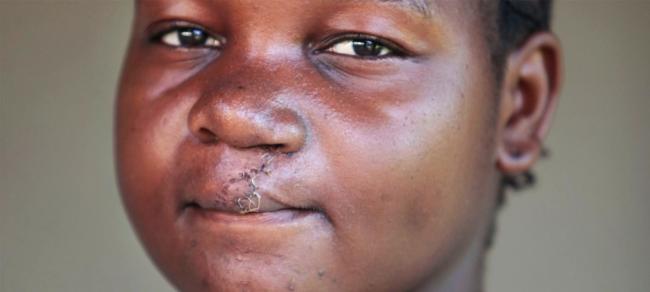
First-ever UN report on disability and development, illustrates inclusion gaps
New York, Dec 4 (IBNS): The United Nations launched its first-ever flagship report on disability and development on Monday; published by, for, and with, persons with disabilities, in the hopes of fostering more accessible, and disability-inclusive societies.
The UN Flagship Report on Disability and Development 2018, coincides with the annual International Day, marked on 3 December, which the UN chief described as important for “the social, economic and political inclusion of all, including people with disabilities,” as promoted in the Sustainable Development Goals, or SDGs.
Secretary-General António Guterres said the report “shows that people with disabilities are at a disadvantage” regarding most SDGs, “but also highlights the growing number of good practices that can create a more inclusive society in which they can live independently.”'
“In many societies, persons with disabilities often end up disconnected, living in isolation and facing discrimination,” he said, highlighting that more than one billion people in the world live with some form of disability.
The report demonstrates how disability-based discrimination has severe effects on transport, cultural life, and access to public places and services, and thus, the report leads with a push to change urban environments to make them more accessible.
The above challenges often go unseen as a result of insufficient questions relevant to disability, and consequently, an underestimation of the number of persons living with disabilities and affected by discrimination, and other barriers.
In 2006, the United Nations adopted the Convention on the Rights of Persons with Disabilities and its Optional Protocol, geared toward protection of the rights and dignity of persons with disabilities, which requires associated parties to promote and protect their human rights.
Javier Vasquez, who helps head up the health division at Special Olympics International in his role as Vice President, stressed the connection between human rights and health when it comes to people living with disabilities.
“When people with intellectual disabilities can enjoy full access to human rights, this reflects in the form of genuine mental and physical health,” he said in an interview with UN News.
Further, he echoed the issue of gaps in inclusion and representation, and how this impacts our understanding of disabilities and these persons’ livelihoods.
On average, persons with disabilities die 16 years sooner than those living without disabilities, however: “A lot of people think people with intellectual disabilities die earlier because of their disabilities, and this is not true,” Vasquez verified.
“The problem is that these illnesses, in the context of people with disabilities, are undiagnosed or undetected, and they go through life without treatment. They are excluded many times because of stigma and discrimination.”
Vasquez called for more extensive and comprehensive research on the challenges and achievements of persons with disabilities, in support of a wider movement for equal access to rights in politics, education, and health.
“You don't find data in the national health information systems...so we are sharing our data to make these people visible.”
Commemorating the International Day of Persons with Disabilities, Guterres asserted the United Nations’ pledge to fulfill the human rights of all persons.
“Let us reaffirm our commitment to work together for a better world that is inclusive, equitable and sustainable for everyone, where the rights of people with disabilities are fully realized.”
CCBRT/Dieter Telemans
Support Our Journalism
We cannot do without you.. your contribution supports unbiased journalism
IBNS is not driven by any ism- not wokeism, not racism, not skewed secularism, not hyper right-wing or left liberal ideals, nor by any hardline religious beliefs or hyper nationalism. We want to serve you good old objective news, as they are. We do not judge or preach. We let people decide for themselves. We only try to present factual and well-sourced news.
Support objective journalism for a small contribution.


