


 Nepal
Nepal
'Can handle alone': Why Nepal turned down foreign rescue teams despite hundreds missing after devastating floods
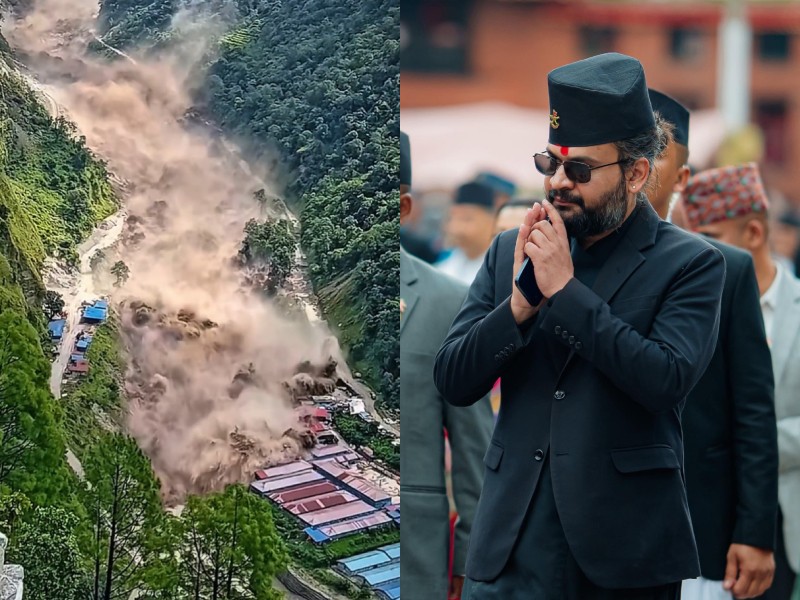
Nepal has declined offers from India, China and several other countries to send helicopters and specialised search-and-rescue teams following the devastating Bhote Koshi floods, choosing instead to keep the operation under the control of its own security agencies.
The decision has drawn attention because hundreds of people remain unaccounted for, including foreign nationals travelling in Nepal.
Kathmandu, however, has distinguished between accepting humanitarian assistance and allowing foreign personnel to take part directly in search-and-rescue operations.
The government led by Prime Minister Balen Shah has maintained that Nepal's security agencies have sufficient capacity to conduct the rescue effort.
It has also established a central mechanism to coordinate information relating to missing foreign nationals.
India, China, the United States, the United Kingdom, Japan, South Korea, Sri Lanka and Bangladesh were among the countries that offered assistance, either formally or informally, according to reports by Kathmandu-based media outlets including The Kathmandu Post and Hamro Patro.
International organisations also approached Nepal, with some governments offering helicopters and personnel trained for disaster-response operations.
Over 400 dead, more than 1,300 missing
The scale of the disaster has nevertheless placed enormous pressure on Nepal's emergency response system.
The floods have killed nearly 400 people, while more than 1,300 remain unaccounted for, according to the figures cited in the reports.
Foreign nationals are among those missing, including Indians travelling to destinations such as Kailash Mansarovar and Gosainkunda.
Continuing the relief effort in Nepal.
— Indian Air Force (@IAF_MCC) August 27, 2026
Another Indian Air Force C-17 aircraft took off carrying 37.5 tonnes of relief supplies including medicines and food items. #Nepal #HADR #HADROps #IndiaNepal #NeighbourhoodFirst@DefenceMinIndia @SpokespersonMoD@HQ_IDS_India@adgpi… https://t.co/7bgh6Fzd96 pic.twitter.com/Pw9DKK6qV8
At least 84 Indians have been rescued, while hundreds of others remain missing or uncontactable.
The situation has prompted neighbouring countries and other international partners to offer direct operational assistance.
Kathmandu, however, has decided that foreign help should primarily come through relief supplies and financial contributions rather than foreign search-and-rescue personnel.
Nepal cites lessons from the 2015 earthquake
A major factor behind the decision appears to be Nepal's experience during the devastating earthquake of April 2015.
The 7.8-magnitude earthquake triggered one of the largest international emergency responses in Nepal's history. Rescue teams, military aircraft, medical personnel and relief organisations arrived from several countries.
While the international deployment significantly expanded Nepal's emergency response capacity, it also created substantial logistical and administrative challenges.
A senior Nepalese foreign ministry official told The Kathmandu Post that Kathmandu had received several official and unofficial requests from countries and organisations seeking permission to send rescue teams.
“However, the government has told them that Nepal's own security agencies are capable of handling the operation,” the official was quoted as saying.
According to the official, the experience of the 2015 earthquake influenced the government's present approach.
The arrival of multiple foreign contingents during that disaster created difficulties in coordinating personnel, aircraft and movements.
Competition between different foreign teams and the challenge of managing their activities added pressure to an emergency system already dealing with damaged airports, roads and communications networks.
Kathmandu now appears keen to avoid a similar situation by retaining a single domestic chain of command during the flood response.
Why Kathmandu is accepting supplies but not rescue teams
Nepal's position does not amount to a rejection of all foreign assistance.
The government has continued to accept relief materials and financial contributions, while seeking to channel international support through official mechanisms.
India has been among the countries providing immediate humanitarian assistance under its Neighbourhood First Policy.
New Delhi initially sent 10 tonnes of relief material to Nepal before following it with another 37.5 tonnes transported by military aircraft.
A second flight has just taken off, carrying 37.5 tonnes of HADR material, medicines & food packets for Nepal.
— Dr. S. Jaishankar (@DrSJaishankar) August 27, 2026
India remains in close and continuous touch with the Nepalese authorities. We will continue to strongly support the ongoing relief efforts.
🇮🇳🇳🇵 pic.twitter.com/4m46leqfkC
Indian Air Force C-130J and C-17 aircraft carried temporary shelters, blankets, hygiene kits, solar lamps, medicines and food packets.
India has also offered Bailey and prefabricated truss bridges after dozens of bridges were destroyed in the floods.
Indian assistance has a particular significance given New Delhi's response to Nepal's 2015 earthquake, when India was among the first countries to deploy substantial search-and-rescue resources.
India's Ministry of External Affairs has stressed that New Delhi's assistance will follow Kathmandu's requirements.
“Whatever request has been made by Nepal, we are acting on that,” MEA spokesperson Randhir Jaiswal said.
The distinction is therefore between assistance that Nepal can incorporate into its own response and foreign teams that would operate directly inside the country's rescue machinery.
Kathmandu creates a 'one-door' system for foreign assistance
Nepal is also attempting to centralise international assistance through a government-controlled mechanism.
The government has asked its diplomatic missions abroad to seek financial support only through the Prime Minister's Relief Fund.
The approach is designed to create what Kathmandu describes as a “one-door mechanism” for foreign contributions.
The system allows the government to centralise incoming assistance, limit duplication and determine where resources are required most urgently.
Kathmandu is expected to seek additional financial and material support as the immediate emergency gives way to rehabilitation and reconstruction.
The United States, the United Kingdom and the World Bank have announced assistance, while the Asian Development Bank has offered support extending beyond immediate relief to areas including risk assessment, early-warning systems and resilient infrastructure, according to Reuters.
Special mechanism created for missing foreign nationals
Alongside the domestic rescue operation, Nepal's foreign ministry has established a dedicated Emergency Response Team (ERT) to deal with cases involving foreign nationals affected by the floods.
The mechanism is intended to centralise information gathering, verification and consular coordination.
“The ERT shall serve as the central coordinating body within the ministry to facilitate search, rescue, information verification, and consular assistance in respect of foreign nationals affected by, missing in, or otherwise connected to the flood incident,” the Nepalese foreign ministry said.
Nepal's Department of Tourism reported that 668 tourists from 34 countries had been out of contact since Wednesday.
India has separately reported that at least 290 Indians are missing or uncontactable in Nepal.
The Nepalese foreign ministry has also deployed an under-secretary to the operations team in Timure, Rasuwa, to gather information directly from security personnel and communicate it to officials in Kathmandu.
India had played frontline role after 2015 earthquake
Nepal's decision is particularly notable given India's extensive role in the country's previous major disaster.
Following the 2015 earthquake, India launched Operation Maitri, deploying Indian Air Force aircraft and helicopters to deliver relief, evacuate stranded people and reach areas cut off by the earthquake.
The response also involved National Disaster Response Force teams, medical personnel, engineers and sniffer dogs.
India became one of the first countries to reach Nepal after the earthquake, providing both emergency search-and-rescue support and humanitarian assistance.
The present flood response is markedly different. While India has again moved quickly with relief supplies and offered additional assistance, Kathmandu has chosen to retain responsibility for the search-and-rescue operation within its own security and administrative structure.
The approach reflects Nepal's stated assessment that its domestic agencies can manage the rescue effort, while its experience from the 2015 earthquake has reinforced the preference for a more tightly coordinated international assistance framework.
Support Our Journalism
We cannot do without you.. your contribution supports unbiased journalism
IBNS is not driven by any ism- not wokeism, not racism, not skewed secularism, not hyper right-wing or left liberal ideals, nor by any hardline religious beliefs or hyper nationalism. We want to serve you good old objective news, as they are. We do not judge or preach. We let people decide for themselves. We only try to present factual and well-sourced news.
Support objective journalism for a small contribution.


