


 JF-17
JF-17
Bangladesh weighs JF-17 fighter jet deal with Pakistan as defence ties reset—What it means for India
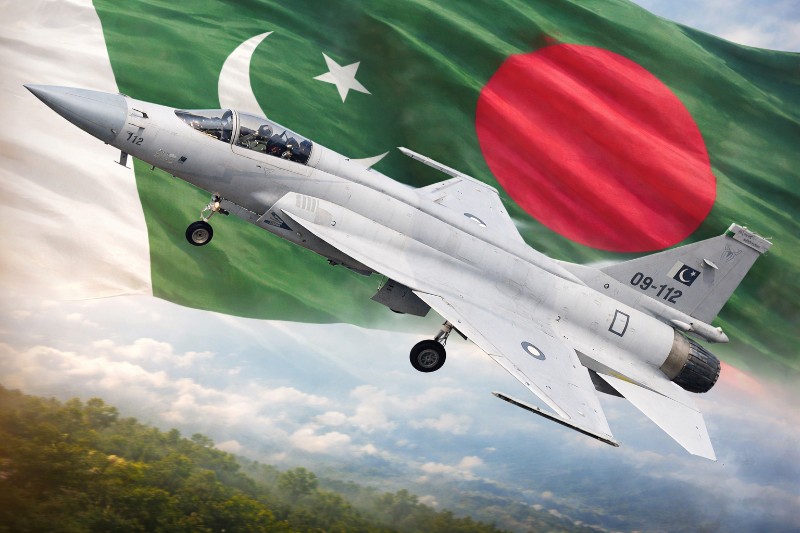
Bangladesh is actively assessing the possible acquisition of JF-17 Thunder fighter jets from Pakistan following high-level air force talks in Islamabad.
The discussions took place during a visit by Bangladesh Air Force Chief Air Chief Marshal Hasan Mahmood Khan, who met his Pakistani counterpart, Air Chief Marshal Zaheer Ahmed Babar Sidhu, according to Pakistan’s military media wing.
While official statements highlighted cooperation and goodwill, the central focus of the engagement was Bangladesh’s expressed “potential interest” in procuring the JF-17, a multi-role combat aircraft jointly developed by Pakistan and China.
Warming Dhaka–Islamabad relations
The fighter jet discussions come amid a broader improvement in relations between Bangladesh and Pakistan after political changes in Dhaka in August 2024.
Following the departure of former prime minister Sheikh Hasina, Bangladesh’s ties with India experienced a strain, while engagement with Islamabad intensified.
Since then, the two countries have resumed direct trade for the first time since 1971 and increased military-level interactions.
Pakistan’s military described the latest visit as reflecting a shared resolve to deepen defence cooperation and build a long-term strategic partnership.
What Pakistan is offering beyond fighter jets
Pakistan’s proposal goes beyond the sale of combat aircraft.
According to official statements, Islamabad has offered a comprehensive defence cooperation framework that includes pilot training, specialised courses at Pakistan Air Force institutions, maintenance support for ageing aircraft and assistance with air defence radar integration.
Pakistan has also assured fast-tracked delivery of Super Mushshak trainer aircraft, positioning itself as a long-term defence partner rather than a one-time supplier.
Why JF-17 appeals to Bangladesh
Bangladesh operates an ageing fighter fleet and faces budgetary constraints that complicate large-scale acquisitions of Western platforms.
The JF-17 is being promoted as a cost-effective alternative that balances modern capabilities with lower acquisition and sustainment costs.
The Block III variant of the JF-17 features an active electronically scanned array radar and compatibility with China’s long-range PL-15E air-to-air missile.
While it does not match the capabilities of fifth-generation aircraft, it has gained traction among air forces seeking incremental modernisation.
Shift from Western fighters to regional options
Until 2024, Bangladesh’s fighter modernisation plans were oriented toward Western platforms.
The Dassault Rafale and the Eurofighter Typhoon were among the aircraft evaluated as potential replacements for older jets in the Bangladesh Air Force inventory.
Those discussions slowed following Bangladesh’s political transition, prompting Dhaka to reassess procurement priorities. The JF-17 has since emerged as a viable alternative amid evolving diplomatic and budgetary considerations.
Pakistan’s broader defence export strategy
For Pakistan, the outreach to Bangladesh aligns with its expanding defence export ambitions.
The JF-17 has become the cornerstone of Islamabad’s military exports, with major deals signed with Azerbaijan and Libya in recent years.
Pakistani officials have highlighted the aircraft’s operational use and international deployments as proof of its credibility, while portraying defence exports as both an economic opportunity and a tool of strategic engagement.
Changing circumstances
The renewed defence engagement between Dhaka and Islamabad comes amid a changing political and diplomatic landscape in Bangladesh.
Relations between Dhaka and New Delhi have been strained following the ouster of former PM Sheikh Hasina in August 2024, creating space for Islamabad to re-engage after decades of limited defence interaction.
Under the interim government led by Nobel laureate Muhammad Yunus, Bangladesh has signalled openness to reassessing defence procurement priorities.
Bangladesh gained independence from Pakistan in 1971, and bilateral ties remained constrained for decades, particularly after war crimes trials initiated by Dhaka in 2010.
Recent political changes have reopened channels for engagement, with defence cooperation emerging as a prominent pillar.
Is India watching closely?
In South Asia’s closely interconnected security environment, fighter jet deals often signal broader geopolitical shifts.
Bangladesh’s growing defence engagement with Pakistan comes at a time of recalibrated regional relationships following political changes in Dhaka.
For India, the developments extend beyond aircraft numbers.
Defence cooperation between Dhaka and Islamabad, if sustained, could reflect evolving strategic alignments in the eastern subcontinent.
Whether the JF-17 discussions culminate in a formal deal remains uncertain, but the trajectory of Bangladesh–Pakistan defence ties is likely to remain under close regional scrutiny.
Support Our Journalism
We cannot do without you.. your contribution supports unbiased journalism
IBNS is not driven by any ism- not wokeism, not racism, not skewed secularism, not hyper right-wing or left liberal ideals, nor by any hardline religious beliefs or hyper nationalism. We want to serve you good old objective news, as they are. We do not judge or preach. We let people decide for themselves. We only try to present factual and well-sourced news.
Support objective journalism for a small contribution.


