


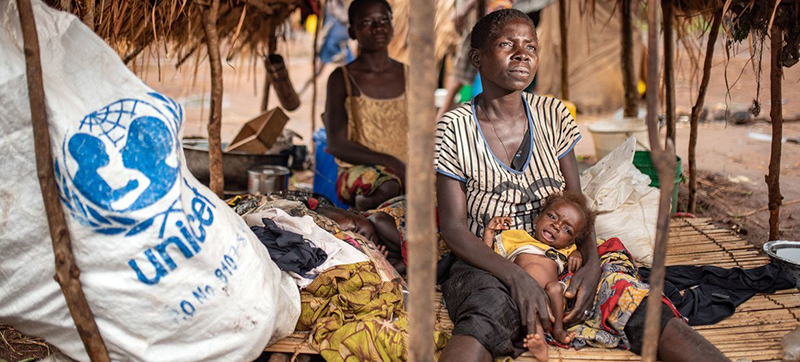
 Emergency Food Aid
Around 258 million need emergency food aid: UN-backed report
New York: The number of people who need urgent food, nutrition and livelihood assistance rose for the fourth consecutive year in 2022, due to conflict, climatic change, and COVID-19 impacts, the UN and partners said in a report published on Wednesday.
Roughly 258 million in 58 countries faced acute hunger at crisis levels or worse, and people in seven countries faced potential starvation, according to the latest Global Report on Food Crises (GRFC).
Tweet URL
This is the highest number in the seven-year history of the report, although much of the growth reflects an increase in the population analysed.
A ‘stinging indictment’
“More than a quarter of a billion people are now facing acute levels of hunger, and some are on the brink of starvation. That’s unconscionable,” UN Secretary-General António Guterres wrote in the foreword to the report.
He described this latest edition as “a stinging indictment of humanity’s failure to make progress towards Sustainable Development Goal 2 to end hunger and achieve food security and improved nutrition for all.”
More than 40 per cent of people at crisis or worse levels resided in Afghanistan, the Democratic Republic of the Congo, Ethiopia, parts of Nigeria, and Yemen.
Young lives threatened
People in seven countries faced starvation and destitution, at some point last year, with nearly 60 per cent in Somalia. The other countries were Afghanistan, Burkina Faso, Nigeria, South Sudan, Yemen and, for the first time, Haiti.
Furthermore, in 30 of the 42 major food crisis contexts analyzed in the report, more than 35 million children under five, are wasted or acutely malnourished.
Some 9.2 million of these boys and girls suffer from severe wasting, the most life-threatening form of undernutrition and a major contributor to increased child mortality.
Innovation and coordination
While conflicts and extreme weather events continue to drive acute food insecurity and malnutrition, economic fallout from the СOVID-19 pandemic and the ripple effects of the war in Ukraine have also become major factors, particularly in the world’s poorest countries.
The report noted that the international community has called for a paradigm shift towards addressing root causes of food crises, rather than responding to their impacts when they occur.
This will require innovative approaches and greater coordination by international organizations, governments, the private sector, regional organizations, civil society and communities.
The annual report, produced by the Food Security Information Network (FSIN), was launched on Wednesday by the Global Network Against Food Crises (GNAFC).
The international alliance consists of the UN, the European Union, and governmental and non-governmental agencies.
Support Our Journalism
We cannot do without you.. your contribution supports unbiased journalism
IBNS is not driven by any ism- not wokeism, not racism, not skewed secularism, not hyper right-wing or left liberal ideals, nor by any hardline religious beliefs or hyper nationalism. We want to serve you good old objective news, as they are. We do not judge or preach. We let people decide for themselves. We only try to present factual and well-sourced news.
Support objective journalism for a small contribution.


