


After 1,000 days of conflict, Yemen sliding into 'deepening catastrophe,' UN agencies warn
New York, Dec 31(Just Earth News): As the conflict in Yemen passes the grim 1,000-day milestone, the United Nations is warning that if humanitarian workers cannot gain greater access and the violence does not subside, the cost in lives will be incalculable.
“As violence has escalated in recent days, children and families are yet again being killed in attacks and bombardments,' the heads of key UN agencies said Friday in a joint statement, as they once again appealed to parties to the conflict to immediately allow full humanitarian access in Yemen and to stop the fighting.
World Health Organization (WHO) Director-General Tedros Adhanom Ghebreyesus, World Food Programme (WFP) Executive Director David Beasley, and UN Children's Fund (UNICEF) Executive Director Anthony Lake, painted a dire picture of what 1,000 days of brutal violence in Yemen has wrought saying the fighting has driven families from their homes, destroyed hospitals and damaged schools.
“More than 1,000 days of children recruited to fight […] 1,000 days of disease and death [and] of unimaginable human suffering,” they said, adding that the conflict has created the worst humanitarian crisis in the world – a crisis which has engulfed the entire country.
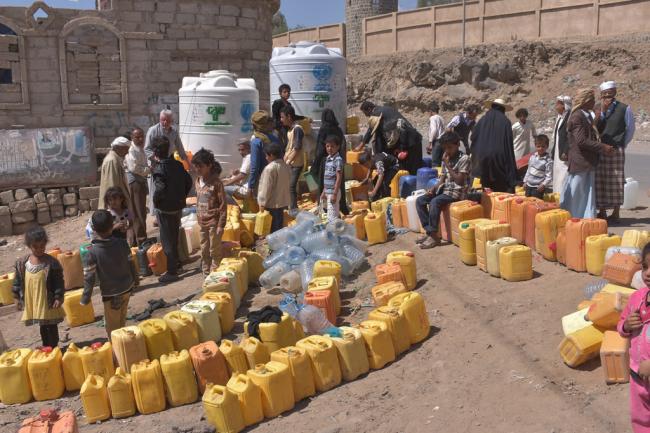
Some 75 per cent of Yemen's population is in need of humanitarian assistance, including 11.3 million children who cannot survive without it. At least 60 per cent of Yemenis are now food insecure and 16 million people do not have access to safe water and proper sanitation. Less than half of Yemen's health facilities are fully functional and medical staff has gone months without being paid their salaries.
“This horrific tally of the conflict's devastation reflects only what we know. In reality, the situation is likely to be worse. UN agencies do not have full humanitarian access to some of the hardest hit communities. In many, we cannot even assess their needs,” the UN leaders explained.
“But this we do know: Yemen has passed the tipping point into a rapid decline from crisis to deepening catastrophe.”
While acknowledging some progress in recent days with the first commercial fuel imports allowed into Hudaydah port, following recent commercial food imports, the agency chiefs said it is critical that these supplies are maintained, as restrictions on fuel imports have caused the price of diesel fuel to double, threatening access to safe water and sanitation, and urgent medical care.
Far too many hospitals are short of fuel for the generators that allow them to stay open. Water pumping stations serving over three million people are quickly running out of the fuel they need to operate, while the price of commercially trucked water has increased up to six-fold.
“Safe water is now completely unaffordable for more than two thirds of Yemenis living in extreme poverty. All of this threatens to undermine efforts to contain the ongoing, deadly outbreaks of diphtheria, cholera and acute watery diarrhea,” they warned.
“We remain committed to helping the people of Yemen. We have reached nearly six million people with clean water, distributed 3.7 million litres of fuel to public hospitals, treated more than 167,000 children for severe acute malnutrition,” they noted but warned: “Yet worsening conditions on the ground threaten to overwhelm our capacity to respond.”
“Yemen's families should not have to withstand another day of war, let alone another 1,000,” the UN leaders concluded.
Photo: UNICEF/Algabal2017
Source: www.justearthnews.com
Support Our Journalism
We cannot do without you.. your contribution supports unbiased journalism
IBNS is not driven by any ism- not wokeism, not racism, not skewed secularism, not hyper right-wing or left liberal ideals, nor by any hardline religious beliefs or hyper nationalism. We want to serve you good old objective news, as they are. We do not judge or preach. We let people decide for themselves. We only try to present factual and well-sourced news.
Support objective journalism for a small contribution.


