


‘We need to stand up now’ for the elderly: urges UN rights expert on World Day
New York: In the coming decade, the number of persons aged 60 or over is projected to grow by 46 per cent, making the increase in those officially classified as elderly, one of the “most significant transformations of this century,'' the United Nations declared on Tuesday, marking the International Day of Older Persons.
By 2030, 1.4 billion elderly people globally will outnumber youth - a big rise from 2017, when that figure stood at 962 million.
Numbers in the developing world are seeing the steepest hikes. In South-East Asia alone, the elderly account for nearly 10 percent of the population as of 2017, compared to eight percent in 2010. This number will continue to increase, with older people expected to make up 13.7 percent of the population by 2030, according to regional World Health Organization (WHO) data.
Given this “demographic revolution”, greater attention must be paid to specific vulnerabilities the elderly face, the UN Independent Expert on the enjoyment of all human rights by older persons, Rosa Kornfeld-Matte, said in a statement.
Unlike refugees, women and children, persons with disabilities or other groups, older persons are not protected by any specific human rights instrument; which may explain the lack of representation of the unique challenges faced by the elderly, in terms of global policy, including the Sustainable Development Goals (SDGs), she explained.
“We need to stand up now for older person’s rights” Ms. Matte pressed, “while we aspire to live for as long as possible, we do not want to age. Pervasive gerontophobia, the fear of age-related self-degeneration and death, nurtures prejudice against older people, discrimination and ultimately the denial of human rights in older age.”
Disparities in old age reflect an accumulated disadvantage, stemming from location, gender, socio-economic, health and income factors, the UN says.
The Day’s theme this year, “The Journey to Age Equality”, aims to empower older persons in all dimensions of development, including promoting their active participation in social, economic and political life as a means of ensuring their inclusiveness.
The 2019 focus on equality is in line with the 2030 Sustainable Development Agenda, specifically SDG 10, the target to reduce inequality within and among countries and ensure equal opportunities for all.
Urging all to defend the rights of older persons, Matte said “We all are duty bound to ensure that future generations – our children and grandchildren – as they grow older, are seen as valuable contributors to society.
“Young people, those in positions of power today, need to realise that they too will age. It is for them to shape older people’s reality and the future they want,” she added.
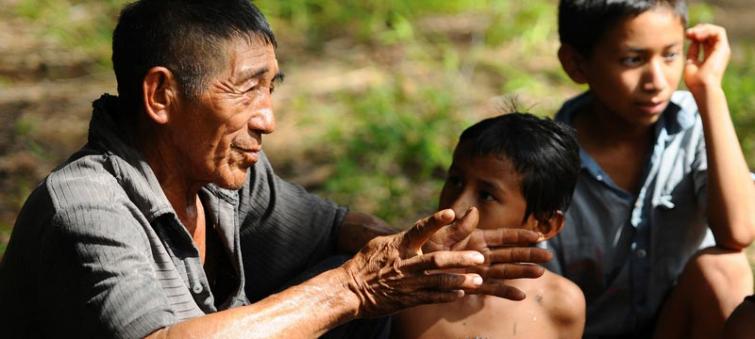
Photo caption and credit: Centro de la Diversidad Cultural, 2013, with UNESCO's permission An elder man talks to children according to the Mapoyo oral tradition.
Support Our Journalism
We cannot do without you.. your contribution supports unbiased journalism
IBNS is not driven by any ism- not wokeism, not racism, not skewed secularism, not hyper right-wing or left liberal ideals, nor by any hardline religious beliefs or hyper nationalism. We want to serve you good old objective news, as they are. We do not judge or preach. We let people decide for themselves. We only try to present factual and well-sourced news.
Support objective journalism for a small contribution.


