


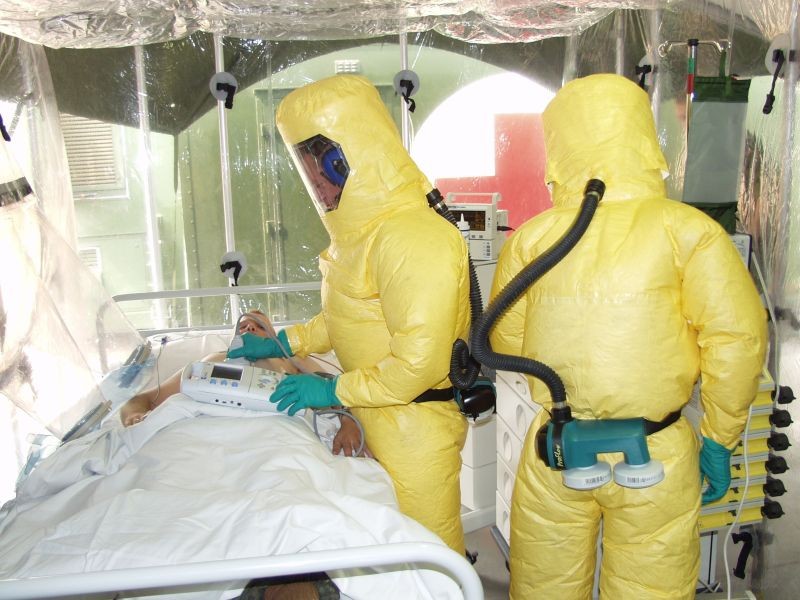
 Ebola
Ebola: India issues travel advisory against visiting these three nations. Check them out now
The Indian government on Wednesday issued a travel advisory, asking citizens to avoid non-essential visits to Democratic Republic of the Congo and other affected countries amid the recent Ebola outbreak.
In a press statement, the Indian Ministry of Health and Family Welfare said, " In view of the evolving situation in Democratic Republic of the Congo and other affected countries, and in line with WHO’s recommendations, Government of India advises all its citizens to avoid non-essential travel to Democratic Republic of the Congo, Uganda and South Sudan.
As per the statement, India has not reported any cases of Ebola disease caused by infection with the Bundibugyo virus strain.
Here’s what @WHO and global health partners are doing to accelerate therapeutic and vaccine R&D for the #Ebola Bundibugyo virus ⬇️ pic.twitter.com/FTwgUlTqw6
— Tedros Adhanom Ghebreyesus (@DrTedros) May 24, 2026
" No vaccines or specific treatments have been approved to prevent or treat Ebola disease caused by Bundibugyo virus," the statement said.
The World Health Organization has raised the public health risk level of the ongoing Ebola outbreak in the Democratic Republic of the Congo from “high” to “very high”, as the virus continues to spread rapidly across the country’s conflict-hit eastern provinces.
WHO chief Dr Tedros Adhanom Ghebreyesus said, however, that the global risk remains “low”.
Emergency Response Intensifies
The United Nations is rushing emergency personnel, supplies and funding into eastern DRC to contain the fast-growing outbreak.
So far, 82 confirmed cases and seven deaths have been officially recorded in DRC. However, WHO warns that the actual scale of the outbreak could be significantly larger, with nearly 750 suspected cases and 177 suspected deaths under investigation.
Conflict and Distrust Hampering Containment
The outbreak is unfolding amid escalating violence, mass displacement and deep mistrust of outside authorities, worsened by rumours and misinformation.
Cases spread beyond DRC
Two Ebola cases linked to travel from DRC have been confirmed in Uganda, including one death.
Two American nationals — including a doctor and another individual identified as a “high-risk contact” — have been transferred to Europe for treatment and monitoring.
Rare Bundibugyo strain detected
The outbreak has been traced to the rare Bundibugyo strain of Ebola, for which there are currently no approved vaccines or treatments.
Only two previous outbreaks of this strain have ever been recorded — in Uganda in 2007 and in DRC in 2012.
Support Our Journalism
We cannot do without you.. your contribution supports unbiased journalism
IBNS is not driven by any ism- not wokeism, not racism, not skewed secularism, not hyper right-wing or left liberal ideals, nor by any hardline religious beliefs or hyper nationalism. We want to serve you good old objective news, as they are. We do not judge or preach. We let people decide for themselves. We only try to present factual and well-sourced news.