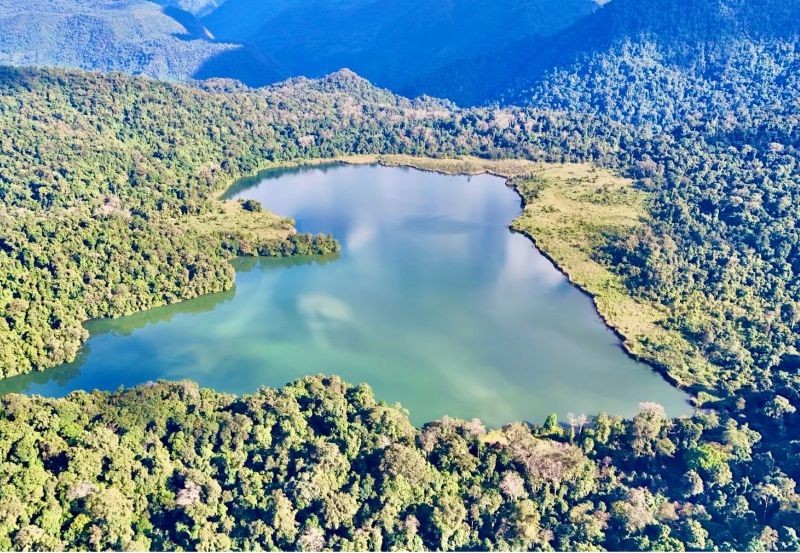
Arunachal's hidden Glaw Lake becomes India's 101st Ramsar Site. Why you should visit
Hidden amid the Eastern Himalayas, Glaw Lake has earned global recognition as India's 101st Ramsar Site, becoming the first wetland in Arunachal Pradesh to receive the prestigious designation.
The recognition shines a spotlight on one of the state's lesser-known travel destinations, celebrated for its pristine waters, rich biodiversity and captivating local legends.
Nestled inside the Kamlang Wildlife Sanctuary, the remote lake is a haven for trekkers, wildlife enthusiasts and travellers seeking offbeat experiences.
What is a Ramsar Site?
A Ramsar Site is a wetland recognised as being of international importance under the Ramsar Convention, an international treaty adopted in 1971 in the Iranian city of Ramsar.
The convention, which came into force in 1975, promotes the conservation and sustainable use of wetlands worldwide.
Wetlands receive Ramsar status because of their ecological significance, biodiversity and their role in supporting wildlife, particularly waterbirds and other aquatic species.
India now has 101 Ramsar Sites
Union Environment, Forest and Climate Change Minister Bhupender Yadav announced the designation of Glaw Lake in a post on X, describing it as a major milestone for wetland conservation.
Powered by 101 🇮🇳🌿
— Bhupender Yadav (@byadavbjp) August 3, 2026
India continues Her journey beyond a century in designating Ramsar Sites.
Delighted to announce Glaw Lake as Arunachal Pradesh’s first Ramsar Site—a significant milestone for biodiversity, water and climate security, and sustainable livelihoods.
Nestled… pic.twitter.com/VnjLwV8Xfs
He said the recognition would strengthen biodiversity conservation, improve water and climate security, and promote sustainable livelihoods.
With the latest addition, India's Ramsar Sites have increased from 26 in 2014 to 101.
Why Glaw Lake is special
Fed by perennial mountain streams, Glaw Lake is surrounded by dense forests that support more than 150 tree species and 49 orchid species within the lake and its catchment.
Located about 20 kilometres from Wakro, the lake is accessible only through a trek, making it a rewarding destination for adventure seekers.
The lake lies within the Kamlang Wildlife Sanctuary, which is home to elephants, leopard cats, wild boar, civets, deer, giant squirrels and flying squirrels.
Travellers can also combine the trek with a visit to the nearby Parshuram Kund, one of Arunachal Pradesh's most revered pilgrimage sites.
The folklore behind the lake
Apart from its natural beauty, Glaw Lake is steeped in the traditions of the Mishmi tribe.
According to travel accounts, local folklore says the lake is protected by four guardian deities—two boys and two girls—who watch over both the waterbody and its visitors.
Other popular beliefs include the claim that no one can drown in the lake and that, despite being surrounded by thick forests, its surface remains largely free of fallen leaves and branches. Another tradition suggests that first-time visitors are often greeted by a brief spell of rain.
While these stories are rooted in local belief and have not been scientifically verified, they add to the mystique of the secluded Himalayan lake.
Best time to visit
The best time to explore Glaw Lake is between October and April, when pleasant weather makes trekking and outdoor activities more comfortable.
With its recent Ramsar recognition, Glaw Lake is expected to attract greater attention from eco-tourists while reinforcing the importance of conserving one of the Eastern Himalayas' most pristine wetland ecosystems.
Support Our Journalism
We cannot do without you.. your contribution supports unbiased journalism
IBNS is not driven by any ism- not wokeism, not racism, not skewed secularism, not hyper right-wing or left liberal ideals, nor by any hardline religious beliefs or hyper nationalism. We want to serve you good old objective news, as they are. We do not judge or preach. We let people decide for themselves. We only try to present factual and well-sourced news.