 Bhajan Club
‘No less than a concert’: PM Modi lauds India’s new bhajan club culture among Gen Z
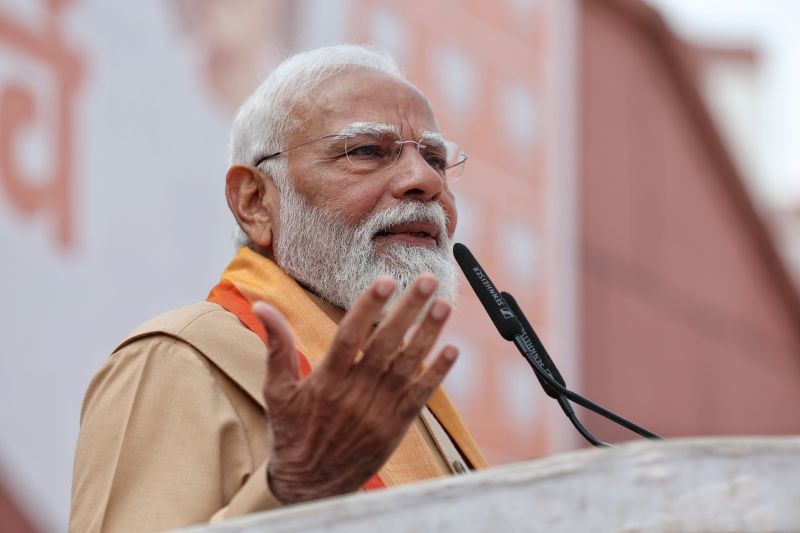
New Delhi/IBNS: Prime Minister Narendra Modi has praised the growing trend of “bhajan clubbing” in India, describing the atmosphere at such events as “no less than a concert” while retaining the spiritual essence of devotional music.
Speaking on Sunday during his monthly radio programme Mann Ki Baat, Modi highlighted how Gen Z is reshaping traditional expressions of faith by blending devotion with contemporary experiences.
“In our country, bhajans and kirtans have been the soul of our culture for centuries. Every era has expressed Bhakti in its own way,” the Prime Minister said, noting that today’s youth are creating something “spectacular” by integrating spirituality into their lifestyles.
Referring to videos circulating on social media, Modi said the emerging culture—popularly known as bhajan clubbing—is drawing large crowds of young people across cities.
“The stage is decorated, there is lighting and music, all the pomp and show. The atmosphere is no less than a concert,” he said.
However, Modi underlined that despite the modern presentation, the sanctity of devotional music remains intact. “What is being sung there is bhajans—with complete concentration, dedication and rhythm. It is heartening to see that the dignity and purity of bhajans are maintained. Neither the decorum of words nor the emotion is compromised,” he added.
The Prime Minister said that while the stage design and musical arrangements may be contemporary, the core spirit of devotion continues to flow through these events, making bhajan clubbing a meaningful cultural evolution rather than a dilution of tradition.
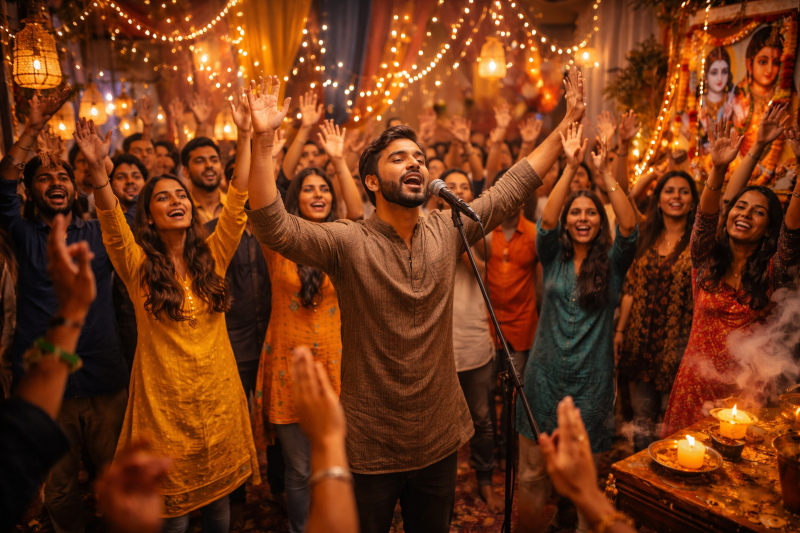 Representational photo of young devotees singing along with raised hands as a performer leads a bhajan session at a new-age bhajan club: ChatGPT
What is bhajan clubbing?
In a marked shift from blaring Hindi chartbusters and alcohol-fuelled nights, a new kind of clubbing is quietly gaining ground among stress-weary urban youth. Driven largely by the Gen Z mindset, revellers are swapping nightclubs for bhajan clubs—spaces where peppy dance numbers give way to devotional songs, and cocktails are replaced with cups of steaming tea.
What began as a niche spiritual experiment is now emerging as a cultural counter-trend, blending faith, community and calm as a way to unwind from the pressures of modern work life.
The concept of bhajan clubs—where people sway, sing and even dance to devotional tracks like Shri Krishna Govind Hare Murari and Raghupati Raghav Raja Ram—has already expanded to multiple Indian cities, including Delhi, Kolkata and Bengaluru.
The trend is also quietly finding takers in the United States, particularly among young professionals seeking alternative, sober social spaces.
Unlike conventional nightlife venues, bhajan clubs are devoid of loud DJs and flashing lights. Instead, soft lighting, incense, diyas and candles set the mood—an atmosphere participants often describe as deeply meditative and grounding.
What sets bhajan clubs apart
Tea instead of alcohol: Alcohol is replaced with tea, herbal drinks or prasad, shifting the focus from intoxication to clarity, mindfulness and connection.
Community bonding: Strangers strike up conversations, share stories and discuss spirituality, music or everyday life. For many Gen Z participants, the appeal lies in a sense of belonging without judgment or pressure.
Readings and reflections: Some sessions include short readings from spiritual texts or poetry by Kabir, Meera or contemporary thinkers, followed by open discussions on mental health, work stress and purpose.
Simple rituals: Lighting a lamp, chanting together, or observing brief moments of silence and gratitude form a quiet but powerful core of the experience.
As urban youth continue to search for balance in an increasingly fast-paced world, bhajan clubs are redefining what it means to “go out”—offering not escape, but stillness.
Support Our Journalism
We cannot do without you.. your contribution supports unbiased journalism
IBNS is not driven by any ism- not wokeism, not racism, not skewed secularism, not hyper right-wing or left liberal ideals, nor by any hardline religious beliefs or hyper nationalism. We want to serve you good old objective news, as they are. We do not judge or preach. We let people decide for themselves. We only try to present factual and well-sourced news.
Support objective journalism for a small contribution.