 Nuclear Power
Big nuclear boost! India’s arsenal surges to around 190 warheads, says SIPRI report
A new report has revealed that all nine nuclear-armed states, including India, continued efforts to modernise and expand their nuclear arsenals in 2025, with most deploying new nuclear-capable or nuclear-armed weapon systems during the year.
The SIPRI report showed India has approximately 190 nuclear warheads as of January 2026, compared to Pakistan's estimated stockpile of 170.
According to the latest report by the Stockholm International Peace Research Institute (SIPRI), the global inventory of nuclear warheads stood at an estimated 12,187 in January 2026. Of these, around 9,745 warheads were held in military stockpiles for potential use.
An estimated 4,012 warheads were deployed with missiles and aircraft, while the remainder were kept in central storage facilities. Between 2,100 and 2,200 deployed warheads were maintained on high operational alert aboard ballistic missiles.
Most of these ready-to-launch warheads belong to Russia and the United States, with smaller numbers held by France and the United Kingdom. SIPRI noted that China and India may now occasionally deploy a limited number of nuclear warheads mounted on missiles during peacetime.
SIPRI Director Karim Haggag warned that growing reliance on nuclear weapons is increasing global risks.
"Influential voices, including some world leaders, are advocating nuclear weapons as a guarantee against attack by a hostile state. However, making national defence and security strategies dependent—or more dependent—on nuclear weapons could significantly increase nuclear risks," Haggag said.
"The dangers associated with nuclear weapons are growing due to advances in weapon technology, the breakdown of arms-control agreements and heightened geopolitical tensions. At the same time, developments such as the conflict between nuclear-armed India and Pakistan are challenging traditional assumptions about nuclear deterrence," he added.
For decades after the Cold War, the dismantling of retired warheads by Russia and the United States outpaced the deployment of new ones, leading to a gradual decline in the global nuclear inventory. SIPRI now believes that trend could soon reverse as disarmament efforts slow and new deployments accelerate.
"The evidence is growing that nuclear-armed states are sidelining, and in some cases abandoning, their disarmament commitments while increasingly showcasing their nuclear capabilities," said Hans M. Kristensen, Associate Senior Fellow at SIPRI and Director of the Nuclear Information Project at the Federation of American Scientists (FAS).
Russia and the United States continue to dominate the global nuclear landscape, jointly possessing around 83 per cent of all stockpiled nuclear warheads. While the size of their arsenals remained relatively stable in 2025, both countries are pursuing extensive modernisation programmes that could expand and diversify their nuclear forces in the coming years.
China's nuclear arsenal is growing faster than that of any other country. SIPRI estimates Beijing now possesses around 620 nuclear warheads and has showcased several new nuclear systems during its 2025 military parade.
By January 2026, China had reportedly loaded hundreds of missiles into three large missile silo fields in the country's north and continued work on dozens more silos in eastern mountainous regions. Depending on future force structures, China could potentially field as many intercontinental ballistic missiles (ICBMs) as either Russia or the United States by the end of the decade.
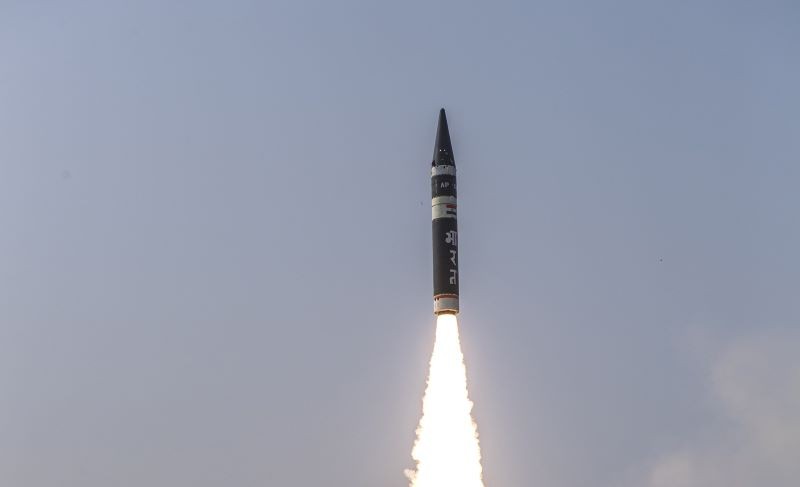
India also slightly expanded its nuclear arsenal in 2025 and continued developing new delivery systems. SIPRI noted that New Delhi's modernisation efforts are increasingly focused on long-range weapons capable of reaching targets across China, while maintaining a strategic focus on its longstanding rivalry with Pakistan.
Pakistan, meanwhile, continued developing new delivery systems and accumulating fissile material, indicating that its nuclear arsenal could grow further in the coming decade.
The report also highlighted the brief armed conflict between India and Pakistan in May 2025. According to SIPRI, India targeted Pakistani air and missile bases that may have nuclear-related roles, although both sides took steps to prevent escalation.
The report warned that increasing secrecy and reduced transparency among nuclear-armed states are creating new risks. As countries modernise their arsenals, many are providing less information about their nuclear capabilities and intentions.
"Along with reduced transparency and the erosion of diplomatic crisis-management channels, the drift towards authoritarianism in some nuclear-armed states is contributing to greater unpredictability," said Matt Korda, Associate Senior Researcher at SIPRI and Associate Director of the Nuclear Information Project at FAS.
Developments in Europe, East Asia and the Middle East during 2025 also suggested a growing role for nuclear weapons in the defence strategies of several non-nuclear states.
Several European countries, including Germany, expressed interest in expanding nuclear-sharing arrangements beyond the United States to include France and the United Kingdom. French President Emmanuel Macron announced in March 2026 that Paris was already discussing such arrangements with Germany and the UK, while several other European nations had also shown interest.
Meanwhile, Russia and Belarus continued to claim that Russian nuclear weapons have been deployed on Belarusian territory.
In December 2025, Russia released footage showing the dual-capable Oreshnik intermediate-range ballistic missile operating from Belarus, further raising concerns about nuclear deployments in Europe.
Support Our Journalism
We cannot do without you.. your contribution supports unbiased journalism
IBNS is not driven by any ism- not wokeism, not racism, not skewed secularism, not hyper right-wing or left liberal ideals, nor by any hardline religious beliefs or hyper nationalism. We want to serve you good old objective news, as they are. We do not judge or preach. We let people decide for themselves. We only try to present factual and well-sourced news.
Support objective journalism for a small contribution.