 India-US
From nuclear energy to trade ties: Why the Jaishankar–Rubio call matters now?
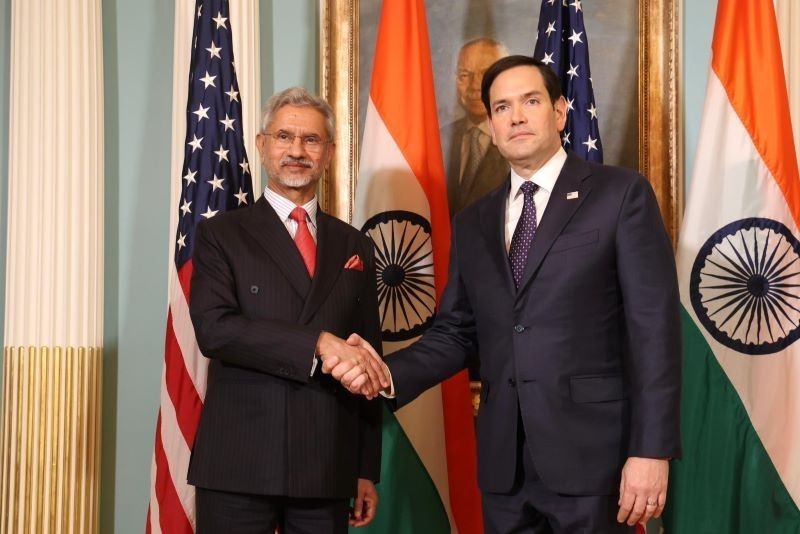
External Affairs Minister S. Jaishankar and US Secretary of State Marco Rubio held a telephone conversation on Tuesday, discussing ongoing negotiations on a bilateral trade agreement and their shared interest in strengthening economic cooperation.
Sharing details of the call, US Principal Deputy Spokesperson Tommy Pigott said in a statement that Secretary Rubio exchanged New Year greetings with Jaishankar and congratulated India on the passage of the Sustainable Harnessing and Advancement of Nuclear Energy for Transforming India Bill.
Pigott said Rubio expressed interest in leveraging the legislation to deepen US–India civil nuclear cooperation, expand opportunities for American companies, advance shared energy security objectives, and strengthen critical mineral supply chains.
The two leaders also exchanged views on regional developments and reaffirmed the commitment of both countries to a free and open Indo-Pacific.
The conversation comes days after India strongly rejected remarks by US Commerce Secretary Howard Lutnick, who suggested that a long-pending India–US trade agreement failed to materialise because Prime Minister Narendra Modi did not place a phone call to President Donald Trump. New Delhi termed the characterisation “not accurate.”
Responding to the comments, the Ministry of External Affairs (MEA) said India and the United States have been engaged in sustained and detailed negotiations on a bilateral trade pact for over a year and remain committed to concluding a mutually beneficial agreement.
MEA spokesperson Randhir Jaiswal said both sides had agreed as early as February 13 last year to negotiate a trade deal and had since held multiple rounds of talks, at times coming close to finalising an agreement.
“We have seen the remarks. India and the US were committed to negotiating a bilateral trade agreement as far back as February 13 last year. On several occasions, we have been close to a deal. The characterisation of these discussions in the reported remarks is not accurate,” Jaiswal said.
He emphasised that there had been no breakdown in political engagement between the two countries, rejecting suggestions that a lack of communication at the leadership level had stalled the process.
“Incidentally, Prime Minister Modi and President Trump have spoken on the phone on eight occasions during 2025, covering different aspects of our wide-ranging partnership,” the spokesperson added.
Support Our Journalism
We cannot do without you.. your contribution supports unbiased journalism
IBNS is not driven by any ism- not wokeism, not racism, not skewed secularism, not hyper right-wing or left liberal ideals, nor by any hardline religious beliefs or hyper nationalism. We want to serve you good old objective news, as they are. We do not judge or preach. We let people decide for themselves. We only try to present factual and well-sourced news.