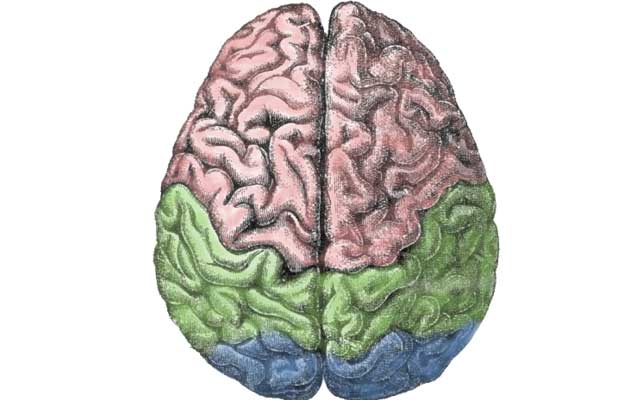
Female brain reacts more strongly to prosocial behavior, finds study
Now, researchers at the UZH have been able to demonstrate that female and male brains process prosocial and selfish behavior differently.
For women, prosocial behavior triggers a stronger reward signal, while male reward systems respond more strongly to selfish behavior.
Behavioral experiments have shown that when women share a sum of money more generously than men. To gain a more in-depth understanding of this behavior, neuroscientists from the Department of Economics looked at the areas of the brain that are active when decisions of this kind are made. They are the first to demonstrate that the brains of men and women respond differently to prosocial and selfish behavior.
The striatum, located in the middle of the brain, is responsible for the assessment of reward and is active whenever a decision is made. The findings show: The striatum was more strongly activated in female brains during prosocial decisions than during selfish decisions. By contrast, selfish decisions led to a stronger activation of the reward system in male brains.
In the second experiment, the reward system was disrupted by administering medication to the participants. Under these conditions, women behaved more selfishly, while men became more prosocial. The latter result surprised the researchers. As Soutschek explains, “these results demonstrate that the brains of women and men also process generosity differently at the pharmacological level”. The results also have consequences for further brain research, with Soutschek stating that “future studies need to take into account gender differences more seriously”.
Even if these differences are evident at the biological level, Soutschek warns against assuming that they must be innate or of evolutionary origin. “The reward and learning systems in our brains work in close cooperation. Empirical studies show that girls are rewarded with praise for prosocial behavior, implying that their reward systems learn to expect a reward for helping behavior instead of selfish behavior. With this in mind, the gender differences that we observed in our studies could best be attributed to the different cultural expectations placed on men and women.” This learning account is also supported by findings that indicate significant differences in the sensitivity of the reward system to prosocial and selfish behavior across cultures.
Image:wikimedia commons
Support Our Journalism
We cannot do without you.. your contribution supports unbiased journalism
IBNS is not driven by any ism- not wokeism, not racism, not skewed secularism, not hyper right-wing or left liberal ideals, nor by any hardline religious beliefs or hyper nationalism. We want to serve you good old objective news, as they are. We do not judge or preach. We let people decide for themselves. We only try to present factual and well-sourced news.
Support objective journalism for a small contribution.