


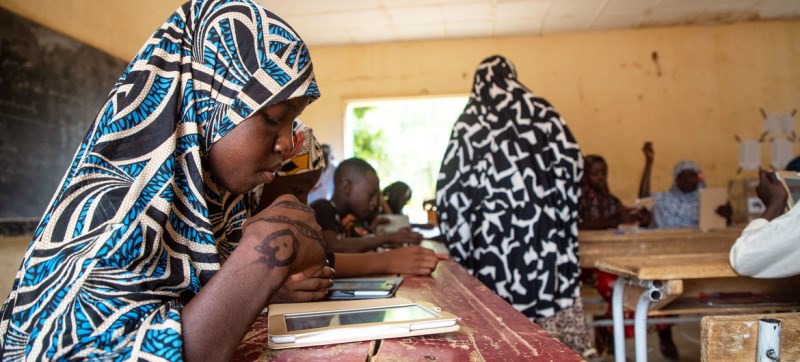
 School Reopening
UNICEF chief: Closing schools should be ‘measure of last resort’
New York: The head of the UN Children’s Fund (UNICEF) underscored on Tuesday that “no effort should be spared” to keep children in school, as the coronavirus pandemic continues into a second year.
“Despite overwhelming evidence of the impact of school closures on children, and despite increasing evidence that schools are not drivers of the pandemic, too many countries have opted to keep schools closed, some for nearly a year”, Henrietta Fore said in a statement.
A high cost
The UNICEF chief highlighted that the cost of closing schools has been devastating, with 90 per cent of students globally facing shutdowns at the peak of the COVID disruptions last year, leaving more than a third of schoolchildren with no access to remote education.
“The number of out-of-school children is set to increase by 24 million, to a level we have not seen in years and have fought so hard to overcome”, she said.
“Children’s ability to read, write and do basic math has suffered, and the skills they need to thrive in the 21st century economy have diminished”, Ms. Fore added.
Closure a ‘last resort’
Keeping children at home puts their health, development, safety and well-being at risk – with the most vulnerable bearing the heaviest brunt, she said.
She pointed out that without school meals, children are “left hungry and their nutrition is worsening”; without daily peer interactions and less mobility, they are “losing physical fitness and showing signs of mental distress”; and without the safety net that school often provides, they are “more vulnerable to abuse, child marriage and child labour”.
“That’s why closing schools must be a measure of last resort, after all other options have been considered”, stressed the top UNICEF official.
Evaluating local transmission
Assessing transmission risks at the local level should be “a key determinant” in decisions on school operations, Ms. Fore said.
She also flagged that nationwide school closures be avoided, whenever possible.
“Where there are high levels of community transmission, where health systems are under extreme pressure and where closing schools is deemed inevitable, safeguarding measures must be put in place”, maintained the UNICEF chief.
Moreover, it is important that children who are at risk of violence in their homes, who are reliant upon school meals and whose parents are essential workers, continue their education in classrooms.
After lockdown restrictions are lifted, she said that schools must be among the first to reopen and catch-up classes should be prioritized to keep children who were unable to learn remotely from being left behind.
“If children are faced with another year of school closures, the effects will be felt for generations to come”, said Fore.
Support Our Journalism
We cannot do without you.. your contribution supports unbiased journalism
IBNS is not driven by any ism- not wokeism, not racism, not skewed secularism, not hyper right-wing or left liberal ideals, nor by any hardline religious beliefs or hyper nationalism. We want to serve you good old objective news, as they are. We do not judge or preach. We let people decide for themselves. We only try to present factual and well-sourced news.
Support objective journalism for a small contribution.


