


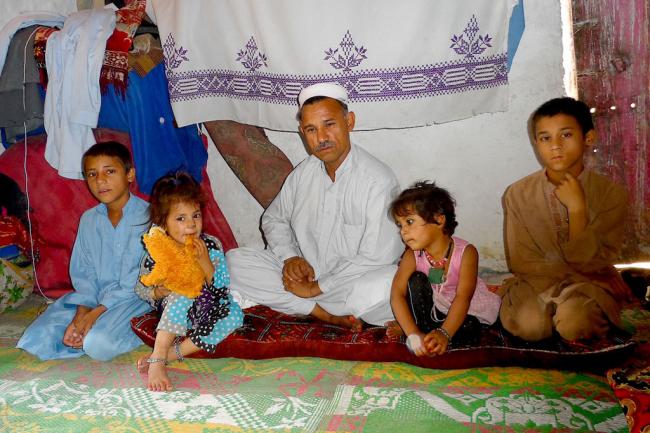
UN warns of humanitarian crisis as 7,400 cross Afghan border each day
The Government of Pakistan has imposed a return deadline of 15 March 2017 for voluntary return and repatriation. UNHCR and IOM estimate that Afghanistan will receive between one and 1.5 million returnees by that date when combined with the internally displaced persons (IDP) movement in eastern, southern and central areas of the State.
While the deadline has been long-known, the Pakistani Government is generating pressure to speed up the return process due to a change in political dynamics between Pakistan and Afghanistan. This includes an increase in the spread of terrorism, presence of the Islamic State of Iraq and the Levant (ISIL/Da’esh) in both countries, and deepening ties between Afghanistan and India.
Yesterday, the Office for the Coordination of Humanitarian Affairs (OCHA) issued Afghanistan Humanitarian Situation Report 3, which states that 60 percent of those returning are children. 80,000 are under the age of 5 and require immediate health and nutritional support.
UNHCR and the UN Office for the Coordination of Humanitarian Affairs (OCHA) are currently overseeing a humanitarian strategy that involves 160 national and international non-governmental organization partners in addition to the UN, IOM, Red Crescent and Red Cross Societies. OCHA is conducting a joint needs assessment that focuses especially on nine districts that have been identified as high return areas.
The UN Children’s Fund (UNICEF) is meanwhile focusing on nutrition, health, and education, providing vitamins, vaccinations, psychological care, and basic teaching materials to people at cross-border points and regions experiencing a high influx of returnees. The agency is also working closely with IOM to ensure that water, sanitation and hygiene needs are met and is collecting feedback on returnee’s needs at key entry and transit points. Messages about immunization, health, nutrition, handwashing, education, child protection, and birth registration have been distributed to the returnees.
OCHA’s report identifies the eastern region of Afghanistan (including Nangarhar, Laghman, Kunar and Nuristan) as the highest risk areas for IED incidents, kidnapping and sudden armed clashes among government forces, armed tribal groups, and Taliban factions. Along the border areas with Pakistan, there have been reports of ISIL/Da’esh. UNICEF and other agencies conducted a security assessment mission earlier this month to enable road missions to the Torkham border and nearby districts experiencing a high rate of returnees.
UNICEF Afghanistan has met the initial short-term three-month funding period to respond to the humanitarian crisis, but will need an additional $2.1 million in the medium-term. The next Situation Report is anticipated for 19 October 2016 and a summary of the programme results will be adjusted to reflect sector-specific needs assessments by 15 October 2016.
Photo: IRIN/Aamir Saeed
Source: www.justearthnews.com
Support Our Journalism
We cannot do without you.. your contribution supports unbiased journalism
IBNS is not driven by any ism- not wokeism, not racism, not skewed secularism, not hyper right-wing or left liberal ideals, nor by any hardline religious beliefs or hyper nationalism. We want to serve you good old objective news, as they are. We do not judge or preach. We let people decide for themselves. We only try to present factual and well-sourced news.
Support objective journalism for a small contribution.


