


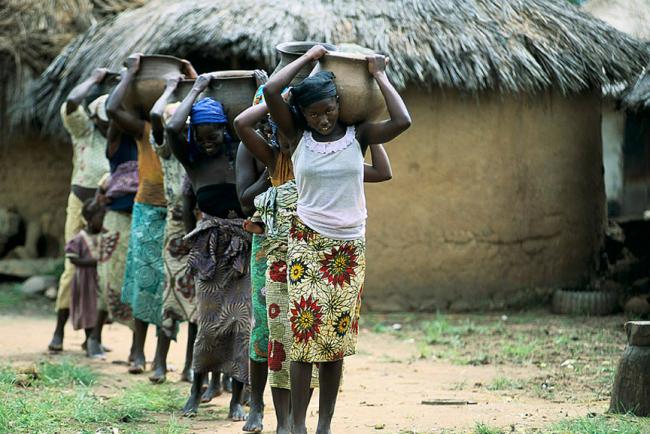
UN unveils alternative policy agenda to transform economies
The UN Women report, Progress of the World’s Women 2015-2016: Transforming Economies, Realizing Rights, brings together human rights and economic policymaking to call for far-reaching changes to the global policy agenda and imagines what the global economy would look like if it truly worked for women, for the benefit of all.
“Our public resources are not flowing in the directions where they are most needed,” said UN Women Executive Director Phumzile Mlambo-Ngcuka.
She added, “For example, to provide safe water and sanitation, quality health care, and decent child- and elderly-care services. Where there are no public services, the deficit is borne by women and girls.”
The report’s publication comes as the international community negotiates a transformative new agenda for sustainable development, 20 years after the landmark Fourth World Conference on Women, in Beijing, China, which set out an ambitious agenda to advance gender equality.
Despite significant advances in many societies, particularly in advancing women’s legal rights, millions of women remain consigned to low paid, poor quality jobs, and lack access to health care, clean water and sanitation.
Only half of women participate in the formal global labour force, compared to three quarters of men, with some developing regions showing 95 per cent of women’s employment informal. That includes unpaid care work, for which women carry the burden, and which has intensified thanks to austerity policies and cutbacks.
Photo: World Bank
Support Our Journalism
We cannot do without you.. your contribution supports unbiased journalism
IBNS is not driven by any ism- not wokeism, not racism, not skewed secularism, not hyper right-wing or left liberal ideals, nor by any hardline religious beliefs or hyper nationalism. We want to serve you good old objective news, as they are. We do not judge or preach. We let people decide for themselves. We only try to present factual and well-sourced news.
Support objective journalism for a small contribution.


