


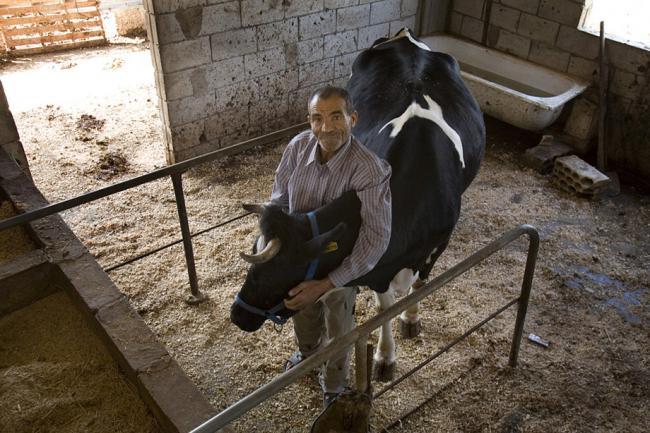
UN launches animal vaccination campaign along Syria-Lebanon border
Triggered by an influx of 1.5 million refugees fleeing the conflict in neighbouring Syria and bringing with them legions of unvaccinated goats, cattle, sheep and other animals, FAO is now targeting all animals in the Syria-Lebanon border area with vaccinations.
The UN agency has warned that as many as 70,000 cows and around 900,000 sheep and goats could be exposed to transboundary disease if left untreated.
According to a farmer in Lebanon’s eastern Bekaa Valley, in fact, animal fever has already established a foothold, killing off livestock and impacting the incomes of herders and pastoralists. FAO estimates that almost 60 percent of livestock farmers in Lebanon depend on dairy animals as their main source of income.
“The idea is to reduce the risk of disease, and avoid drops in the productivity of the national herd,” Maurice Saade, FAO Representative in Lebanon, said in a press release.
The UN agency further warned that an outbreak of disease among Lebanon’s livestock could potentially have a devastating impact on the country’s natural resources and food production systems, particularly as up to 25 per cent of the country’s active population is employed in agriculture.
Several animal diseases are highly contagious and can spread extremely rapidly, causing high mortality and morbidity in animals and resulting in serious socio-economic and public health consequences, the FAO continued.
The three most prevalent diseases already detected in Lebanon include lumpy skin disease, foot-and-mouth disease and the peste des petits ruminants, otherwise known as “goat plague” – a highly contagious disease characterized by fever, mouth sores, diarrhoea, rapid weight loss, pneumonia and a high death rate in a short period of time.
Photo: FAO/Kai Wiedenhoefer
Support Our Journalism
We cannot do without you.. your contribution supports unbiased journalism
IBNS is not driven by any ism- not wokeism, not racism, not skewed secularism, not hyper right-wing or left liberal ideals, nor by any hardline religious beliefs or hyper nationalism. We want to serve you good old objective news, as they are. We do not judge or preach. We let people decide for themselves. We only try to present factual and well-sourced news.
Support objective journalism for a small contribution.


