
December 23, 2025 09:46 pm (IST)
Follow us:
facebook-white sharing button
twitter-white sharing button
instagram-white sharing button
youtube-white sharing button
Delhi erupts over lynching of Hindu man in Bangladesh; protest outside High Commission | Targeted killing sparks global outrage: American lawmakers condemn mob lynching of Hindu man in Bangladesh | Assam on a ‘powder keg’: Himanta Biswa Sarma flags demographic shift, Chicken’s Neck fears | Bangladesh on edge: Student leader shot as pre-poll violence deepens after Hadi killing | Historic deal sealed: India, New Zealand sign landmark Free Trade Agreement in record time | Supreme court snubs urgent plea to stop PMO’s chadar offering at Ajmer Sharif | Emergency landing drama: Air India flight heads back to Delhi after engine malfunction! | PM Modi slams ‘cut and commission’ TMC in virtual Taherpur address | US launches Operation Hawkeye Strike in Syria targeting ISIS after Americans killed | Horror on tracks: Rajdhani Express ploughs into elephant herd, eight killed in Assam

Three years of violence halt government health services in Central African Republic – UN

| | May 10, 2016, at 09:44 am
New York, May 10 (Just Earth News/IBNS): More than three years of violence have dismantled the already very fragile health structures in the Central African Republic (CAR), bringing the government service delivery capacity to a complete stop, and leaving thousands of people vulnerable to diseases and with little access to health services, the United Nations humanitarian aid office said over the weekend.

The UN Office for the Coordination of Humanitarian Affairs (OCHA) said that access to health is very poor throughout the country, except in the capital Bangui, and insecurity also impedes or delays responses elsewhere.

Currently 1 million people are assisted by 31 health cluster partners including non-government organizations and UN agencies. Aid agencies use mobile services to help thousands of displaced in areas not covered by the Ministry of Health's basic facilities.

Preventive activities, primary and secondary health care, all functional referral hospitals, early warning mechanisms and rapid outbreak response capacity and psychosocial support remain essentially reliant on humanitarian actors, OCHA said.

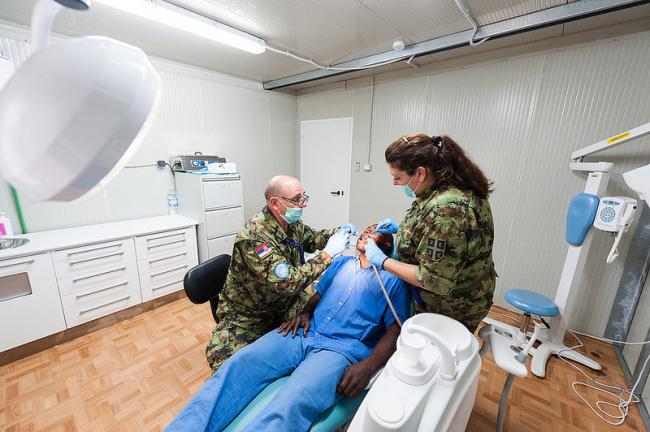
UN Photo/Catianne Tijerina
 

Support Our Journalism

We cannot do without you.. your contribution supports unbiased journalism

IBNS is not driven by any ism- not wokeism, not racism, not skewed secularism, not hyper right-wing or left liberal ideals, nor by any hardline religious beliefs or hyper nationalism. We want to serve you good old objective news, as they are. We do not judge or preach. We let people decide for themselves. We only try to present factual and well-sourced news.

Support objective journalism for a small contribution.


