


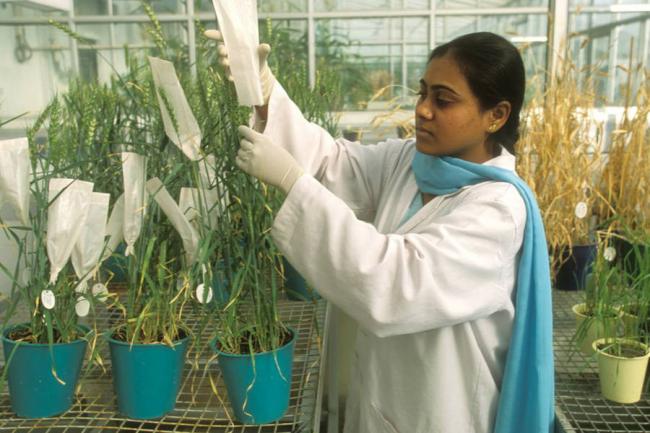
'The world needs science and science needs women,' says UN on new International Day
“UNESCO's message is clear – the new [2030 Agenda for Sustainable Development] will not meet its promise without investing in women's and girls' empowerment through and in science,” Irina Bokova highlighted in a message.
According to the most recent UNESCO Science Report, women account for only 28 per cent of researchers across the world, with the gap deepening at the higher echelons of decision-making. Women also have less access to funding, to networks, to senior positions, which puts them at a further disadvantage in high impact science publishing.
“This calls for deep and sustained change, starting in the earliest years through improved participation of women and girls in science education, training and research activities at all levels,” Bokova stressed.
“Girls' and women's access to Science, Technology, Engineering and Mathematics (STEM) cannot be envisaged when girls and women remain the majority of out-of-school children, youth and illiterate adults. This gap throws a shadow over entire societies, as no country can move forward with only half its creativity, energy, and dreams,” she added.
Based on a study conducted in 14 countries, the United Nations estimates that the probability for female students of graduating with a Bachelor's degree, Master's degree and Doctor's degree in science-related field are 18, eight and two per cent respectively, while the percentages of male students are 37, 18 and six per cent.
“Gender equality is a global priority at UNESCO, and promoting women and girls in science stands at the heart of this action, through a range of initiatives,” noted Bokova, inviting all partners and Governments to redouble efforts to empower girls and women through and in science, as a foundation to take forward the 2030 Agenda.
Photo: FAO/Jon Spaull
Support Our Journalism
We cannot do without you.. your contribution supports unbiased journalism
IBNS is not driven by any ism- not wokeism, not racism, not skewed secularism, not hyper right-wing or left liberal ideals, nor by any hardline religious beliefs or hyper nationalism. We want to serve you good old objective news, as they are. We do not judge or preach. We let people decide for themselves. We only try to present factual and well-sourced news.
Support objective journalism for a small contribution.


