


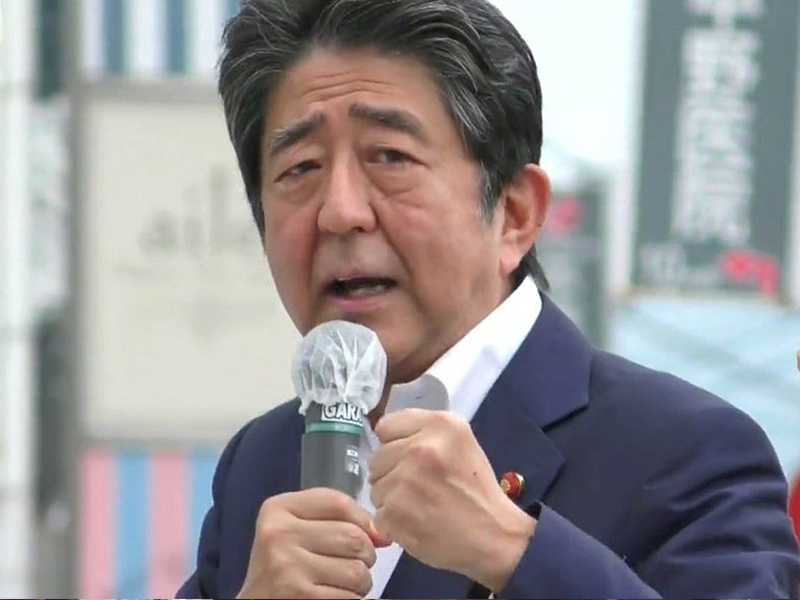
 Shinzo Abe
Section of Chinese netizens celebrate assassination of former Japan PM Shinzo Abe
Beijing: A section of Chinese internet users were seen celebrating the assassination of former Japanese Prime Minister Shinzo Abe.
The radical nationalism on show has damaged China’s image internationally and may complicate Beijing’s efforts to improve relations with other countries, commentators warned, reported South China Morning Post.
Hu Xijin, former editor-in-chief of the nationalistic tabloid Global Times, expressed sympathy for Abe on Chinese social media Weibo on Friday.
“I feel, at this point, political complexities should be set aside… I hope more people can understand and join me,” Hu said.
But many Weibo users , who see Abe as representative of a Japanese right-wing in denial about the country’s war crimes, replied with hostile comments.
“What I regret is that [the assassination] didn’t happen yesterday,” said one commentator, referring to the July 7 anniversary of the Marco Polo Bridge Incident in 1937, which triggered the full-scale Japanese invasion of China.
Nationalistic commentator Sima Nan wrote on Weibo that it was a natural for Hu to offer condolences over Abe’s death, but he criticised a Chinese reporter who cried in a video report about the shooting, the newspaper reported.
Another nationalistic blogger known as Guyanmuchan, who has over 6.4 million followers on Weibo and was named as an “internet ambassador” by Guangdong province last year, said people should reflect on why so many people in China were toasting Abe’s death.
“Sorry, we normal Chinese don’t feel sympathy for Abe. As a Japanese politician who was hostile to China and was killed by another Japanese, feeling happy should be the reaction of a normal Chinese,” Guyanmuchan said in a post on Friday.
“Hatred of the West and polarisation among Chinese over certain issues have existed in China for a long time, but the hostile comments over Abe’s death have greatly damaged China’s image,” said one political scientist, who declined to be named for the sensitivity of the issue.
Anti-Japanese sentiment has been rife on social media since 2012, when protests took place in multiple Chinese cities after Tokyo nationalised a group of islands China also claims, former Tsinghua University political lecturer Wu Qiang was quoted as saying by the newspaper.
Abe was killed in a gun attack Friday in Japan's western city of Nari while speaking in an election campaign.
The attacker, a 41-year-old man, has been arrested and the weapon has been seized.
Support Our Journalism
We cannot do without you.. your contribution supports unbiased journalism
IBNS is not driven by any ism- not wokeism, not racism, not skewed secularism, not hyper right-wing or left liberal ideals, nor by any hardline religious beliefs or hyper nationalism. We want to serve you good old objective news, as they are. We do not judge or preach. We let people decide for themselves. We only try to present factual and well-sourced news.
Support objective journalism for a small contribution.


