


 Afghanistan Refugees
Refugees face dire consequences from COVID-19 underfunding, UNHCR warns
New York: Underfunding has left a “yawning gap” in the UN Refugee Agency’s ability to protect forcibly displaced people worldwide from the fallout of the COVID-19 pandemic, the UNHCR said on Friday.
The emergency tops their list of the 10 most underfunded situations in 2021. Only one-third of the budgeted requirements of $924 million has been received, according to UNHCR's Chief of Public Health Section, Ann Burton, who called for more global attention and funding support.
Host States hit hardest
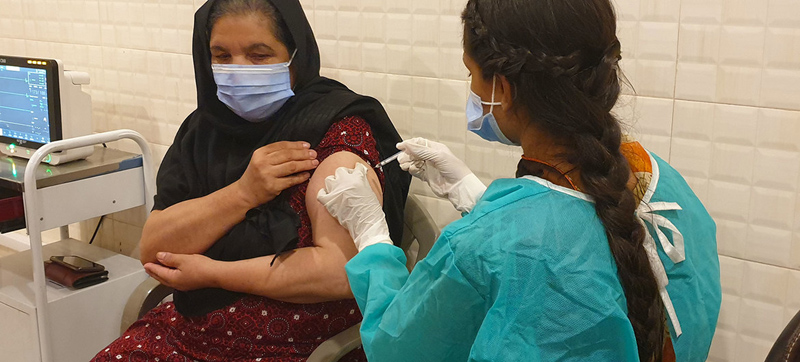
Ms. Burton emphasized that “vaccine inequity continues to hit the hardest in many refugee-hosting states”. 86 per cent of refugees are hosted in developing countries, however, some 80 per cent of all vaccine doses have been given in high- and upper-middle-income countries, she noted.
Low-income countries also have the least resilient health systems and are struggling to cope with the needs of their own populations, before adding the extra needs posed by hosting refugees.
Ms. Burton echoed calls by UN Agencies for States to share excess doses with COVAX to address the global vaccine inequity and avoid prolonging the pandemic. While “very encouraged” by the vaccine rollout for refugees by hosting states Ms. Burton warned that many barriers to vaccine access remain.
She reiterated that UNHCR is ready to support states overcome some of these barriers if they have the means to do so, for example “by creating information materials in refugee languages suitable for low literacy levels”.
Economic repercussions
Ms. Burton pointed out that the pandemic has hurt forcibly displaced and stateless people in ways that “reach far beyond the risk posed by the virus” itself. Failure “to adequately fund the response only deepens their plight,” she added.
The economic repercussions of the pandemic have led their business and workplaces to close, with their “precarious livelihoods often the first to go”. Forcibly displaced people often do not have access to measures such as distance learning for schoolchildren or subsidies to offset the economic impact provided by governments.
This has meant that people cannot afford to pay rent or afford daily necessities, such as food, which in turn increases the risk of exploitation and gender-based violence, she warned, before reiterating a call for States to include refugees in national social safety nets and for donors to support UNHCR help fill that gap.
$74 million funding shortfall
UNHCR’s COVID-19 response covers every region and a whole spectrum of needs, Ms. Burton said.
At the end of August, they met a shortfall of $74 million in cash assistance, and smaller “but significant gaps” in funding to alleviate the pandemic’s impact on primary health care, primary education, and services for people with specific needs.
Pointing out that forcibly displaced people constitute one per cent of the world’s population, she warned that on health grounds alone, failing to integrate them into the global pandemic response would be “reckless.” But it was “not too late” to channel funds to where they are most urgently needed, she added.
Support Our Journalism
We cannot do without you.. your contribution supports unbiased journalism
IBNS is not driven by any ism- not wokeism, not racism, not skewed secularism, not hyper right-wing or left liberal ideals, nor by any hardline religious beliefs or hyper nationalism. We want to serve you good old objective news, as they are. We do not judge or preach. We let people decide for themselves. We only try to present factual and well-sourced news.
Support objective journalism for a small contribution.


