


 South Asia
Pakistan’s bid for a South Asian bloc without India gains attention — But experts say it’s doomed to fail
Pakistan is attempting to craft a new regional architecture—one that pointedly excludes India.
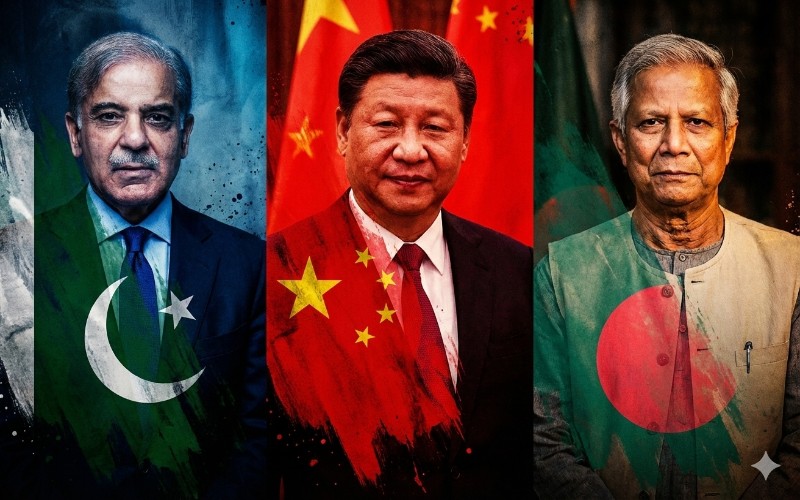
Pakistani Deputy Prime Minister Ishaq Dar recently announced Islamabad’s intention to expand its trilateral initiative with Bangladesh and China, hinting at a broader framework aimed at replacing the stagnating South Asian Association for Regional Cooperation (SAARC).
However, geopolitical observers are unconvinced.
Given India’s vast economic weight, connectivity role, and crisis-response capabilities, experts say no regional nation is likely to risk joining a grouping that sidelines New Delhi.
Pakistan’s new proposal: A SAARC alternative without India
Speaking last week, Ishaq Dar declared that South Asia can no longer remain trapped in “zero-sum mindsets” and “dysfunctional regional architecture.”
He argued for “open and inclusive regionalism,” signalling Pakistan’s support for emerging multilateral platforms beyond SAARC.
The Deputy PM claimed that Islamabad—as part of its trilateral mechanism with Bangladesh and China—has already begun exploring ways to scale up the initiative. The first meeting of this trilateral was held in Kunming earlier this year.
Dar suggested that such frameworks could be replicated with other countries, taking aim at India by cautioning against “rigidity” that holds regional progress “hostage.”
SAARC: A bloc frozen by India–Pakistan hostility
Formed in 1985 with India, Pakistan, Bangladesh, Sri Lanka, Nepal, Bhutan, and the Maldives, SAARC was once envisioned as South Asia’s primary platform for economic cooperation. Afghanistan joined in 2007.
But the grouping has been effectively paralysed since the 2016 Uri terror attack, which prompted India to boycott the Islamabad summit.
New Delhi has since favoured BIMSTEC—an alternative regional grouping that excludes Pakistan.
Despite representing over two billion people, South Asian trade remains a meagre $23 billion—only 5 percent of the region’s total commerce.
Weak connectivity and persistent political tensions have stalled SAARC’s ambitions.
Why Pakistan’s proposal is seen as impractical
Experts believe Islamabad’s plan is more aspirational than actionable.
Rabia Akhtar of the Centre for Security, Strategy and Policy Research in Lahore said the proposal reflects Pakistan’s desire to “reimagine cooperation” as SAARC remains frozen.
But Akhtar stressed two key hurdles — whether smaller countries see value in tiny, issue-based groupings, and whether joining such blocs could jeopardise their ties with India.
India’s dominance, she noted, is an unavoidable factor in the region.
India’s unmatched regional influence
Analysts say the core reason Pakistan’s plan may never take off is India’s outsized regional role.
As JNU professor Swaran Singh highlighted, India’s population is seven times Pakistan’s.
Its defence budget is five times larger, its economy 12 times greater, and its foreign exchange reserves 45 times bigger.
Such a scale makes India indispensable to any meaningful South Asian cooperation framework.
Neighbours rely on India — Economically and in crises
Smaller nations like Nepal and Bhutan rely heavily on Indian trade routes.
During crises—from natural disasters to COVID-19 vaccine diplomacy—New Delhi has been the region’s primary first responder.
JNU academic Shantesh Kumar Singh stressed that India’s leadership remains essential to prevent South Asia from becoming vulnerable to external strategic pressures, particularly China’s growing regional footprint.
He warned that excluding India would leave any bloc “fragmented and underfunded,” further weakening regional unity.
A vision unlikely to move beyond rhetoric
While Pakistan’s proposal highlights its desire for alternate regional structures, experts agree that sidelining India is simply not feasible.
India’s economic clout, logistical importance, and crisis-response leadership make it too central to South Asia’s functioning.
For now, Pakistan’s pitch appears less a realistic blueprint and more a political message—one unlikely to reshape the region’s power dynamics anytime soon.
Support Our Journalism
We cannot do without you.. your contribution supports unbiased journalism
IBNS is not driven by any ism- not wokeism, not racism, not skewed secularism, not hyper right-wing or left liberal ideals, nor by any hardline religious beliefs or hyper nationalism. We want to serve you good old objective news, as they are. We do not judge or preach. We let people decide for themselves. We only try to present factual and well-sourced news.
Support objective journalism for a small contribution.


