


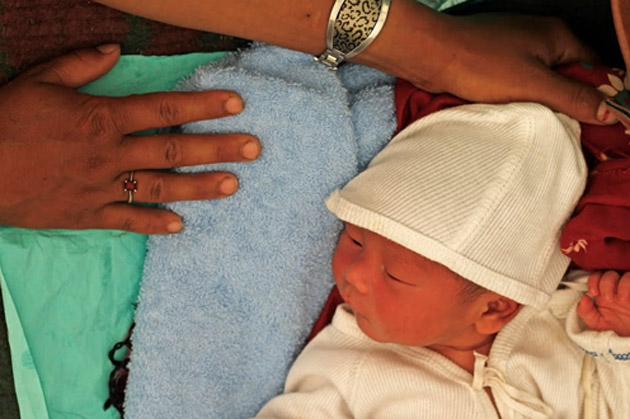
Nepal: WHO marks one month since devastating earthquake as it ramps up aid
Marking the sombre milestone in a newsletter today, the World Health Organization (WHO) warned that even though the initial tremors had subsided, the threat of disaster is far from over as monsoon season fast approaches.
“There are more challenges ahead – to urgently restore primary health care services, even temporarily, provide water proof medical tents, essential medicines and keep a strict vigil to rapidly respond to any disease outbreak,” Dr. Poonam Khetrapal Singh declared in the WHO circular.
“As media attention fades away, this is the time for WHO and partners to stand with Nepal and help the country build back a more resilient health system,” she added.
The 25 April earthquake, and its 7.3 magnitude follow-up on 12 May, damaged 26 of Nepal’s hospitals and over 1,100 health facilities while affecting some 5.6 million people, half of whom have been displaced. In addition, an estimated 8,500 people were killed by the two quakes.
Working closely with the country’s Government, the WHO has ramped up critical medical and health assistance across the devastated areas, enhancing disease surveillance through the creation of early warning response and alert systems and prioritizing assessment and outreach efforts to reach remote areas.
According to Dr. Khetrapal Singh, much of the WHO’s success in providing immediate relief has been down to the decades-long emergency preparation the UN agency has been engaged in with the Government of Nepal.
“Our pre-positioned essential medicines and medical supplies were made immediately available. Emergency funds were sanctioned almost immediately – within six hours of the earthquake – to meet the immediate financial needs and fill critical gaps in the aftermath of the disaster,” she continued.
She said, “We are committed to support Nepal’s health system to deliver life-saving and essential services to its people and build back resilient health facilities that will be safe in emergencies.”
Photo: WHO/A. Khan
Support Our Journalism
We cannot do without you.. your contribution supports unbiased journalism
IBNS is not driven by any ism- not wokeism, not racism, not skewed secularism, not hyper right-wing or left liberal ideals, nor by any hardline religious beliefs or hyper nationalism. We want to serve you good old objective news, as they are. We do not judge or preach. We let people decide for themselves. We only try to present factual and well-sourced news.
Support objective journalism for a small contribution.


