


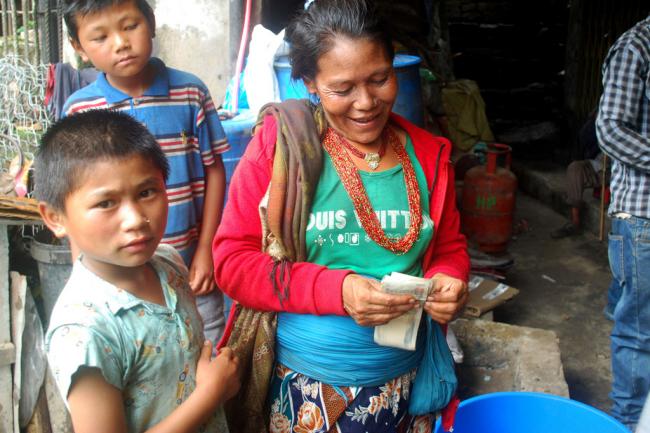
Nepal: UN relief official warns emergency is not over yet
“The emergency is not over yet,” warned Jamie McGoldrick, the Humanitarian Coordinator in Nepal.
He said, “As long as humanitarian needs persist, relief agencies will continue to support the Government in addressing these vulnerabilities and ensuring the survival of communities affected.”
The cold and damp monsoon weather exposes those affected to further hazards and, together with customs delays, adds to the challenges aid agencies tackle daily.
Shelter, food and livelihoods support, water and sanitation, medical and psychosocial care, and protection remain top priorities, he said.
In the last three months, the humanitarian community provided shelter assistance to 340,000 families, distributed food to over 2 million people and provided safe drinking water to some 2.5 million survivors in 14 most-affected districts, points out a press release issued by the UN Office for the Coordination of Humanitarian Affairs (OCHA).
Hundreds of thousands of children continue to benefit from education and psychosocial support. Almost all of health facilities also restored use of cash programming, which proved to be indispensable in achieving these goals and overcoming the topography challenge.
“I am heartened and encouraged by the dedication of the responders: the Government, the many volunteers, my colleagues. Together, we achieved a lot,” stated McGoldrick.
He added, “But we must continue.”
Basic shelter will continue to be provided to families who lost their homes, as more-durable shelter solutions are sought and implemented, underscore the press release.
Aid agencies aim to assist more than 1.4 million people with food and another 1 million people with livelihoods support, and to provide safe drinking water and sanitation to 2.5 million people.
Medical camp kits will continue to replace damaged health infrastructure and temporary learning spaces are intended for additional 270,000 children.
The humanitarian community is also planning ahead, to ensure the most vulnerable are assisted beyond the monsoon and prepared to survive through the harsh and cold wintery conditions.
“We cannot fail the most vulnerable communities, people who count on us more than ever with the monsoon season underway and the winter fast-approaching” stressed McGoldrick.
He said, “The humanitarian community can and will deliver on its commitments, provided that we receive the right support.”
To date, only $210 million, or 50 per cent, were received against the $422 million humanitarian appeal.
An additional $222 million in support to post-earthquakes relief was provided directly to the Government of Nepal on a bilateral and in-kind basis.
Photo: OCHA
Support Our Journalism
We cannot do without you.. your contribution supports unbiased journalism
IBNS is not driven by any ism- not wokeism, not racism, not skewed secularism, not hyper right-wing or left liberal ideals, nor by any hardline religious beliefs or hyper nationalism. We want to serve you good old objective news, as they are. We do not judge or preach. We let people decide for themselves. We only try to present factual and well-sourced news.
Support objective journalism for a small contribution.


