


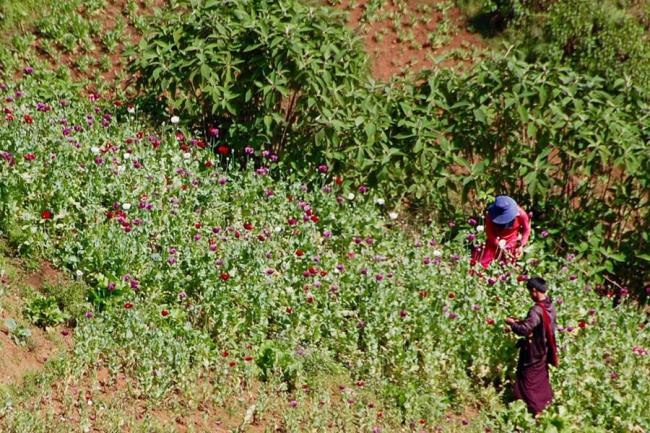
Myanmar: opium cultivation down 25 per cent, but conflict areas remain 'safe haven' for drug traders
New York, Dec 7(Just Earth News): The total area of opium poppy cultivation in Myanmar has decreased significantly in 2017 to 41,000 hectares, down 25 per cent from the 55,500 recorded in 2015, a United Nations survey released on Wednesday has found.
“Myanmar has taken important steps to address opium cultivation, especially in South Shan where we are running a programme together,” said Troels Vester, Country Manager of the UN Office on Drugs and Crime (UNODC), emphasizing the importance of sustainable alternatives to opium cultivation.
The Myanmar Opium Survey 2017 released by UNODC finds reductions have been most significant in East Shan with a drop of 37 per cent and South Shan with a drop of 29 per cent.
However, the report also reveals that while progress has been made, North Shan and Kachin states have seen reductions of less than three per cent and seven per cent, which on the ground amounts to a decrease of only 700 hectares in total.
The report reconfirms the link between conflict and opium in Myanmar, and that insecure areas with active insurgencies continue to cultivate and produce at levels similar to 2015.
“As long as significant parts of Shan and Kachin remain unstable and basically autonomous from the rest of the country and region, the environment will remain a safe haven for those who run the drug trade,” said UNODC Regional Representative Jeremy Douglas.
The decline in opium cultivation occurs against the backdrop of a changing regional drug market that has seen a fall in opium and heroin prices over recent years, as most countries in East and Southeast Asia report a shift toward synthetic drugs and especially methamphetamine.
UNODC says there is still a huge amount of work to be done and sustained support will be critical to its efforts.
Photo: UNODC
Source: www.justearthnews.com
Support Our Journalism
We cannot do without you.. your contribution supports unbiased journalism
IBNS is not driven by any ism- not wokeism, not racism, not skewed secularism, not hyper right-wing or left liberal ideals, nor by any hardline religious beliefs or hyper nationalism. We want to serve you good old objective news, as they are. We do not judge or preach. We let people decide for themselves. We only try to present factual and well-sourced news.
Support objective journalism for a small contribution.


