


 India-Iran
Modi-Pezeshkian talks: Iran seeks India’s 'extensive contacts' to end West Asia war
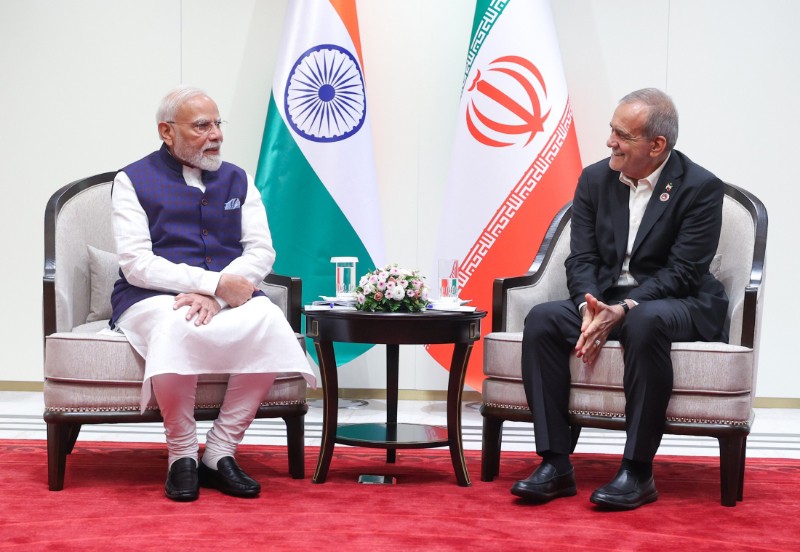
Bishkek/IBNS: Iranian President Masoud Pezeshkian has sought Prime Minister Narendra Modi’s diplomatic support to help steer the parties involved in the West Asia conflict away from further escalation and towards dialogue.
The appeal came during the first face-to-face meeting between Modi and Pezeshkian since fighting erupted earlier this year.
The two leaders met on the sidelines of the Shanghai Cooperation Organisation (SCO) summit in Bishkek, Kyrgyzstan, amid continuing concerns over regional security, energy supplies and the wider economic consequences of conflict.
According to an Iranian readout of the meeting, Pezeshkian thanked India for its position during the conflict and emphasised Tehran’s stated preference for resolving disputes through diplomacy.
“Unfortunately, instead of making use of diplomatic mechanisms, the Americans have chosen the path of war, insecurity and imposing their will through force,” Pezeshkian was quoted as saying.
He argued that the continuation of hostilities would not serve the interests of Iran, the wider region or the international community.
“The continuation of war is in the interest neither of us, nor of the region, nor of humanity,” Pezeshkian said.
The Iranian president also referred to India’s longstanding relationship with Iran and its links with countries across West Asia, asking New Delhi to play a role in bringing the parties back to “dialogue and agreement”.
Iran highlights India’s 'extensive contacts'
Pezeshkian’s appeal places India’s established ties with competing regional and global actors at the centre of Tehran’s diplomatic calculations.
India maintains close strategic and economic relationships with Iran while also maintaining partnerships with the United States, Israel and Arab Gulf countries.
New Delhi has repeatedly called for dialogue and diplomacy in resolving conflicts in West Asia, while stressing the protection of Indian nationals and the uninterrupted movement of energy and goods.
During the meeting, Pezeshkian also expressed Iran’s willingness to expand cooperation with India across political, economic, scientific and cultural areas.
The Iranian side also highlighted the importance of reducing the impact of sanctions on bilateral economic engagement.
Modi, according to the Iranian readout, described Pezeshkian as a “peace-loving person” who could play an “effective role” in advancing peace.
“We must intensify our efforts to establish peace. My belief and conviction is that, ultimately, peace and security will prevail,” Modi was quoted as saying.
The Indian Prime Minister later said the two leaders had discussed the regional situation and reaffirmed that India would “continue to support all efforts aimed at ensuring lasting peace”.
Chabahar and Strait of Hormuz add economic weight
The Modi-Pezeshkian discussions also covered transport and maritime connectivity, including the Strait of Hormuz and developments surrounding Chabahar Port.
Chabahar remains a major element of India’s connectivity strategy towards Iran, Afghanistan and Central Asia.
For New Delhi, the Iranian port provides an alternative route to the region and has wider significance for trade and strategic connectivity.
The Strait of Hormuz carries a substantial share of global oil shipments, making instability around the waterway an immediate concern for energy-importing economies, including India.
Any disruption to maritime traffic can affect shipping costs, insurance premiums and the movement of energy supplies.
India has therefore consistently emphasised the need for the unhindered movement of energy and commercial goods in the region.
Modi and Pezeshkian have remained in contact during the recent period of instability.
The two leaders also spoke by telephone in late June, when regional developments and the safety of Indian nationals were among the issues discussed.
Modi reiterates India’s position on Russia-Ukraine war
The Prime Minister’s diplomatic message at the SCO summit extended beyond West Asia, with his meeting with Russian President Vladimir Putin also producing a renewed call for an end to the Russia-Ukraine conflict.
During a joint statement following their bilateral meeting in Bishkek, Modi said India supported peaceful efforts to resolve the war and underlined the importance of moving from “endless war” towards an “end of war”.
“We have to move from a situation of 'endless war' to 'end of war'... It is humanity's wish that the end of this war happens soonest,” Modi said.
He referred to previous discussions with Putin on the Ukraine conflict and reiterated New Delhi’s position that disputes should be resolved through peaceful means.
“As you know, India supports all peaceful methods (to resolve the impasse),” Modi said. “India advocates for resolving all problems peacefully, which is necessary for all of humanity.”
The remarks build on Modi’s repeated public emphasis on diplomacy since Russia launched its full-scale invasion of Ukraine.
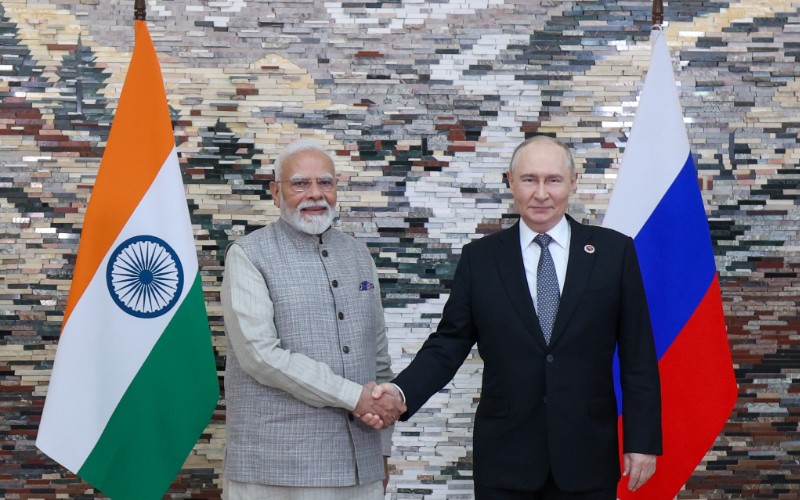 PM Modi meets Russian President Vladimir Putin on the sidelines of the 26th SCO Summit in Bishkek, Kyrgyzstan, August 31, 2026. Photo: PIB India
From ‘not an era of war’ to ‘end of war’
Modi’s latest comments also echo the message he delivered to Putin during their meeting on the sidelines of the SCO summit in Samarkand in 2022.
At that meeting, Modi had told Putin that “this is not an era of war” and stressed the importance of dialogue and diplomacy.
“India is an advocate of permanent peace in this region. Our stand is very clear - this is not an era of war. This is the time to come together against those challenges which threaten humanity. Therefore, India believes in diplomacy and dialogue,” Modi had said.
He had also invoked India’s traditions associated with Mahatma Gandhi and Gautama Buddha while explaining New Delhi’s emphasis on peaceful resolution of disputes.
In Bishkek, Modi again framed the issue in terms of the broader human cost of prolonged conflict.
“Every day of war sets humanity back, and we must work toward ending hostilities,” he said, adding that “the land of Gandhi and the land of Buddha share a single message: the path of peace.”
India’s balancing act across conflict zones
The simultaneous focus on West Asia and Ukraine underscores the range of diplomatic issues confronting India as it engages with major Eurasian powers.
New Delhi maintains longstanding defence, energy and strategic ties with Moscow while deepening economic and technological cooperation with Western countries.
At the same time, its relationship with Iran remains important for connectivity, energy security and access to Central Asia.
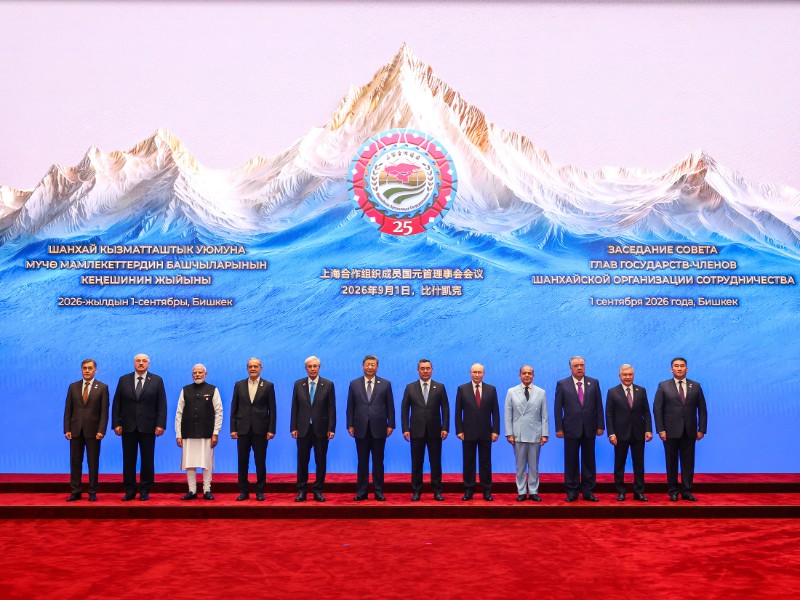 PM Modi in a group photograph at the 26th SCO Summit in Bishkek, Kyrgyzstan, September 01, 2026. Photo: PIB India
The Modi-Pezeshkian meeting also comes as Iran continues to navigate its relations with the United States and other regional powers amid persistent tensions in West Asia.
For Tehran, India’s ability to maintain communication with multiple sides gives New Delhi a potentially important diplomatic channel.
For India, the emphasis remains on dialogue, regional stability, protection of its citizens and secure movement of energy and trade.
The two leaders’ discussion linked immediate concerns over West Asian hostilities with longer-term questions surrounding India-Iran economic cooperation, Chabahar connectivity and maritime security.
Modi-Putin talks add another layer to SCO diplomacy
Modi’s separate meeting with Putin in Bishkek further widened the diplomatic significance of his SCO engagements.
India has consistently advocated dialogue between Russia and Ukraine while continuing its relationship with Moscow.
The Prime Minister’s latest remarks again emphasised ending hostilities rather than allowing the conflict to become prolonged.
The bilateral meeting took place ahead of Putin’s expected visit to New Delhi for the BRICS summit, adding significance to discussions between the two leaders at the SCO gathering.
Support Our Journalism
We cannot do without you.. your contribution supports unbiased journalism
IBNS is not driven by any ism- not wokeism, not racism, not skewed secularism, not hyper right-wing or left liberal ideals, nor by any hardline religious beliefs or hyper nationalism. We want to serve you good old objective news, as they are. We do not judge or preach. We let people decide for themselves. We only try to present factual and well-sourced news.
Support objective journalism for a small contribution.


