


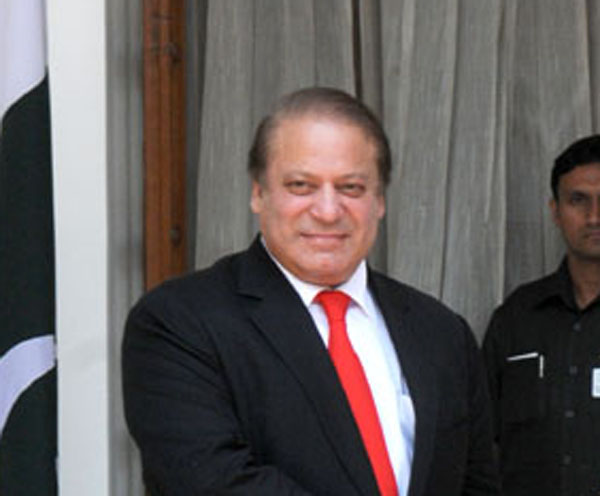
IFAD President to discuss poverty alleviation with Pak PM and senior govt officials
Nwanze will also meet with Mohammad Ishaq Dar, Minister of Finance, Revenue, Economic Affairs, Statistics and Privatization; Sartaj Aziz, Adviser to the Prime Minister on National Security and Foreign Affairs; and Sikandar Hayat Khan Bosan, Minister for National Food Security and Research.
In Pakistan, an estimated 60 million people are living below the poverty line. They are located mostly in rural areas. Vision 2025 -- the Government’s national poverty reduction strategy, is aimed at reducing poverty by half by 2025 and lifting Pakistan to an upper middle-income country.
“IFAD is committed to supporting the Government of Pakistan to tackle rural poverty,” said Nwanze. “In order to end hunger, we have to promote sustainable agriculture, which means investing in rural smallholder producers,” he added.
Agriculture is the largest sector in Pakistan’s economy, accounting for 42.3 per cent of total employment and the primary source of livelihood of the rural poor. But, in the country’s many mountainous areas, rugged terrain and ecological fragility make agricultural production and access to markets difficult for the isolated communities who live there.
IFAD is recognized by the Government of Pakistan for its strong commitment to rural poverty alleviation and its ability to implement development projects in the most difficult and challenging areas of the country, such as Gilgit-Baltistan, AJK, Baluchistan and southern Punjab.
IFAD financing in Pakistan is focused mainly on promoting the sustainable economic transformation of the rural poor and ultra- poor households by:
building assets, providing vocational training, access to microfinance and technical assistance
building institutional capacity and links to markets
strengthening policy and institutions for better community-led development
building households’ resilience to achieve sustainable nutrition and food security
IFAD has been working in Pakistan since 1978. It has provided more than $604 million in financing for 26 projects, benefiting more than 2 million households.
Support Our Journalism
We cannot do without you.. your contribution supports unbiased journalism
IBNS is not driven by any ism- not wokeism, not racism, not skewed secularism, not hyper right-wing or left liberal ideals, nor by any hardline religious beliefs or hyper nationalism. We want to serve you good old objective news, as they are. We do not judge or preach. We let people decide for themselves. We only try to present factual and well-sourced news.
Support objective journalism for a small contribution.


