


 Clean Energy
Global wake-up call in Brazil: Guterres pushes for immediate clean energy transformation
UN Secretary-General António Guterres is continuing his campaign to accelerate the global switch from fossil fuels to clean energy – “the cheapest source of new electricity in nearly every country.”
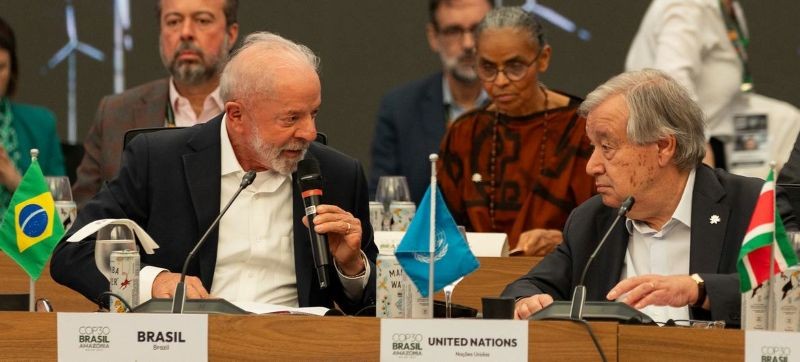
The latest push came on Friday in remarks to the Energy Transition Roundtable in Belém, Brazil, held just days before the formal opening of the COP30 climate change conference.
“The fossil fuel age is ending. Clean energy is rising. Let us make the transition fair, fast, and final,” he said.
‘Renewables revolution’ underway
The UN chief told world leaders that “the global energy landscape is changing at lightning speed.”
Green energy sources accounted for 90 per cent of new power capacity last year, while investment in them reached $2 trillion, or $800 billion more than fossil fuels.
“The renewables revolution is here,” he said. “But we must go much faster – and ensure all nations share the benefits.”
The international community must ensure a “just, orderly and equitable” transition from fossil fuels, triple renewable energy capacity and double energy efficiency by the end of the decade.
Keep global warming in check
However, countries are falling short. Even if new national climate action plans are implemented, global temperature rise is still expected to exceed 2 degrees Celsius above the pre-industrial era.
“That means more floods, more heat, more suffering – everywhere,” he warned.
“To return below 1.5 degrees by century’s end, global emissions must fall by almost half by 2030, reach net zero by 2050, and go net negative afterwards.”
Focus on policies and people
The Secretary-General outlined five areas for action, calling first for countries to “align laws, policies and incentives with a just energy transition; and eliminate fossil fuel subsidies that distort markets and lock us into the past.”
Governments must “put people and equity at the centre of the transition” and support workers and communities who depend on oil, coal and gas for their living, including through training and new opportunities.
This is particularly the case for young people and women.
Support developing countries
“Invest in grids, storage, and efficiency. Renewables are surging, infrastructure must catch up – fast,” he continued.
As “technology must be part of the solution, not a new source of strain,” clean energy must power all new electricity demand “including from the data centres driving the AI revolution.”
His final point stressed the need to “unlock finance at scale for developing countries,” noting that Africa receives just two per cent of global clean energy investment.
“We must support developing countries to implement their commitment to transition away from fossil fuels: through stronger cooperation, investment and technology transfer – and calibrated to different capacities and dependencies,” he said.
Support Our Journalism
We cannot do without you.. your contribution supports unbiased journalism
IBNS is not driven by any ism- not wokeism, not racism, not skewed secularism, not hyper right-wing or left liberal ideals, nor by any hardline religious beliefs or hyper nationalism. We want to serve you good old objective news, as they are. We do not judge or preach. We let people decide for themselves. We only try to present factual and well-sourced news.
Support objective journalism for a small contribution.


