


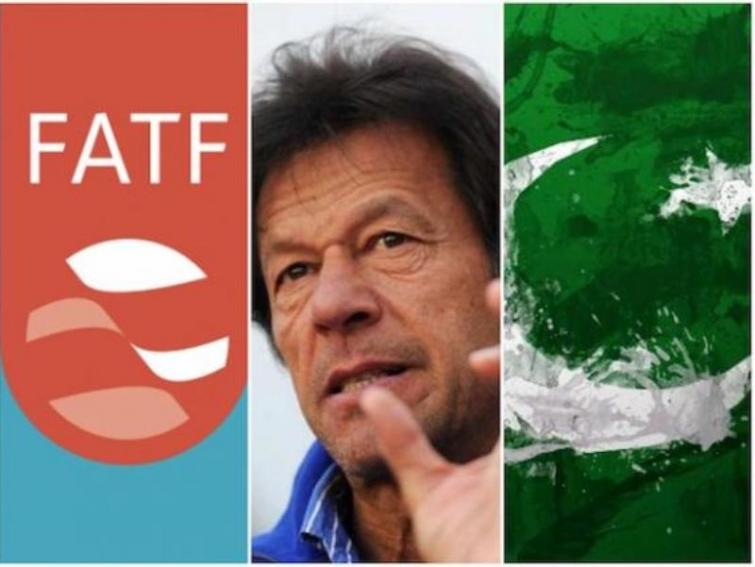
 Pakistan I FATF
FATF: Pakistan leaves loopholes in small saving schemes to help terror groups
A geo-political expert said Pakistan has left a loophole deliberately in the small saving schemes to help terrorist groups, many of whom enjoy the patronage of the state, to dodge the Financial Action Task Force (FATF) scrutiny.
Fabien Baussart wrote in his blog post published in the Times of Israel: "Small savings in Pakistan generate over Rs 4 trillion in over seven million accounts held by individuals, equal to 28 percent of all bank deposits. The possibility of terrorist groups and individuals holding these accounts remains quite high, given the number of terror groups and cadres in Pakistan.
"By Prime Minister Imran Khan’s own admission, a couple of years ago Pakistan was home to over 40000 terrorists."
"For the last few years, the global money laundering and terrorist financing watchdog, the Financial Action Task Force (FATF), has been asking Pakistan to comply with international standards and rules of anti-money laundering and anti-terrorist financing laws and regulations.
"Although Pakistan has complied with some of the conditions set by FATF, with great reluctance, there is one area which has not paid due care to plug the terrorist financing–small savings accounts," he wrote.
"The problem lies with the new rules–National Savings Schemes (AML and CFT) Rules, 2019, which calls for scrutiny of all account holders–seven million of them–in six months and risk profiling of the account holders in a similar period," the writer added.
Baussart said the All Pakistan National Savings Officers Association (APNSOA) has flagged several reasons why Pakistan was unlikely to fulfill the FATF obligations regarding the small savings sector.
"The first is the problems in identifying the consumers as a mechanism for doing so has not been put in place despite such a tight, and almost impossible, deadline. To illustrate, printed copies of KYC (Know Your Customer) were not available, till April this year, in any of the National Savings Centres," read the blog post.
Support Our Journalism
We cannot do without you.. your contribution supports unbiased journalism
IBNS is not driven by any ism- not wokeism, not racism, not skewed secularism, not hyper right-wing or left liberal ideals, nor by any hardline religious beliefs or hyper nationalism. We want to serve you good old objective news, as they are. We do not judge or preach. We let people decide for themselves. We only try to present factual and well-sourced news.
Support objective journalism for a small contribution.


