September 25, 2026 12:34 pm (IST)

Follow us:


Digital economy has potential to drive ASEAN integration: IT leaders
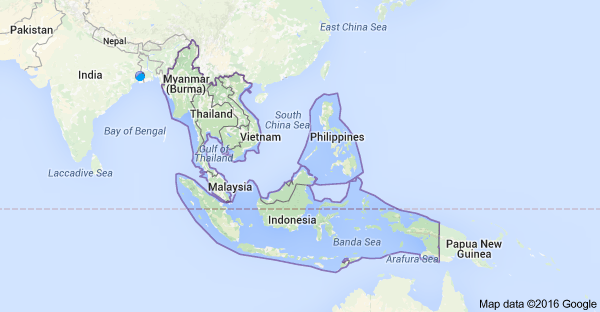
Kuala Lumpur, Jun 1 (IBNS): In a session on the emergence of the digital economy in South-East Asia at the 25th World Economic Forum on ASEAN, global and regional IT leaders said that countries in the region could miss out on major opportunities.
They urged governments to collaborate on harmonizing regulations and liberalizing the sector.
“What is happening is that the uptake of digital services is going so fast and is bringing down borders between these different nations,” said Sigve Brekke, President and Chief Executive Officer of Norway’s Telenor Group.
Telenor, among other investments in the region, holds a mobile operator’s licence in Myanmar. “But I don’t see ASEAN countries taking part in this. I am afraid that ASEAN is losing out. There are too many big words about digital opportunities, but I don’t see the action,” Brekke added.
In addition to coordinating policy frameworks, the region needs to foster start-ups and create products to meet the demand for digital services, Brekke continued. Local content could include information for farmers, which would allow them to cut out middlemen, and for use in education. Cashless payment systems should also be possible.
Brekke’s message to policy-makers was: “The revolution is coming extremely fast. There are great opportunities for ASEAN companies to take charge of the future. Get your act together – the sooner the better.”
There are indications that ASEAN countries are waking up to the opportunities of the digital economy and the priorities for achieving it. “For many years, South-East Asia has had an insecurity complex relative to China and India,” said Nick Nash, Group President of Garena in Singapore. “But we are beginning to see home-grown companies. On the one hand, I appreciate the need for the proverbial kick in the pants, but there are rays of light.”
He added: “There really is strong potential here if we build it the right way.”
Nash noted that countries in the region, notably Singapore and Thailand, have bolstered their educational institutions. “We are improving from a human capital standpoint. That is a strong check mark.”
In addition, some countries have been implementing pro-growth IT policies. Vietnam has kept IT costs low, significantly boosting the proliferation of smartphones – an example of “how a lower-income country can get this policy right”. According to Nash, another challenge ASEAN economies need to address is the liberalization of foreign ownership limits.
“No matter how you define the digital economy, government and policy play an important role” in making it happen, Yasmin Mahmood, Chief Executive Officer of the Malaysia Digital Economy Corporation (MDEC), noted.
While the Fourth Industrial Revolution will be driven by business, she observed, young people in South-East Asia, where 40% of the population is below 30 years old, will be creating the innovations from the cutting-edge technologies.
Government policy has to focus on schools and invest in education to turn young digital natives into digital producers, Yasmin stressed.
Inclusion is important. But this does not just involve access to the internet; it also entails delivering faster transmission speeds.
According to Emirsyah Satar, Chairman of the Indonesian e-commerce group Matahari Mall, a user in Papua New Guinea downloads files 25 times more slowly than someone in Jakarta. “That is the challenge for the government.”
Support Our Journalism
We cannot do without you.. your contribution supports unbiased journalism
IBNS is not driven by any ism- not wokeism, not racism, not skewed secularism, not hyper right-wing or left liberal ideals, nor by any hardline religious beliefs or hyper nationalism. We want to serve you good old objective news, as they are. We do not judge or preach. We let people decide for themselves. We only try to present factual and well-sourced news.
Support objective journalism for a small contribution.



Latest Headlines
Shehbaz Sharif faces Hafiz Saeed question at UN, refuses to respond
Fri, Sep 25 2026
Ex-Pakistan PM Imran Khan’s sisters detained: Uzma, Noreen held for 30 days ahead of PTI protest
Mon, Sep 21 2026
Pakistan: Imran Khan’s sister Aleema Khan detained for 30 days ahead of PTI protest
Sun, Sep 20 2026
Pakistan: 14 school children, including nine girls, suffer burn injuries after bottles containing an acidic chemical explode
Sat, Sep 19 2026
21 killed, 78 injured in Pakistan mosque blast near police compound
Fri, Sep 18 2026