


Despite progressive laws, gender-based violence ‘pervasive’ in South Africa, UN expert warns
“The violence inherited from apartheid still resonates profoundly in today’s South African society dominated by deeply entrenched patriarchal attitudes towards the role of women in society which makes violence against women and children an almost accepted social phenomenon” said the UN Special Rapporteur on violence against women, Dubravka Šimonovic, today, in a press release after her first official visit to the country, from December 4 to 11.
Stressing the need for change, she said “despite an arsenal of progressive laws and policies to deal with gender-based violence put very ably in place, there has been little implementation, hence impact and gender-based violence continue to be pervasive and at the level of systematic women’s human rights violation.”
The independent expert said that different forms of violence against women and girls existed throughout the country, including femicides, or gender-related killing of women; domestic violence; and gang-rapes, which led to lethal consequences.
With regard to the high number of gender-related killings, the rights expert encouraged South Africa to establish a ‘femicide watch,’ whereby data and information on each case would be carefully analysed to determine any failure in the response’s chain to protect women. The number of killings would also be released annually – helping to develop and bolster further preventive measures.
In the context of domestic violence, Šimonovic called for risk assessment and crisis management along with orders that would guarantee immediate protection.
Warning that girls as young as eight years old can be forced into marriage, she elaborated on reports that Ukuthwala continued to be practiced in some rural areas. The UN expert added that the practice was associated with abduction, kidnapping, assault and rape.
“It needs to be clearly stated that such practice violates the constitutional rights to dignity, freedom and security of the person,” she underscored.
Other harmful practices include virginity testing and accusations of witchcraft.
She said that there was insufficient specialized training for all front-line responders of gender-based violence, namely the police, prosecution office and courts. The expert called for better police awareness to protect women victimized in domestic partnerships; to manage the reporting and investigation of sexual offenses; and to refer the sexually abused to medical services.
Šimonovic cautioned against secondary traumatization, which could occur when hearings were conducted in a non-victim friendly manner. She outlined that while mandated by the Sexual Offenses Act, victim-friendly rooms at police stations were lacking, leaving women without adequate security in the presence of perpetrators.
The expert also highlighted the need for gender-sensitive education for magistrates – pointing to judiciary gender stereotyping, which leads to perpetrator leniency. She expressed concern that there were no established risk assessment and crisis management. The rapporteur pointed out that protection orders were not available immediately and, citing human or financial resource shortages, even when issued, were often not adequately followed-up by police.
During her eight-day visit, Šimonovic met with Government officials at the federal and provincial levels; representatives of civil society organizations; and academics, including in the Diepsloot and Khayelitsha townships. She also visited a women’s prison, met with numerous women survivors of gender-based violence.
In 2016, the Special Rapporteur will present a comprehensive report with her conclusions and recommendations to the UN Human Rights Council.
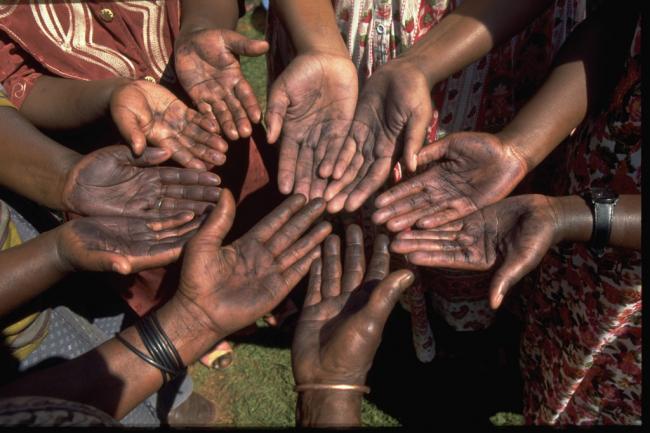
Photo: UNICEF/Giacomo Pirozzi
Support Our Journalism
We cannot do without you.. your contribution supports unbiased journalism
IBNS is not driven by any ism- not wokeism, not racism, not skewed secularism, not hyper right-wing or left liberal ideals, nor by any hardline religious beliefs or hyper nationalism. We want to serve you good old objective news, as they are. We do not judge or preach. We let people decide for themselves. We only try to present factual and well-sourced news.
Support objective journalism for a small contribution.


