


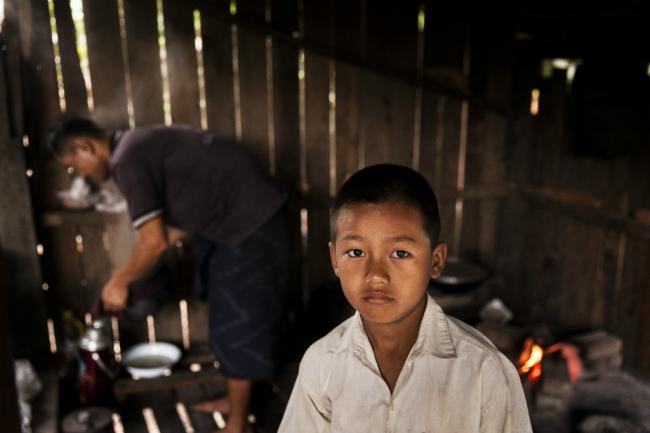
Despite progress, life for children in Myanmar's remote areas remains a struggle, UNICEF warns
“Myanmar faces a real challenge in ensuring that children everywhere – and not just in urban areas – gain from the country's rapid development,” said Justin Forsyth, the Deputy Executive Director of the UN Children's Fund (UNICEF).
“There is a risk that many children and their families are excluded. This is especially the case for poorer children living in remote areas or trapped in situations of tension and conflict,” he added.
The Child Alert report issued on Tuesday by UNICEF attributed unresolved conflict, poverty and under-development to that situation.
The report stressed that investing some of the financial dividends earned from Myanmar's recent economic growth, in services that will benefit children and youth, can help steer the country towards a more prosperous and stable future.
The report notes that social and economic measures undertaken by the Government since 2010 are beginning to strengthen the systems that boost children's health, education and protection.
A draft child law, and increased public funding for immunization programmes and education have demonstrated a stronger commitment to furthering children's rights in the country, UNICEF said.
However, the agency pointed out that life for many children in Myanmar remains a struggle: up to 150 children under the age of five die each day, while nearly 30 per cent suffer from moderate or severe malnutrition. More than half of all children live below the poverty line.
In Rakhine state, 120,000 internally displaced people – including many ethnic Rohingyas – live in camps as a result of inter-communal conflict that erupted in 2012. Violence surged again last year following attacks on border guard posts.
In remote Kachin, Shan and Kayin states and other border areas, recurrent clashes between the Myanmar military and Ethnic Armed Organisations continue to drive families from their homes. Civilians find themselves at risk from poverty, statelessness, and trafficking, while having only limited access to essential health and education services.
The report calls for improved humanitarian access to an estimated 2.2 million children affected by violence, and for an end to rights violations including the use of children as soldiers.
The report was released ahead of the second national Peace Conference in Myanmar on May 24, which UNICEF says is an opportunity to commit to stronger protection of children from conflict.
Photo: UNICEF/Brown
Source: www.justearthnews.com
Support Our Journalism
We cannot do without you.. your contribution supports unbiased journalism
IBNS is not driven by any ism- not wokeism, not racism, not skewed secularism, not hyper right-wing or left liberal ideals, nor by any hardline religious beliefs or hyper nationalism. We want to serve you good old objective news, as they are. We do not judge or preach. We let people decide for themselves. We only try to present factual and well-sourced news.
Support objective journalism for a small contribution.


