


Countries need to step up search of disappeared persons- UN human rights group
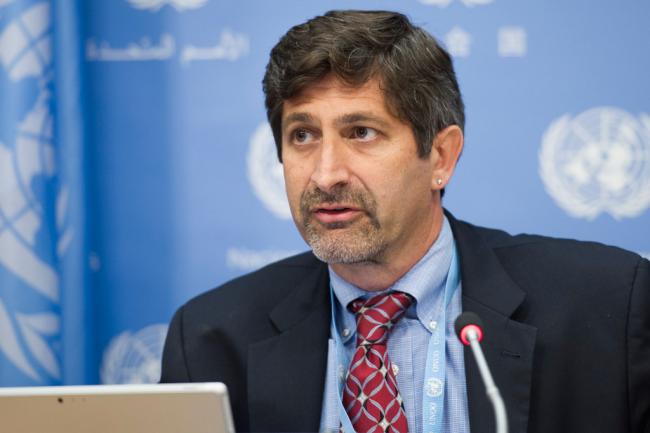
“One person is probably being disappeared in one of your countries as we are talking,” Ariel Dulitzky, Chair of the Working Group, told the 47-members of the UN Human Rights Council meeting in Geneva, Switzerland.
“The time for words and promises is over. It is now the time for action on behalf of relatives to support their fight for truth, justice, reparation and memory,” he said, adding that it is very worrisome that, in 2015, the Working Group continues daily to receive new cases of enforced disappearances.
Dulitzky also presented the Working Group’s reports on its visit to the Western Balkans, the follow-up to the recommendations made on past visits to Mexico and Timor-Leste and the study on enforced disappearances and economic, social and cultural rights.
The Group also examined 64 reported cases of enforced disappearances that have occurred in the last few months – concerning China, Egypt, Kenya, Pakistan, Syria and the United Arab Emirates – as well as more than 381 cases, including newly-reported cases and updated information on previously accepted ones.
Other countries whose cases were examined during the session are: Albania, Algeria, Argentina, Bahrain, Bangladesh, Cambodia, Chile, Democratic People’s Republic of Korea, Democratic Republic of the Congo, Ecuador, El Salvador, Eritrea, France, Gambia, Georgia, Greece, Iran, Jordan, Libya, Mexico, Morocco, Peru, Philippines, Senegal, Tajikistan, Tunisia, Turkey, Ukraine, Uzbekistan, Yemen and Zimbabwe.
The five-member Working Group was established by the UN Commission on Human Rights in 1980 to assist families in determining the fate and whereabouts of disappeared relatives. It endeavours to establish a channel of communication between the families and the governments concerned, to ensure that individual cases are investigated, with the objective of clarifying the whereabouts of persons who, having disappeared, are placed outside the protection of the law.
The Group also announced its visit to Sri Lanka from 9 to 18 November, and also decided to prepare next year follow-up reports on the recommendations made on its past visits to the Republic of Congo and Pakistan.
UN Photo/Mark Garten
Support Our Journalism
We cannot do without you.. your contribution supports unbiased journalism
IBNS is not driven by any ism- not wokeism, not racism, not skewed secularism, not hyper right-wing or left liberal ideals, nor by any hardline religious beliefs or hyper nationalism. We want to serve you good old objective news, as they are. We do not judge or preach. We let people decide for themselves. We only try to present factual and well-sourced news.
Support objective journalism for a small contribution.


