


Canada: Scientists discover world's oldest sketch in South Africa cave
South Africa, Sept 13 (IBNS): Scientists have discovered a 73,000-year-old sketch in a South African cave, media reports said.
The researchers in a report released by the journal, 'Nature', on Wednesday said the sketch resembling a hashtag was believed to be the world's oldest known drawing by the humans.
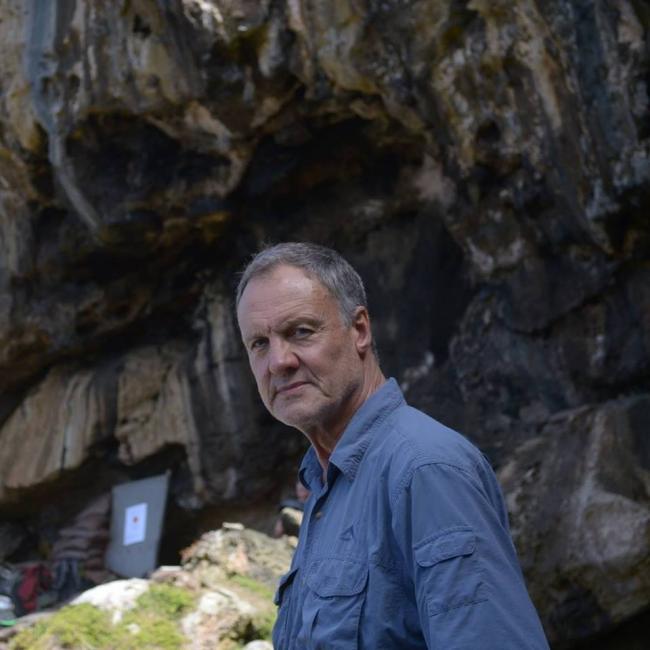
Christopher Henshilwood of the University of Bergen in Norway said this sketch was created with a sharpened flake of ochre, a pigment widely used in the ancient world.
The sketch with six red lines crossed by three other curved lines appeared on a small flake of mineral crust proving that designs on various surfaces with different techniques could be produced by early humans in southern Africa.

The sketch, said the researchers, was believed to be part of a larger drawing because lines reaching the edge were cut off abruptly there.
The production of the hashtag design over the past 100,000 years in rock art and paintings proved that the sketch is probably not just a collection of random scratchings.
Other artifacts with similar patterns engraved were found from the cave, Henshilwood said and added, "It almost certainly had some meaning to the maker, and probably formed a part of the common symbolic system understood by other people in this group."
These findings, said Henshilwood, were also a proof that early humans could store information outside the brain and that early members of our species behaved essentially like us before they left Africa for Europe and Asia.
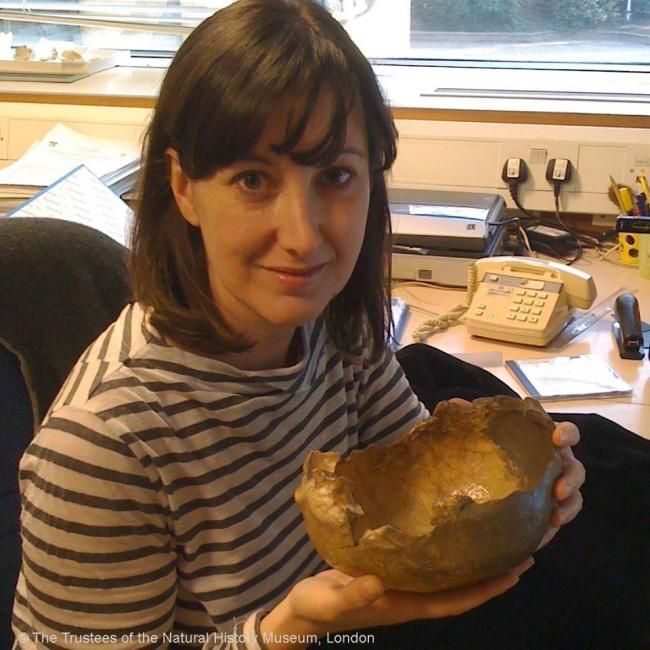
Silvia Bello, a researcher at the Natural History Museum in London who didn't participate in the study, called the finding important.
"It further shows how rich and complex human behaviour already was 73,000 years ago," she said in an email.
(Reporting by Asha Bajaj)
Images: Christopher Henshilwood/Facebook
Blombos Cave silcrete flakes/Courtesy of Journal Nature
Silvia Bello/Facebook
Support Our Journalism
We cannot do without you.. your contribution supports unbiased journalism
IBNS is not driven by any ism- not wokeism, not racism, not skewed secularism, not hyper right-wing or left liberal ideals, nor by any hardline religious beliefs or hyper nationalism. We want to serve you good old objective news, as they are. We do not judge or preach. We let people decide for themselves. We only try to present factual and well-sourced news.
Support objective journalism for a small contribution.


