


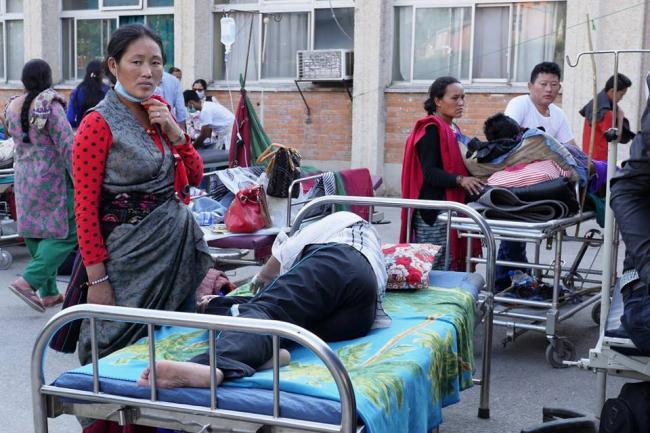
At regional UN meeting, south-east Asian countries agree to establish dedicated health emergency preparedness fund
“The new funding stream for emergency preparedness […] is an expression of the solidarity shared within the region, as well as recognition that preparedness is less costly than response,” the UN World Health Organization’s (WHO) Regional Director for the South-East Asia Region, Dr. Poonam Khetrapal Singh, said in a news release on Friday.
Noting that the region has suffered numerous health emergencies due to earthquakes, cyclones, and floods, and that it is threatened by a range of diseases such as the Severe Acute Respiratory Syndrome (SARS), Middle East respiratory syndrome coronavirus (MERS-CoV), pandemic influenza, and Zika virus, the UN health agency said that the new fund will allow countries to invest in infrastructure and human resources to enhance preparedness.
The release further added that establishing the joint funding stream under the South-East Asia Regional Health Emergency Fund was noted by WHO’s regional member countries as a key priority for its regional health agenda.
“Enhancing health security is a critical component of our public health mission, and a core part of WHO’s work in the South-East Asia Region,” Dr Khetrapal Singh said.
The decision on the fund was made at the 610th session of the agency’s Regional Committee for South-East Asia; the highest decision-making body for WHO in the region.
Furthermore, the Regional Committee adopted resolutions calling for the promotion of physical activity, as well as on strengthening the region’s health workforce, considered vital to achieving universal health coverage.
According to WHO, the density of health care providers in the south-east Asia region is 12.5 per 10,000 population, far less than its recommended minimum of 44.5 per 10,000 population.
“Expanding health workforces across the region is one part of what the countries are trying to achieve, but we also need to increase staff retention, particularly in rural areas, as well as provide further training to health workers to enhance their skills,” noted Dr Khetrapal Singh.
The Regional Committee is made up of 11 member countries – Bangladesh, Bhutan, the Democratic People's Republic of Korea, India, Indonesia, Maldives, Myanmar, Nepal, Sri Lanka, Thailand and Timor-Leste – and has been holding its meeting in the Sri Lankan capital,
Photo: WHO/A. Bhatiasevi
Source: www.justearthnews.com
Support Our Journalism
We cannot do without you.. your contribution supports unbiased journalism
IBNS is not driven by any ism- not wokeism, not racism, not skewed secularism, not hyper right-wing or left liberal ideals, nor by any hardline religious beliefs or hyper nationalism. We want to serve you good old objective news, as they are. We do not judge or preach. We let people decide for themselves. We only try to present factual and well-sourced news.
Support objective journalism for a small contribution.


