


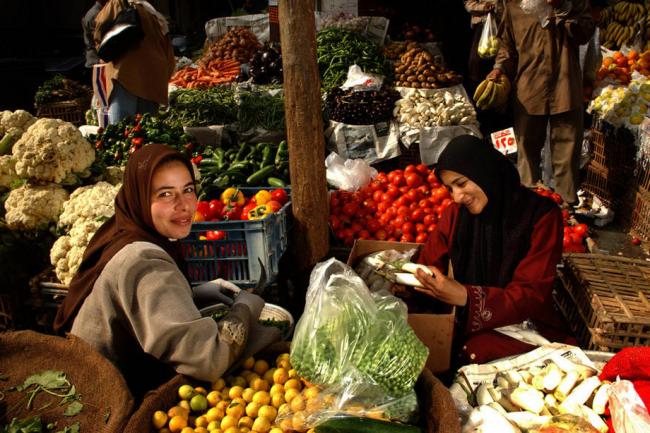
An age-old model of healthy living, Mediterranean diet is now under threat: UN
Such is the finding of a new report presented on Thursday at EXPO Milano by the FAO and the International Centre for Advanced Mediterranean Agronomic Studies (CIHEAM), a group of 13 countries cooperating in the fields of agriculture, food, fisheries and rural territories in the region.
“The Mediterranean diet is nutritious, integrated in local cultures, environmentally sustainable and it supports local economies,” explained Alexandre Meybeck, Coordinator of FAO’s Sustainable Food Systems Program.
He said, “This is why it’s essential that we continue to promote and support it.”
The Mediterranean diet’s focus on vegetable oil, cereals, vegetables and pulses, and its moderate intake of fish and meat, has been associated with long and healthy living.
Because it is largely plant-based, the diet is comparatively light on the environment, requiring fewer natural resources than animal production.
But globalization, food marketing and changing lifestyles – including in the roles women play in society – are altering consumption patterns in the Mediterranean, away from fruits and legumes towards more meat and dairy products, according to the report.
With products being increasingly sourced from outside the region and diverse local landscapes being transformed by monoculture production, traditional food systems are affected by these shifting dietary habits.
Tourism, urban development, depletion of natural resources, as well as a loss of traditional knowledge all contribute to the rapid diminishing of genetic diversity in crops and animal breeds across the Mediterranean, the report warns.
While Southern countries continue to struggle with undernutrition, a number of others throughout the region are burdened with obesity and overweight.
At the same time, the region as a whole is seeing a rise in chronic diet-based diseases that increasingly lead to disability and death.
In this context, policy makers, researchers and the food industry need to pay more attention to increasing food consumption and production in ways that preserve local resources and knowledge.
Awareness campaigns should drive up consumer demand for traditional Mediterranean products, with an eye on better integrating current food trends and consumer habits with the use of local products across the region.
In support of such goals, CIHEAM on Thursday issued the Med Diet EXPO Call to Action, pushing for efforts to preserve Mediterranean agro-ecosystems, make the region’s food systems more sustainable, and ensure food security and nutrition for a growing population.
FAO and CIHEAM are jointly developing case studies on ways to increase production sustainably and promote adherence to traditional diet patterns.
The Call to Action also details a three-year pilot project in CIHEAM countries, along with special guidelines for improving the sustainability of diets in the Mediterranean.
Photo: FAO/Ami Vitale
Support Our Journalism
We cannot do without you.. your contribution supports unbiased journalism
IBNS is not driven by any ism- not wokeism, not racism, not skewed secularism, not hyper right-wing or left liberal ideals, nor by any hardline religious beliefs or hyper nationalism. We want to serve you good old objective news, as they are. We do not judge or preach. We let people decide for themselves. We only try to present factual and well-sourced news.
Support objective journalism for a small contribution.


