Women’s Reservation Bill fails in Lok Sabha as government falls short of two-thirds majority
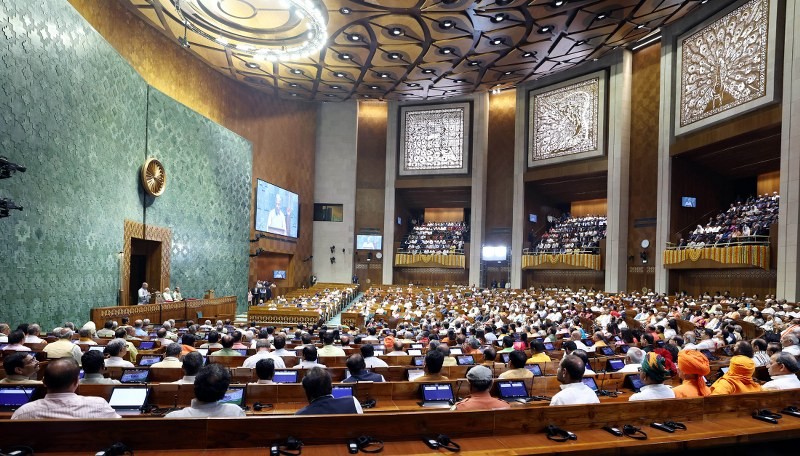
The Centre on Friday failed to secure the required two-thirds majority in the Lok Sabha to pass the Constitution (131st Amendment) Bill, 2026, which sought to provide 33% reservation for women in Parliament and state assemblies.
The bill received 298 votes in favour and 230 against, falling short of the threshold needed for a constitutional amendment.
Following the setback, two related bills — including one on delimitation and another proposing an increase in Lok Sabha seats — were not put to a vote.
The government maintained that these measures were “intrinsically linked” to the women’s reservation proposal.
The debate in the Lok Sabha stretched late into Thursday night and resumed on Friday, with the government making a strong case for the legislation.
Government’s stand
Leading the charge, Prime Minister Narendra Modi urged MPs to rise above political differences and support the bill.
“Do not see this from a political lens; this is in national interest,” he said, assuring that southern states would not face any injustice due to the proposed increase in seats.
Union Home Minister Amit Shah echoed the sentiment, stating that the representation of southern states would be protected or may even see a marginal increase if the Lok Sabha expands from 543 to around 816 seats.
Both leaders accused the Opposition of obstructing a historic opportunity to ensure women’s representation.
Opposition’s criticism
Leader of the Opposition Rahul Gandhi strongly opposed the bill, particularly its linkage with delimitation.
“This is not a women’s bill… it is an attempt to change the country’s electoral map, using women as a cover,” he alleged.
He further claimed that the move was aimed at bypassing a caste census and limiting representation for Other Backward Classes (OBCs).
What happens next
With the bill failing to pass, the future of women’s reservation — especially in its current linked form with delimitation — remains uncertain, setting the stage for a renewed political battle over representation, census data, and electoral boundaries.
Support Our Journalism
We cannot do without you.. your contribution supports unbiased journalism
IBNS is not driven by any ism- not wokeism, not racism, not skewed secularism, not hyper right-wing or left liberal ideals, nor by any hardline religious beliefs or hyper nationalism. We want to serve you good old objective news, as they are. We do not judge or preach. We let people decide for themselves. We only try to present factual and well-sourced news.
Support objective journalism for a small contribution.