 Kartarpur Sahib
Where are pilgrims? Exploring the deterrents to visiting Kartarpur Sahib
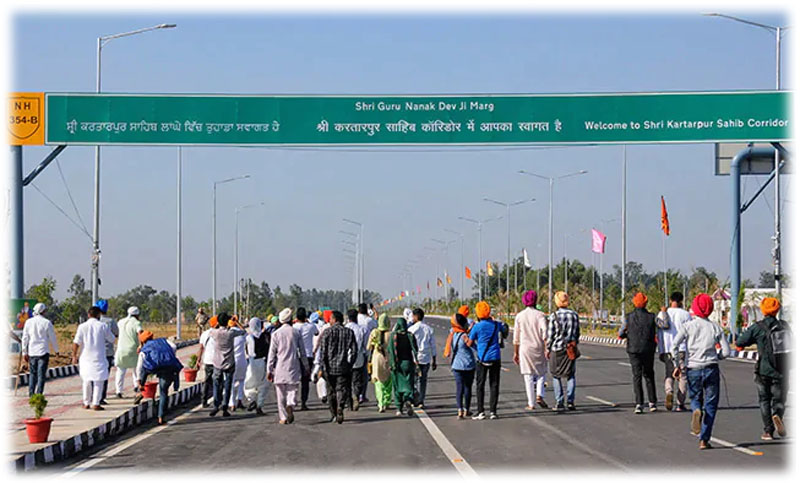
Kartarpur Sahib Gurdwara stands as a testament to the profound spiritual legacy of Sri Guru Nanak Dev Ji.
It’s where the Guru spent the final 18 years of his life, an iconic place of pilgrimage for Sikhs from all corners of the world.
One would expect that the inauguration of the Kartarpur Corridor, heralding a new era of accessibility to this sacred site, would lead to an overwhelming influx of pilgrims.
Yet, the numbers tell a different story. With an average of just 200 daily visitors, the turnout is drastically lower than the anticipated 5,000 devotees per day. Why?
For one, the $20 service fee being levied by Pakistan on every visitor is disheartening. Faith and spirituality shouldn’t come with a price tag, especially when that price is considered exorbitant by many. Devotees are torn between the desire to visit a spiritual haven and the need to manage their finances judiciously.
Moreover, the mandatory passport requirement is another logistical challenge. Although one doesn’t need a visa to travel to Kartarpur Sahib, but a passport and permit is mandatory. In a country like India, a significant proportion of the population does not possess a passport. Their spiritual journey should not be marred by bureaucratic hurdles.
And for those who have passports, the delicate dance of international diplomacy often trickles down to the everyday choices of ordinary citizens, as evidenced by the apprehensions many hold about visiting Pakistan. While the allure of Kartarpur Sahib Gurdwara beckons many, a pervasive fear exists that having a Pakistani stamp in one’s passport might jeopardize future visa applications, especially to coveted destinations like the US and countries within the European Schengen area. This unease, rooted in perceived geopolitical tensions and concerns about stringent visa vetting processes, unfortunately, serves as a deterrent for many who might otherwise embark on a pilgrimage to this sacred site.
In the intertwined realms of spirituality and geopolitics, it is often the simplest gestures that can bridge vast divides. By eliminating the $20 service fee and the passport requirement, Pakistan can send a potent message of goodwill and openness, one that acknowledges and respects the deep-seated spiritual yearnings of devotees. Such steps, although seemingly minimal in the larger panorama of international relations, hold the promise to significantly boost visitor numbers to Kartarpur Sahib Gurdwara, allowing countless more to experience the profound legacy of Sri Guru Nanak Dev Ji, unhindered by financial or bureaucratic barriers.
Support Our Journalism
We cannot do without you.. your contribution supports unbiased journalism
IBNS is not driven by any ism- not wokeism, not racism, not skewed secularism, not hyper right-wing or left liberal ideals, nor by any hardline religious beliefs or hyper nationalism. We want to serve you good old objective news, as they are. We do not judge or preach. We let people decide for themselves. We only try to present factual and well-sourced news.