 AMU
AMU
SC reserves judgement on grant of minority status to Aligarh Muslim University
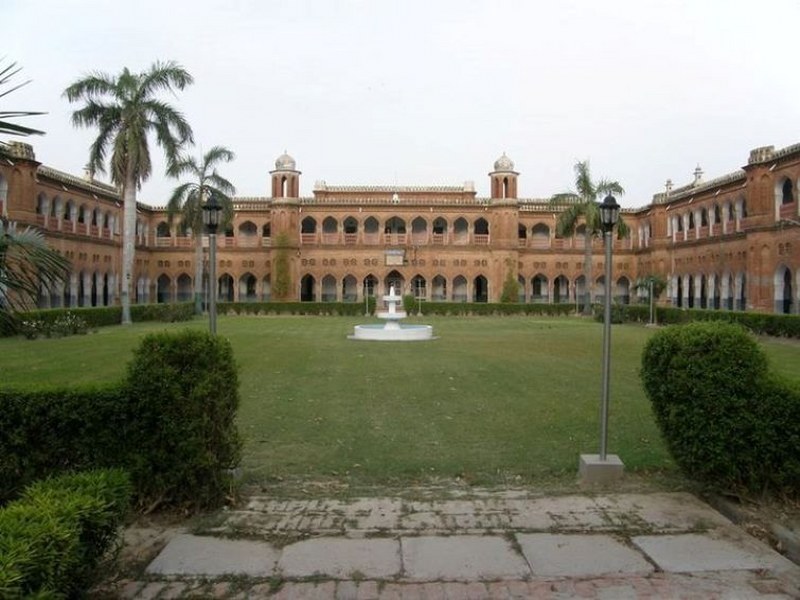
New Delhi/IBNS/UNI: The Supreme Court after eight days of hearing, reserved its judgement on Thursday on the issue of minority status to Aligarh Muslim University (AMU).
A seven-judge Constitution Bench comprising Chief Justice of India (CJI) DY Chandrachud, Justice Sanjiv Khanna, Justice Surya Kant, Justice JB Pardiwala, Justice Dipankar Datta, Justice Manoj Misra and Justice Satish Chandra Sharma after hearing the arguments from all the parties concluded the hearing and reserved its judgement.
The bench has to resolve the issue of whether an educational institution has minority status under Article 30 of the Constitution and whether a centrally-funded university established by parliamentary statute can be designated as a minority institution.
The bench was hearing a reference arising from the 2006 verdict of the Allahabad High Court which held that AMU was not a minority institution.
One issue that arises in the case is whether a university, established and governed by a statute (AMU Act 1920), can claim minority status.
The correctness of the 1967 judgment of the Supreme Court in S. Azeez Basha vs. Union of India (5-judge bench) which rejected the minority status of AMU and the 1981 amendment to the AMU Act, which accorded minority status to the university.
Senior advocates Rajeev Dhavan, and Kapil Sibal representing AMU and the AMU Old Boys' Association, presented their arguments.
Throughout the 8-day-long hearings, several key aspects of deliberation were put before the bench ranging from the interpretation of Article 30 of the Indian Constitution, its interplay with Entry 63 of List 1, the legislative history of AMU, and analysis of the various Amendment Acts from 1951 up to 1981 undertaken to the original 1920 AMU Act.
Support Our Journalism
We cannot do without you.. your contribution supports unbiased journalism
IBNS is not driven by any ism- not wokeism, not racism, not skewed secularism, not hyper right-wing or left liberal ideals, nor by any hardline religious beliefs or hyper nationalism. We want to serve you good old objective news, as they are. We do not judge or preach. We let people decide for themselves. We only try to present factual and well-sourced news.
Support objective journalism for a small contribution.