 Bank Locker Rules
SC asks RBI to frame new bank locker regulations to be followed by all banks across India
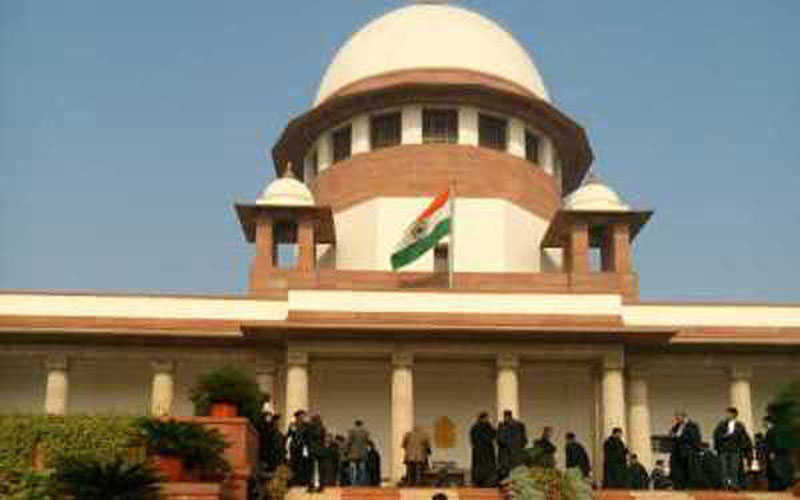
New Delhi/IBNS : The Supreme Court on Friday asked the Reserve Bank of India (RBI) to frame new regulations on locker facility management within six months to bring uniformity in the service across the banks in the country.
The Supreme Court ruled that being the custodians of public property, banks cannot leave their customers in lurch by claiming ignorance of the contents of the locker, said an NDTV report.
"Banks are under the mistaken impression that not having knowledge of the contents of the locker exempts them from (the) liability for failing to secure the lockers in themselves as well. In as much as we are the highest court of the country, we cannot allow the litigation between the bank and locker holders to continue in this vein," the top court observed while hearing a case linked to the United Bank of India's Kolkata branch," the top court made the observation while listening to a case linked to a United Bank of India branch in Kolkata, reported NDTV
A bank customer Amitabh Dasgupta complained that the bank officials had broken open his locker after they claimed that he had failed to pay the fees, which he denied. Dasgupta said the bank officials returned him only two of the seven ornaments he had kept in the locker, the report stated.
According to the report, Dasgupta approached the SC against an order of the National Consumer Disputes Redressal Commission (NCDRC) which agreed with the order of the State Consumer Forum's decision to reduce the Rs 3 lakh compensation to Rs 30,000, ordered by the District Consumer Forum.
The national and state forums decided that "the civil court can decide on the loss of the contents", the report added.
The apex court noted that the banks "cannot impose unilateral and unfair terms on consumers" and imposed a fine of Rs 5 lakh for breaking the locker without informing the customer while ordering that the money can be recovered from the officials involved in the act if they are still in service.
It also ordered the bank to pay Rs 1 lakh as "litigation cost" to the petitioner.
"There is no uniformity in procedure with each bank having its own procedure. What happens if one's locker is broken open by the bank and the locker's contents are disputed? Whose responsibility is it?" the SC questioned while reprimanding the United Bank of India officials.
The Supreme Court said the lockers have to be broken only after informing the customer, and in the presence of authorised officials and an independent witness, the NDTV report informed.
The court said the rules laid by it will be applicable till the RBI frames the new regulations.
Support Our Journalism
We cannot do without you.. your contribution supports unbiased journalism
IBNS is not driven by any ism- not wokeism, not racism, not skewed secularism, not hyper right-wing or left liberal ideals, nor by any hardline religious beliefs or hyper nationalism. We want to serve you good old objective news, as they are. We do not judge or preach. We let people decide for themselves. We only try to present factual and well-sourced news.
Support objective journalism for a small contribution.