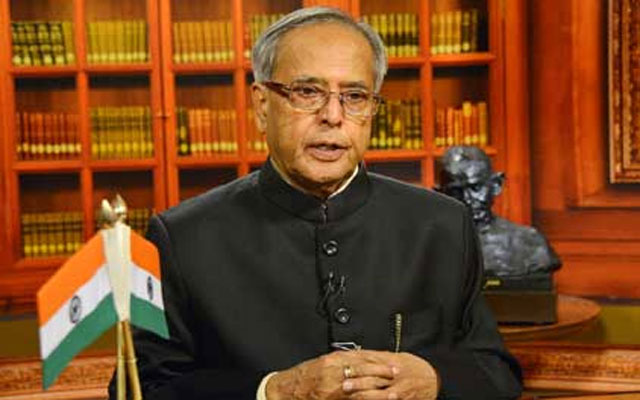
Look east and act rast policies would open new markets of Myanmar, ASEAN and some other countries: President
The President pointed out that the recently passed GST Act will ensure that the transition cost and double taxation is minimized and a common national market will evolve at the advantage of the people involved in business and trade.
While lauding the Government’s new Look East and Act East policies, Mukherjee went deep into the past and recollected that India in the East served as the hub of international trade right from the times of the Egyptian, Mesopotamian and Greek civilizations. He said, it was the Eastern part of India that had fuelled and sustained the European and British revolutions in the 16th and 17th centuries and it was here that the great industrialization dream of Pandit Jawahar Lal Nehru in early post independent India, took shape.
Mukherjee recollected his past duties as a Finance Minister of the country when he had an opportunity to shape and foster policies aimed at revolutionizing the East’s economic growth and he opined that the same may be played out during the next decade or so too.
e urged the entrepreneurs of Bharat Chamber of Commerce to avail the opportunities available and drive the engines of growth and even asked them to utilize the growth models and techniques essentially taking into account the ways and means that ensure equitable growth-the growth that is not limited to the affluent colonies of Kolkata and other State capitals, but one that reaches the villages in the hinterland.
The President even recollected the rich heritage of Eastern India comprising West Bengal, Jharkhand, Bihar, Assam, Orissa and several other States of North East as the land of renaissance and reformation which apart from being the breeding ground of various cultures and religions, witnessed the excellence in indigenous handlooms, setting up of nascent industries around jute, tea, iron ore, coal and petroleum.
At the end Shri Mukherjee opined that India has to continue its march forward and has to sustain the growth rate that it has achieved during the decades of post liberalization and in this work the eastern part of India will have to fire the engine of growth.
Support Our Journalism
We cannot do without you.. your contribution supports unbiased journalism
IBNS is not driven by any ism- not wokeism, not racism, not skewed secularism, not hyper right-wing or left liberal ideals, nor by any hardline religious beliefs or hyper nationalism. We want to serve you good old objective news, as they are. We do not judge or preach. We let people decide for themselves. We only try to present factual and well-sourced news.
Support objective journalism for a small contribution.