 Kashmir Craftsmen
Kashmiri craftsman keep alive the centuries-old 'Palhoor' tradition
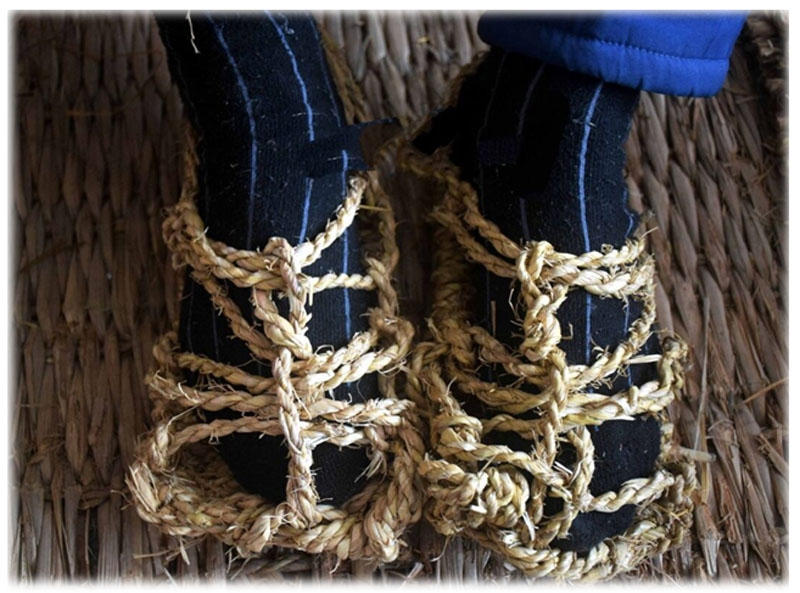
Srinagar: The government is helping a Kashmiri craftsman named Muhammad Yusuf Bhat to keep the centuries-old 'Palhoor' (traditional sleeper) alive in the Kashmir Valley.
Yusuf, a resident of Zanturg village in Khario Pampore, not only uses straw to make shoes, but also many other items such as patij (mats), cups and baskets.
This art was used by the Kashmiri people in ancient times during severe cold season.
When leather and plastic shoes were not available or only well-to-do people could afford to wear such shoes, how did common people protect their feet while walking?
Especially in an area like Kashmir where there is a need to walk on snow in winter.
The fact is that Kashmiri people used to walk even in severe cold and snow and they did not even have leather and plastic boots.
Originally, the people of Kashmir invented locally made shoes made of wood and grass which they used. Shoes made of wood were called kharao and grass shoes were called Palhoor.
Muhammad Yusuf Butt is a resident of Zantrag village in Pulwama district, on the outskirts of Srinagar.
This village is located in Pampore region.
Butt, with the help of the Handicrafts Department of Jammu and Kashmir, has taken up the task of reviving traditional household items made from grass.
They make pulhoor in their house.
Apart from this, they use grass straws to make many other items like mats, covers for cups and baskets.
He learned this art from his ancestors and thanked the department for its efforts to keep this traditional culture alive.
Mohammad Yusuf Butt says that they make mats from paddy grass.
According to him, when modern products for furnishing were not available, people used to sit on the same grass mats in their homes.
He said that a round mat was called "Changaj" while rectangular and large mats were called "Pataj".
Director of Industries and Crafts Department Mahmood Shah says that the industrial policy introduced in 2020 talks about promoting these traditional industries which are close to extinction.
He said that the Kharkhanadar scheme was introduced to revive such dying industries.
He said that these things are now being made in the School of Design. Apart from this, factories are being run in Lake Dal and many other areas, which will help in promoting the extinct industries of Kashmir.
Support Our Journalism
We cannot do without you.. your contribution supports unbiased journalism
IBNS is not driven by any ism- not wokeism, not racism, not skewed secularism, not hyper right-wing or left liberal ideals, nor by any hardline religious beliefs or hyper nationalism. We want to serve you good old objective news, as they are. We do not judge or preach. We let people decide for themselves. We only try to present factual and well-sourced news.
Support objective journalism for a small contribution.