India's next generation launch vehicle GSLV Mk-III successful
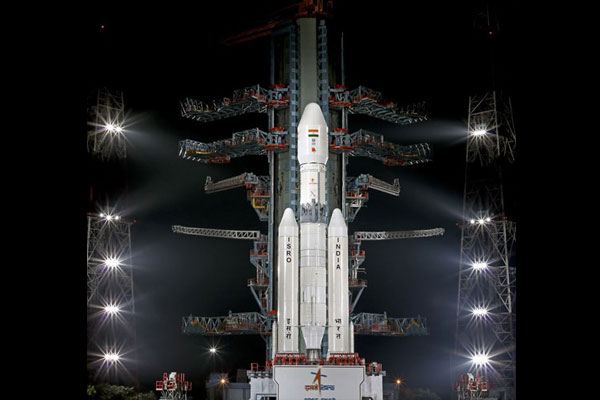
Also known as LVM3-X/CARE, this suborbital experimental mission was intended to test the vehicle performance during the critical atmospheric phase of its flight and thus carried a passive (non-functional) cryogenic upper stage.
The mission began with the launch of GSLV Mk-III at 9:30 am IST from the Second Launch Pad as scheduled and about five and a half minutes later, carried its payload – the 3775 kg Crew Module Atmospheric Re-entry Experiment (CARE) – to the intended height of 126 km.
Following this, CARE separated from the upper stage of GSLV Mk-III and re-entered the atmosphere and safely landed over Bay of Bengal with the help of its parachutes about 20 minutes 43 seconds after lift-off.
Two massive S-200 solid strap-on boosters, each carrying 207 tons of solid propellants, ignited at vehicle lift-off and after functioning normally, separated 153.5 seconds later.
L110 liquid stage ignited 120 seconds after lift-off, while S200s were still functioning, and carried forward for the next 204.6 seconds.
CARE separated from the passive C25 cryogenic upper stage of GSLV Mk-III 330.8 seconds after lift-off and began its guided descent for atmospheric re-entry.
After the successful re-entry phase, CARE module’s parachutes opened, following which it gently landed over Andaman Sea about 1600 km from Sriharikota, there by successfully concluding the GSLV Mk-III X/CARE mission.
With today’s successful GSLV Mk-III X / CARE mission, the vehicle has moved a step closer to its first developmental flight with the functional C25 cryogenic upper stage.
Prime Minister Narendra Modi has congratulated scientists for successful launch of GSLV Mk-III.
“Successful launch of GSLV Mk-III is yet another triumph of brilliance and hardwork of our scientists. Congrats to them for the efforts”, said the Prime Minister.
Support Our Journalism
We cannot do without you.. your contribution supports unbiased journalism
IBNS is not driven by any ism- not wokeism, not racism, not skewed secularism, not hyper right-wing or left liberal ideals, nor by any hardline religious beliefs or hyper nationalism. We want to serve you good old objective news, as they are. We do not judge or preach. We let people decide for themselves. We only try to present factual and well-sourced news.
Support objective journalism for a small contribution.