 India-Uzbekistan
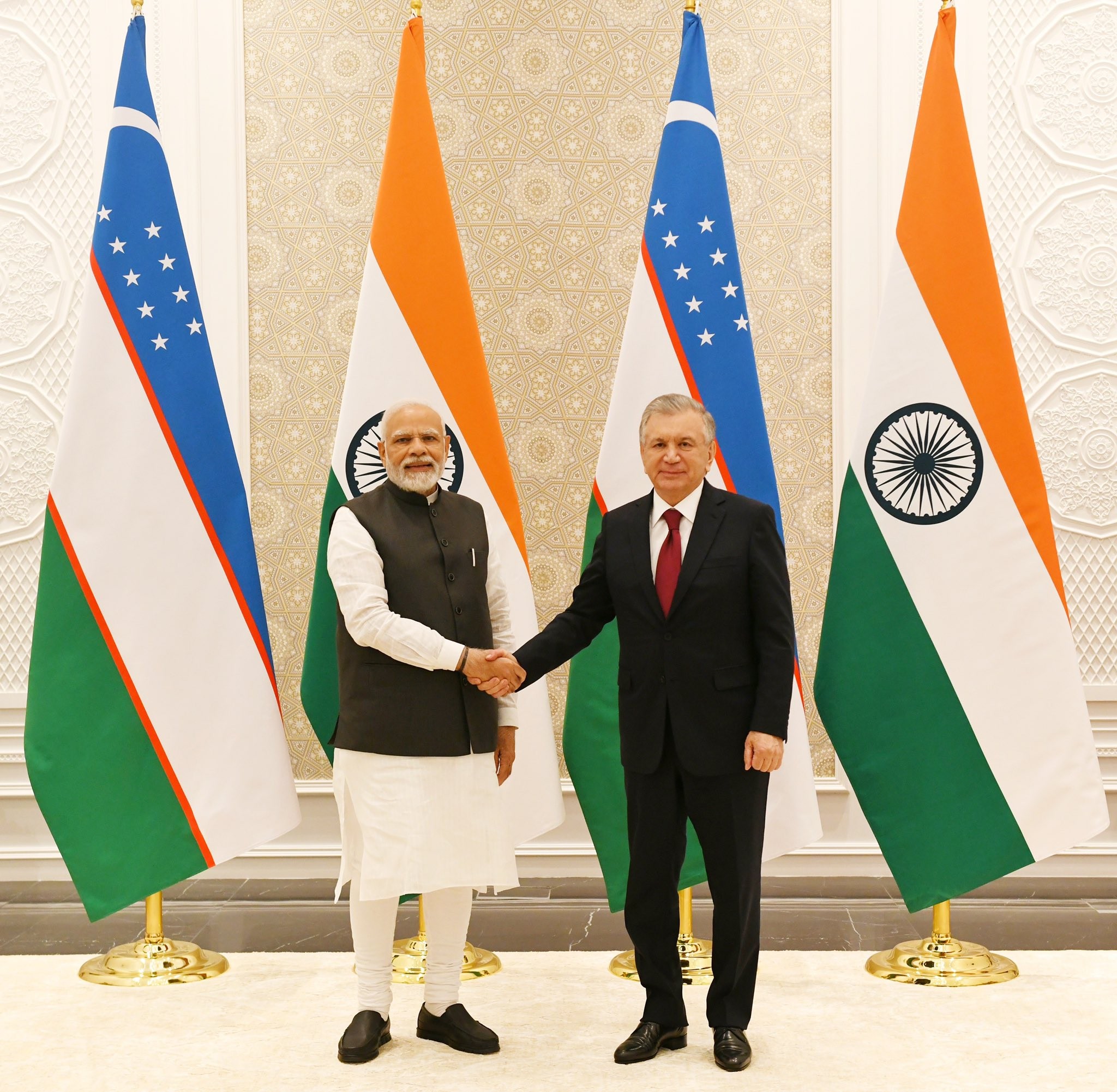
India, Uzbekistan aim to deepen strategic defence collaborations
In a significant development aimed at strengthening bilateral defence relations, India and Uzbekistan convened a high-level virtual seminar focused on combat leadership, signalling a renewed commitment to strategic collaboration.
This landmark event marks a crucial chapter in the evolving military partnership between the two nations, highlighting their shared emphasis on leadership development as a cornerstone of operational effectiveness in modern warfare.
The seminar, held under the theme “Leadership Qualities in Officers and Junior Commanders Which Influence Combat Operations,” was jointly organised by India’s prestigious College of Defence Management (CDM) and the Armed Forces Academy of Uzbekistan.
CDM, a tri-services institution operating under the Headquarters Integrated Defence Staff (HQ IDS), is known for shaping the strategic acumen of senior Indian military leaders.
The Armed Forces Academy of Uzbekistan, meanwhile, represents the country’s growing focus on professional military education and doctrinal advancement.
Organised as part of the broader Defence Cooperation Agreement between India and Uzbekistan, the seminar provided a unique platform for military professionals, defence scholars, and officers to engage in substantive dialogue.
Participants from both countries exchanged perspectives on the psychological, behavioural, and strategic aspects of leadership during combat operations.
Drawing from real-world battlefield experiences and scholarly research, speakers underscored how effective leadership at both the officer and junior commander levels can decisively influence mission outcomes.
India has longstanding and wide-ranging cooperation with Uzbekistan in the field of defence. Bilateral defence cooperation is carried out through the Joint Working Group format, established in 2019 and the fourth JWG meeting having taken place in Uzbekistan in April 2024.
India-Uzbekistan military technical cooperation has evolved over time encompassing fields of military training, military education and defence industrial interaction.
India and Uzbekistan participate in joint military exercises under the title “DUSTLIK”, with the fifth edition held in April 2024 and attended by COAS General Manoj Pande during his visit to Uzbekistan.
One of the central takeaways from the discussion was the critical importance of cultivating leadership traits such as decisiveness, resilience, moral courage, and adaptability in high-pressure combat scenarios.
Both sides shared illustrative examples from historical and recent military engagements, emphasising the role of mentorship, communication, and initiative in complex operational environments.
By analysing leadership failures and successes across varied operational theatres, participants were able to derive actionable insights that can be integrated into future training and doctrine development.
The seminar’s format, though virtual, did not limit the depth or interactivity of the engagement.
Advanced digital platforms allowed for real-time discussions, breakout sessions, and the sharing of multimedia content, facilitating a rich educational experience.
The event also showcased the increasing role of technology in enabling international military cooperation, especially in an era where in-person interactions can be limited by geopolitical or logistical constraints.
India’s College of Defence Management used the occasion to reinforce its mission of preparing Indian Armed Forces officers for higher responsibilities through advanced management and leadership training.
Each year, CDM trains more than 500 officers from the Indian Army, Navy, and Air Force, equipping them with the tools needed to lead effectively in diverse operational contexts.
Uzbekistan, on its part, demonstrated its dedication to enhancing military professionalism by actively participating in academic-military collaborations, a focus that aligns with its broader goals of strengthening regional security and modernizing its defence forces.
This seminar also builds on the growing momentum in India-Uzbekistan defence ties, particularly since the signing of a comprehensive defence cooperation agreement in 2018.
That agreement laid the groundwork for collaboration in areas such as military education, joint production, training, and defence technology sharing.
More recently, the Indian Army Chief’s official visit to Uzbekistan in April 2024 served as a strategic milestone, further deepening mutual trust and reaffirming India’s interest in fostering strong partnerships with Central Asian countries.
Officials from both nations expressed their appreciation for the seminar and reiterated their commitment to continuing such initiatives.
They emphasized that platforms like these not only foster mutual understanding and trust but also contribute meaningfully to regional stability and peace.
As both India and Uzbekistan face the complexities of modern security threats—from asymmetric warfare to cyber defence—the emphasis on joint leadership development emerges as a practical and forward-looking response.
In conclusion, the virtual seminar on combat leadership represents more than a knowledge-sharing exercise—it is a testament to the evolving strategic synergy between India and Uzbekistan.
By investing in leadership training and academic exchange, both countries are laying a solid foundation for long-term military cooperation, capability building, and regional harmony.
As global security dynamics continue to shift, such engagements stand as powerful reminders of the enduring value of collaboration, shared learning, and the cultivation of strong, principled leaders for the challenges ahead
Support Our Journalism
We cannot do without you.. your contribution supports unbiased journalism
IBNS is not driven by any ism- not wokeism, not racism, not skewed secularism, not hyper right-wing or left liberal ideals, nor by any hardline religious beliefs or hyper nationalism. We want to serve you good old objective news, as they are. We do not judge or preach. We let people decide for themselves. We only try to present factual and well-sourced news.
Support objective journalism for a small contribution.