 India-UK
India Setu curtain raiser showcases AI, healthcare, and conservation as drivers of global collaboration
Kolkata/IBNS: The curtain raiser of the upcoming London thought leadership summit IndiaSetu, hosted under the Global Collaboration Forum (GCF), brought together leaders from healthcare, technology, academia, and conservation on a Saturday evening to discuss India’s growth and the power of collaboration in shaping the future.
In his opening remarks, Dr. Amit Ghose, consultant urologist and founding director of the GCF, said, “India learnt the global architecture while being used as a back office.
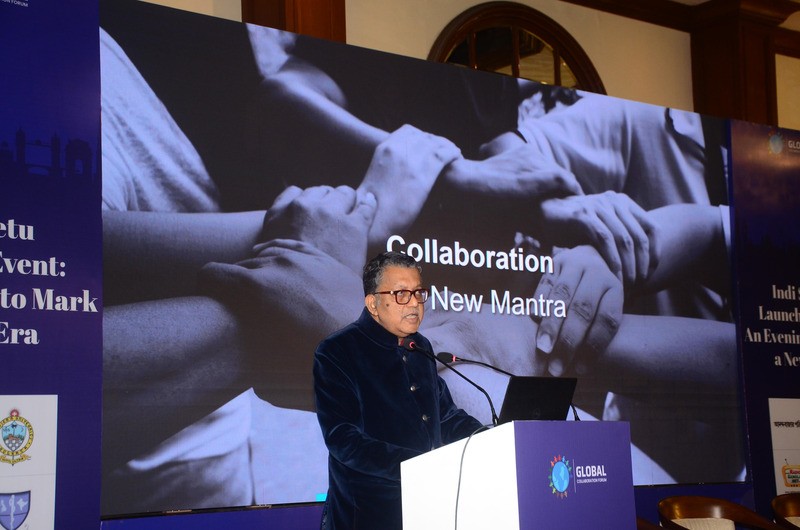 Dr. Amit Ghose walked the audience through the framework of IndiSetu 2025. Photo: Avishek Mitra/IBNS
He introduced the framework of India Setu, highlighting its role in building global partnerships, while affirming India’s progress since Partition across multiple areas of growth and development.
Bhaarat Dave, acting British deputy high commissioner for East and Northeast India, emphasised the use of artificial intelligence (AI) in vaccine development and digital healthcare. He noted that Britain brings “safe ethics” to the world of AI, while India contributes scale and an efficient workforce.
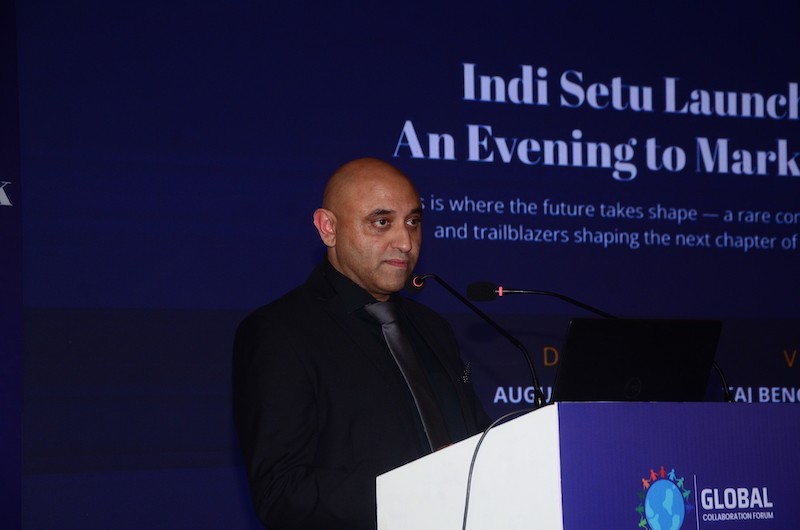 Acting Deputy High Commissioner, Bhaarat Dave spoke at the IndiSetu launch event in Kolkata on UK-India collaboration. Photo: Avishek Mitra
This was followed by a panel discussion on AI in healthcare featuring Jaideep Roy, former PwC leader of FS Advisory India, and Swagatham Das, professor at the Indian Statistical Institute, Kolkata.
Roy spoke about advancements in AI and the challenges of data sharing, observing that India Setu can become a global platform for such debates.
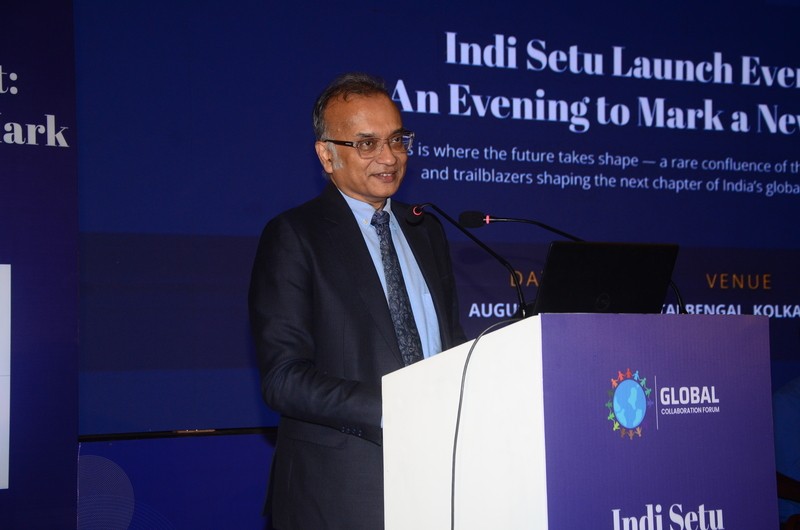 Jaideep Roy explained how this summit could be the stage for discussion on the consequences of AI. Photo: Avishek Mitra/IBNS
Das added that while “AI is a recent buzzword,” and showed how the technology has existed for decades.
Joining online, Dr. Prokar Dasgupta, Professor of Robotic Surgery and Urological Innovation at King’s College London, remarked that artificial intelligence can take over manual work, freeing humans to focus on creative tasks, “which will make us happy.”
A special presentation on Project Tiger was delivered by Bittu Sahgal, leading conservationist and founding editor of Sanctuary Asia.
“I am glad to be alive at a time in history when wild tigers still exist. But in this day and age, only love for tigers has hope of pulling them back from the edge of extinction,” Sahgal said.
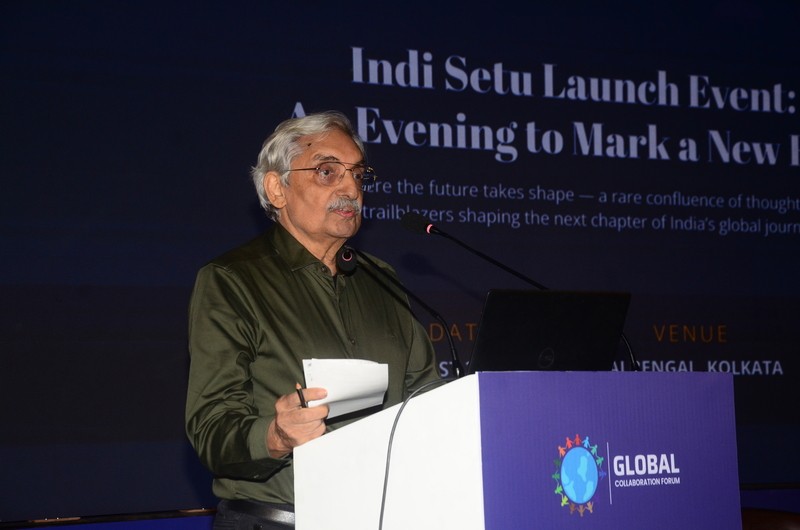 Leading conservationist Bittu Sahgal delivered a powerful presentation on Project Tiger. Photo: Avishek Mitra/IBNS
He stressed that saving tigers is fundamental to development, citing late Prime Minister Indira Gandhi’s conservation policies that banned mining, large dams, highways, hotels, and commercial forestry projects in tiger reserves.
“To the surprise and delight of sceptics, India not only ended up saving the tiger but also, with it, a host of endangered species,” he added.
Sahgal explained that tiger forests sustain more than 600 rivers even during peak summer and store vast amounts of carbon as a byproduct of non-extractive forest policies.
He concluded that the tiger is a metaphor for nature itself: “India must return to its roots and relearn what our ancient cultures taught us — respect and worship nature, and nature will protect us by revitalising our economy, food, and climate security.”
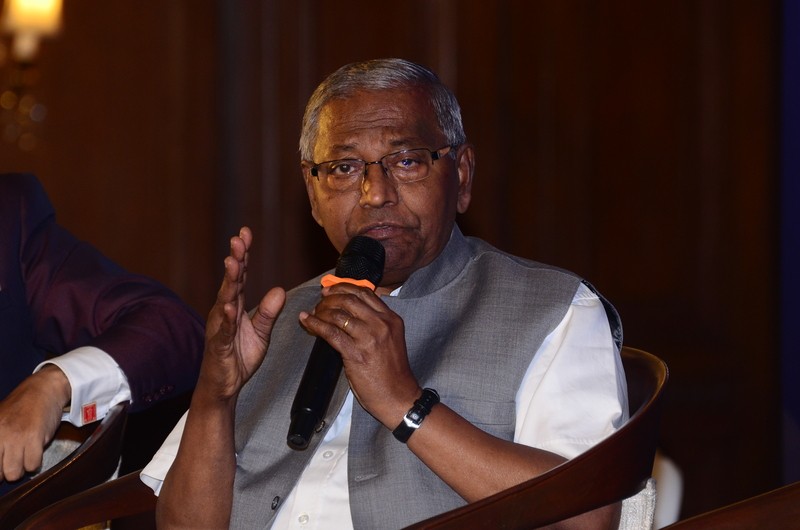 Rev. Dr. Felix Raj championed this collaboration as a necessity. Photo: Avishek Mitra/IBNS
The programme also featured a panel discussion on “Building a Resilient Tomorrow: The Promise of Kolkata” with Rev. Dr. Felix Raj, SJ, vice-chancellor of St. Xavier’s University; Paul Walsh MBE, founder of Jungle Crows; Madhuparna Sreemany, CEO of Pathfinder Educational Institute; and Yashoroop Dey, co-founder of Citizen Research Foundation.
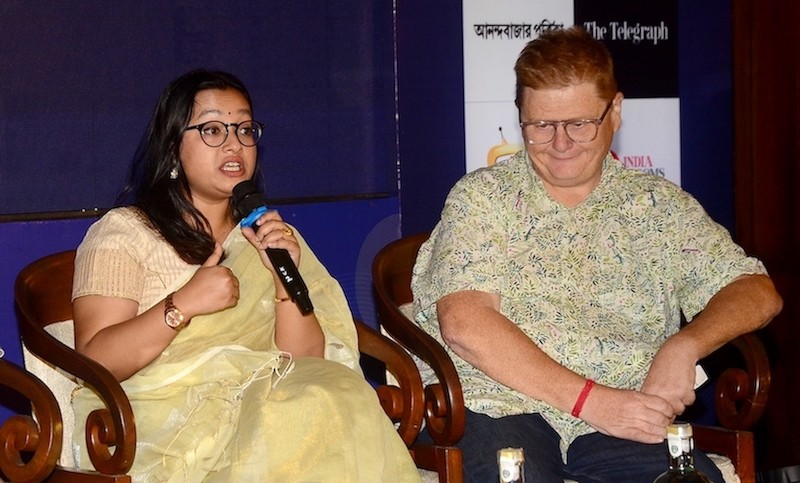 Madhuparna Sreemany, CEO of Pathfinder Educational Institute makes a point on the upcoming summit as Paul Walsh listens. Photo: Avishek Mitra/IBNS
The discussion, moderated by Sujata Sen, CEO of Future Hope Foundation, raised concerns about Indian students’ post-study work visas and explored how India Setu can be a platform to address such issues.
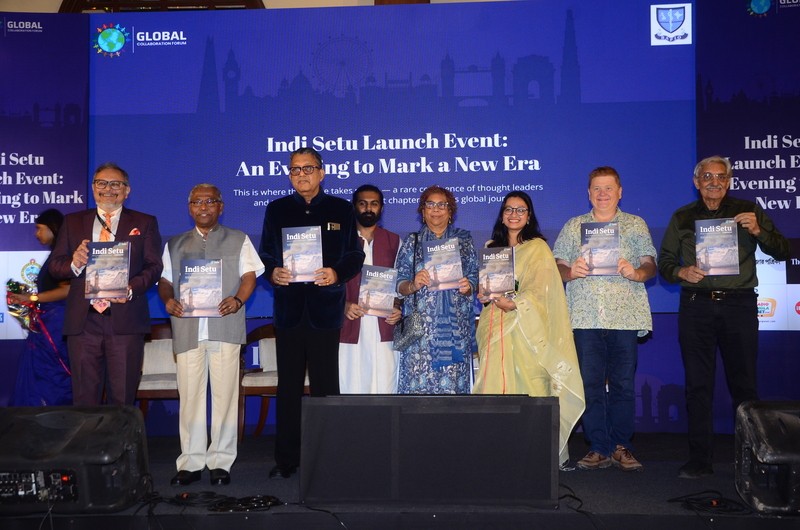
The event concluded with the launch of the IndiSetu Magazine.
IndiSetu website for registration: https://indisetu-gcf.com
Support Our Journalism
We cannot do without you.. your contribution supports unbiased journalism
IBNS is not driven by any ism- not wokeism, not racism, not skewed secularism, not hyper right-wing or left liberal ideals, nor by any hardline religious beliefs or hyper nationalism. We want to serve you good old objective news, as they are. We do not judge or preach. We let people decide for themselves. We only try to present factual and well-sourced news.
Support objective journalism for a small contribution.