How China helped Pakistan during Operation Sindoor with real-time intel, satellite support and more
New Delhi: China helped Pakistan militarily and strategically during Operation Sindoor with real-time intelligence, satellite surveillance, and high-end weapon systems.
Speaking at a FICCI seminar, Indian Army Vice Chief Lt Gen Rahul R. Singh said China had aided Pakistan in multiple ways during the operation, Aaj Tak reported. “From real-time intelligence and surveillance to advanced military equipment, the signs of Chinese involvement were unmistakable,” he noted.
According to Indian defence officials, China provided Pakistan with real-time data on Indian troop movements and missile trajectories.
This intelligence was reportedly gathered through five satellites specifically positioned to monitor Indian military bases and air operations.
Additionally, China was accused of offering strategic battlefield guidance and assisting in synchronising Pakistan’s air and ground operations.
Pakistan, in its counteroffensive, deployed Chinese-made J-10C and JF-17 Block III fighter jets, armed with PL-15 beyond-visual-range missiles. Turkish-origin Songar drones were also used, while China’s HQ-9P and LY-80 air defence systems attempted — unsuccessfully — to intercept Indian strikes.
Indian forces, in contrast, claimed to have neutralised six Pakistani fighter jets, two surveillance aircraft and multiple drones, relying on indigenous platforms such as the Akash air defence system and the Russian-origin S-400.
Among the most striking revelations was China’s reported deployment of CH-4 and Wing Loong drones for surveillance and precision strikes, all of which, India says, were intercepted.
China also allegedly shared CM-401 hypersonic missiles with Pakistan, which were used in attempted strikes on military bases in Pathankot and Gurdaspur but were blocked by India’s layered defence grid.
Post-operation, Pakistan has confirmed the purchase of China’s KJ-500 AEW&C aircraft — capable of detecting enemy aircraft from 470 km and monitoring airspace deep into Indian territory.
The plane can fly 5,700 km and remain airborne for 12 hours, dramatically expanding Pakistan’s early-warning capacity.
Indian officials also pointed to cyber and information warfare coordination.
Chinese "Wumao" internet operatives collaborated with Pakistani networks to flood social media with exaggerated claims of Indian military losses.
Meanwhile, Indian Navy sources reported that over 200 Chinese fishing vessels operating in the Indian Ocean were actually conducting covert surveillance of Indian naval assets.
Despite these claims, Pakistan has rejected any notion of external dependency. Defence Minister Khawaja Asif, in a 7 July press briefing, dismissed the Indian accusations as “baseless”, asserting that Pakistan’s ISR (intelligence, surveillance, reconnaissance) capacities are entirely indigenous and robust.
However, in a 27 June interview with Arab News, Asif had acknowledged that China shared intelligence with Pakistan post-Operation Sindoor.
He described the exchange as “normal between allies”, particularly since China itself is in an ongoing border standoff with India.
India maintains that such collaboration goes beyond mere intelligence sharing and amounts to active operational support, raising serious regional security concerns.
China downplays involvement
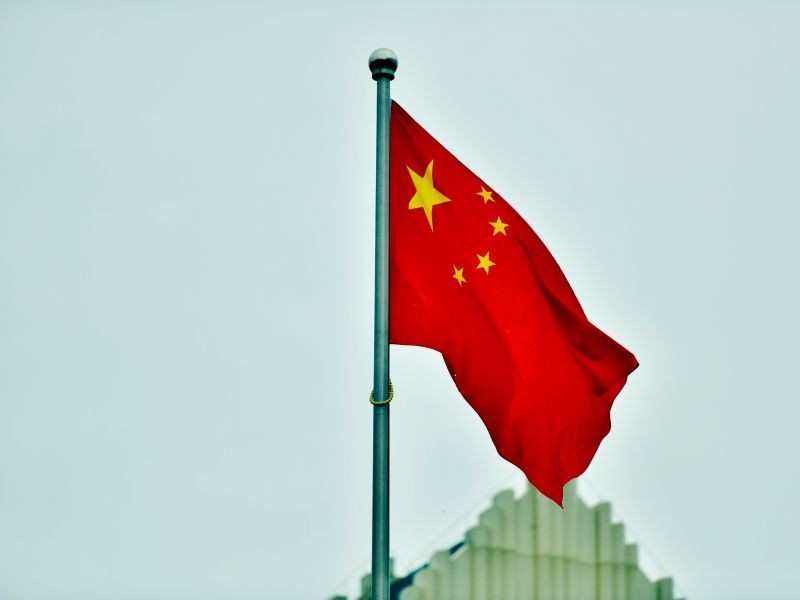
Beijing on Monday sought to downplay India’s claim that China had extended direct military support to Pakistan during Operation Sindoor, and used the hostilities between the two nuclear-armed countries as a “live lab” to trial its weapon systems, according to an NDTV report.
The Chinese Foreign Ministry described its ties with Islamabad as those of “close neighbours” and said defence and security cooperation between the two was routine — not aimed at any third country.
"I am not familiar with the specifics you mentioned. Let me say that China and Pakistan are close neighbours enjoying traditional friendship. Defence and security cooperation is part of the normal cooperation between the two countries and does not target any third party," said Mao Ning, spokesperson for the Chinese Foreign Ministry, during a media briefing in response to remarks made by Indian Army Deputy Chief Lt Gen Rahul R Singh.
When asked whether China had been providing Pakistan with live battlefield intelligence, Mao responded, "I am not sure how that allegation came about. Different people may have different perspectives".
She further added, "What I can say is, China-Pakistan relations do not target any third party. This is China's policy. On India-Pakistan relations, we support the two sides in properly addressing differences through dialogue and consultation and jointly keeping the region peaceful and stable."
Mao also refused to respond to questions regarding reports from Paris which alleged that China had used its embassies to cast doubts over the performance of French-made Rafale fighter jets in the wake of the India-Pakistan conflict.
"I am not familiar with what you mentioned," she said.
Support Our Journalism
We cannot do without you.. your contribution supports unbiased journalism
IBNS is not driven by any ism- not wokeism, not racism, not skewed secularism, not hyper right-wing or left liberal ideals, nor by any hardline religious beliefs or hyper nationalism. We want to serve you good old objective news, as they are. We do not judge or preach. We let people decide for themselves. We only try to present factual and well-sourced news.
Support objective journalism for a small contribution.