'ED can't arrest an accused if...': Supreme Court delivers big judgement on Article 19 of PMLA
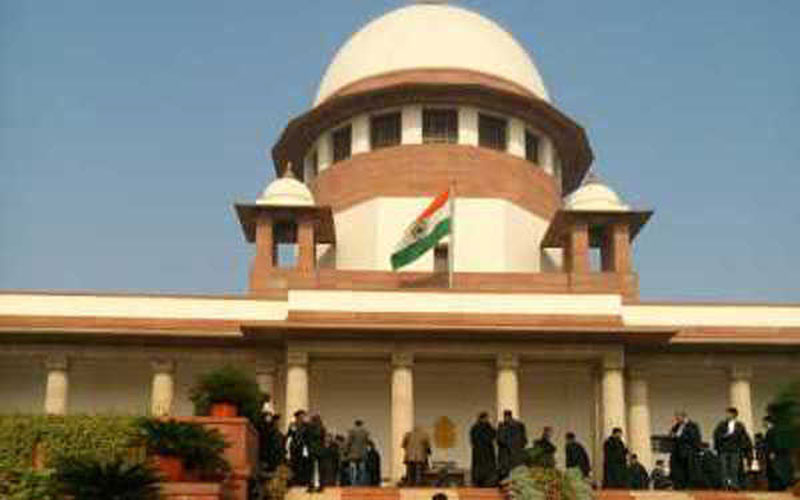
New Delhi/IBNS: The Supreme Court has delivered a significant judgement curtailing the Enforcement Directorate (ED)'s power to arrest an accused, media reports said.
The top court ruled the ED can't arrest an accused if he appears as summoned by a court.
The probe agency in that matter can't arrest an accused under Section 19 of the Prevention of Money Laundering Act (PMLA).
If the ED wants to arrest the accused, it will have to take the court's permission.
"After cognisance is taken of the offence... the ED and its officers are powerless to exercise powers under Section 19 to arrest the person shown as accused in the complaint," the Supreme Court said as quoted by NDTV.
The Section 19 of PMLA Act empowers ED to arrest anyone on the basis of the material in hand and a reason to consider the person as guilty.
The top court had earlier reserved its order on April 30.
Earlier, this month, the Supreme Court had stated the probe agency can't be selective in taking inculpatory materials and not the entire evidence.
The court had said as quoted by The Times of India, "Can you be selective in choosing the material? By arrest, you are taking away the liberty of a person. So it is your responsibility to reflect upon the entire material. You have to take a balanced view and cannot neglect other material.
"You have to take a balanced view and cannot neglect other material. You cannot exclude one material that does not point towards him. In that case, it would be violative of Section 19 of the Act."
The court had remarked this in response to Delhi Chief Minister Arvind Kejriwal's submission that several statements where he was not named were provided but those were ignored by the ED.
Kejriwal, who was arrested in the liquor policy scam, is now on an interim bail till June 1.
Support Our Journalism
We cannot do without you.. your contribution supports unbiased journalism
IBNS is not driven by any ism- not wokeism, not racism, not skewed secularism, not hyper right-wing or left liberal ideals, nor by any hardline religious beliefs or hyper nationalism. We want to serve you good old objective news, as they are. We do not judge or preach. We let people decide for themselves. We only try to present factual and well-sourced news.
Support objective journalism for a small contribution.