Centre to table Delimitation Bill 2026, lays framework for PoK seats if territory returns
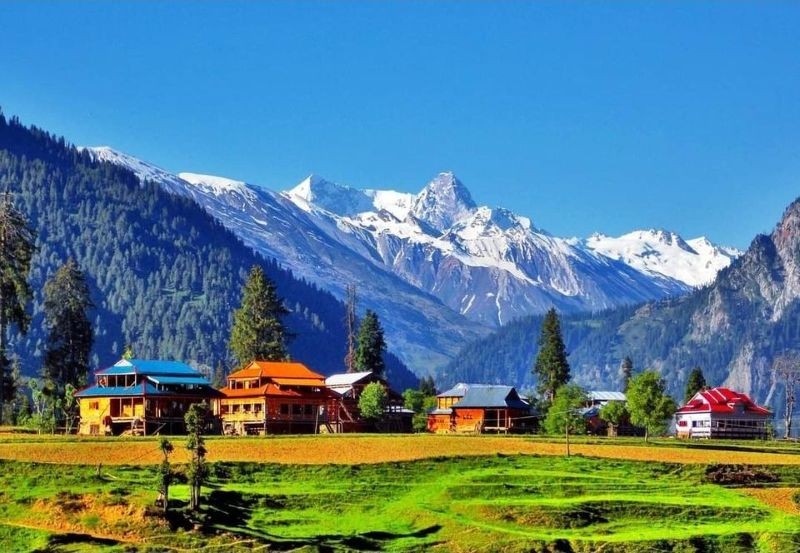
The Centre is set to introduce the Delimitation Bill, 2026, in Parliament this week, proposing a legal framework to carry out constituency delimitation in Pakistan-occupied Kashmir (PoK) in the event the region comes under Indian control.
The move is being projected as a reaffirmation of India’s long-standing constitutional claim over Pakistan-Occupied Kashmir, rooted in the 1947 accession of Jammu and Kashmir to India.
Under the proposed law, the Election Commission of India would be empowered to function as the Delimitation Commission for territories currently under Pakistan’s occupation, once circumstances permit.
At present, 24 seats in the Jammu and Kashmir Legislative Assembly are reserved for areas in PoK. These seats have remained vacant since elections cannot be conducted in the region.
The Bill is expected to be taken up during the extended three-day Budget session. Government sources say it requires only a simple majority for passage—numbers the ruling alliance is confident of securing.
However, two accompanying legislations—the Constitution (131st Amendment) Bill, 2026 and the Union Territories Laws (Amendment) Bill, 2026—will require a special majority under Article 368 of the Indian Constitution.
Historical basis of India’s claim
India’s claim over PoK stems from the Instrument of Accession signed in 1947 by Maharaja Hari Singh, which integrated the princely state of Jammu and Kashmir with India.
This position has been reiterated through multiple legal and political measures, including a unanimous parliamentary resolution passed in 1994 calling for Pakistan to vacate the occupied territories.
Even without administrative control, India has continued to reflect this claim institutionally.
The 24 reserved Assembly seats have remained unchanged across successive delimitation exercises, despite revisions in the total number of seats in Jammu and Kashmir.
Political context and opposition concerns
Union Home Minister Amit Shah has repeatedly asserted that PoK is an integral part of India and vowed that it will be reclaimed. Prime Minister Narendra Modi has similarly underlined the government’s commitment to fully integrating Jammu and Kashmir, particularly after the 2019 revocation of Article 370.
However, Opposition parties have questioned the timing of the Bill, arguing that any delimitation exercise should ideally follow a fresh Census. They have also flagged potential political implications tied to the broader delimitation debate.
The government, for its part, maintains that the legislation is necessary to complete the constitutional framework and reinforce India’s territorial position, even as the status of PoK remains unchanged on the ground.
Support Our Journalism
We cannot do without you.. your contribution supports unbiased journalism
IBNS is not driven by any ism- not wokeism, not racism, not skewed secularism, not hyper right-wing or left liberal ideals, nor by any hardline religious beliefs or hyper nationalism. We want to serve you good old objective news, as they are. We do not judge or preach. We let people decide for themselves. We only try to present factual and well-sourced news.
Support objective journalism for a small contribution.