 Delhi metro
Cabinet clears two new metro corridors in Delhi at estimated cost of Rs 8,400 crore
New Delhi/IBNS/UNI: The Union Cabinet chaired by Prime Minister Narendra Modi on Wednesday approved two corridors of Delhi Metro with a total investment of Rs 8,399 crore.
The two metro lines of 20.7 km would be built between Lajpat Nagar and Saket G-Block, and between Inderlok and Indraprastha.
The metro line between Lajpat Nagar and Saket G-Block would be approximately 8.4 kilometres and have eight metro stations. The entire corridor will be elevated.
The length between Inderlok and Indraprastha would be 12.377 kilometres. This corridor will comprise an underground line of 11.349 kilometres and an elevated line of 1.028 kilometre. This corridor will have 10 stations.
Eight new interchange stations will come up on these corridors at Inderlok, Nabi Karim, New Delhi, Delhi Gate, Indraprastha, Lajpat Nagar, Chirag Dilli and Saket G Block. These stations will significantly improve the interconnectivity among all the operational lines of the Delhi Metro network.
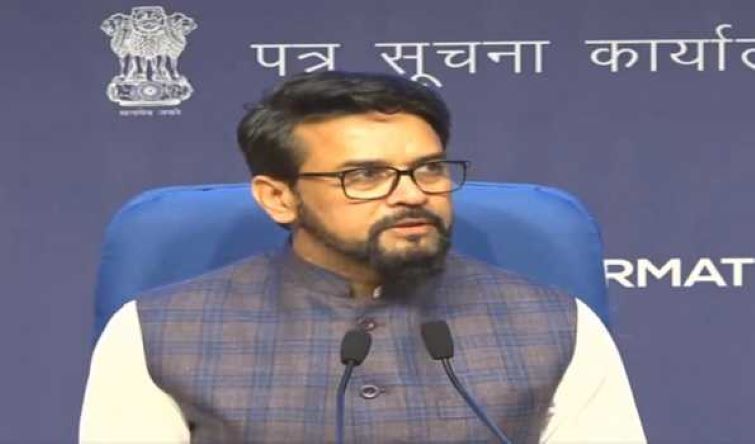
"The metro network in the national capital is the largest network in the country. The total length of the metro network in the country is 945 kilometres and works on 919 kilometres of metro network is under progress. I am happy to share that two new corridors have been approved entailing an investment of Rs 8,400 crore," Union Information and Broadcasting (I&B) Minister Anurag Thakur said while briefing the media on Cabinet decisions.
The Minister said that both metro corridors will be completed by March 2029.
"The construction of metro lines will ease traffic congestion and reduce pollution. It will reduce fossil fuel consumption and reduce travel costs besides enhancing commuter convenience," Thakur said.
The total project cost of the two corridors will be sourced from the Centre, Delhi government, and international funding agencies.
While the Lajpat Nagar-Saket G Block corridor will connect the Silver, Magenta, Pink, and Violet Lines, the Inderlok-Indraprastha corridor will be an extension of the Green Line and will provide interchange with the Red, Yellow, Airport Line, Magenta, Violet and Blue Lines.
The Delhi Metro is already constructing a network of 65 kilometres as part of its fourth phase of expansion. These new corridors are expected to be completed by March 2026 in stages.
At present, the DMRC operates a network of 391 kilometres consisting of 286 stations. The Delhi Metro is now one of the fastest growing Metro networks in the world.
"The Delhi Metro Rail Corporation Limited (DMRC) has already started the pre-bid activities and preparation of Tender documents," an official statement said.
Support Our Journalism
We cannot do without you.. your contribution supports unbiased journalism
IBNS is not driven by any ism- not wokeism, not racism, not skewed secularism, not hyper right-wing or left liberal ideals, nor by any hardline religious beliefs or hyper nationalism. We want to serve you good old objective news, as they are. We do not judge or preach. We let people decide for themselves. We only try to present factual and well-sourced news.
Support objective journalism for a small contribution.