 Union Budget
“Blind to real crisis!” Rahul Gandhi slams Budget 2026–27
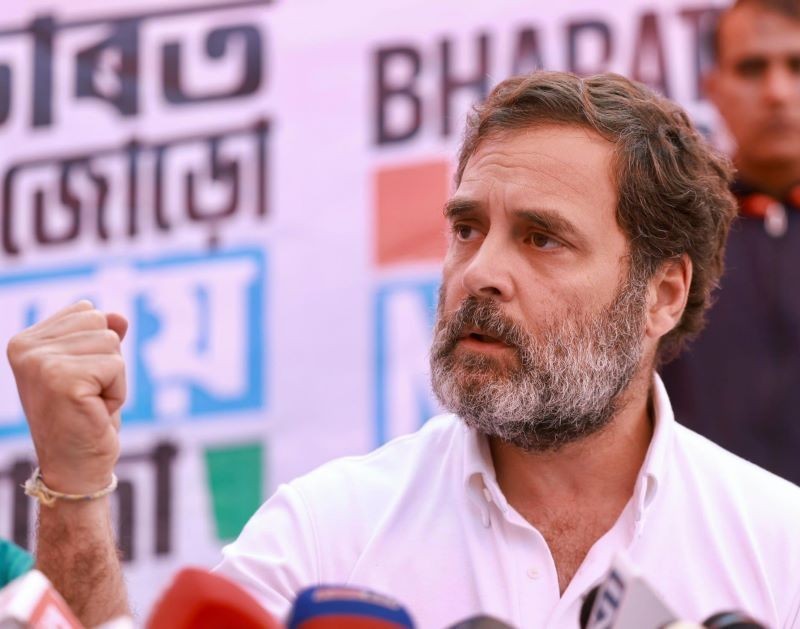
Leader of Opposition in the Lok Sabha Rahul Gandhi, on Sunday criticised the Union Budget and said it remained 'blind' to the real crisis faced by the nation.
He said the budget failed to address real issues, which include unemployment, slowing manufacturing growth, capital outflows, declining household savings, and agrarian distress.
In hsi X post, Gandhi said, "Youth without jobs. Falling manufacturing.Investors pulling out capital. Household savings plummeting. Farmers in distress.Looming global shocks - all ignored."
Youth without jobs.
— Rahul Gandhi (@RahulGandhi) February 1, 2026
Falling manufacturing.
Investors pulling out capital.
Household savings plummeting.
Farmers in distress.
Looming global shocks - all ignored.
A Budget that refuses course correction, blind to India’s real crises.
In his further remark, the Indian politician said: "A Budget that refuses course correction, blind to India’s real crises."
Former Uttar Pradesh Chief Minister and Samajwadi Party leader Akhilesh Yadav accused the budget of leading to the market crash.
आ गया भाजपाई बजट का परिणाम, शेयर मार्केट हुआ धड़ाम।
— Akhilesh Yadav (@yadavakhilesh) February 1, 2026
हमने तो पहले ही कहा था :
- सवाल ये नहीं है कि शेयर बाज़ार रविवार को खुलेगा, सवाल ये है कि और कितना गिरेगा।
- जब भाजपा सरकार से कोई उम्मीद नहीं है, तो उसके बजट से क्या होगी।
- हम तो भाजपा के हर बजट को 1/20 (एक बँटे बीस) का बजट… pic.twitter.com/ZmrGZMkfiX
"The results of the BJP's budget are in, and the stock market has crashed," he said.
He said the budget did not care for the common people of the nation.
India’s Union Budget for 2026–27 places a renewed emphasis on manufacturing, infrastructure and technology-led growth, as Finance Minister Nirmala Sitharaman seeks to sustain economic momentum amid global uncertainty and tighter financial conditions.
Presenting the Budget in Parliament, Sitharaman said the government’s priorities for Asia’s third-largest economy would focus on accelerating growth, enhancing competitiveness and strengthening resilience against volatile global dynamics.
The Budget outlines steps to deepen financial sector reforms, scale up capital expenditure and review regulatory frameworks to support sustained expansion.
The fiscal roadmap projects gradual consolidation. The debt-to-GDP ratio is estimated at 55.6 per cent in 2026–27, down from 56.1 per cent in the revised estimates for the current year, while the fiscal deficit is pegged at 4.3 per cent of GDP.
For 2026–27, the government has projected non-debt receipts at ₹36.5 lakh crore and total expenditure at ₹53.5 lakh crore. Net tax receipts are estimated at ₹28.7 lakh crore. Gross market borrowings are budgeted at ₹17.2 lakh crore, with net borrowings from dated securities placed at ₹11.7 lakh crore.
Capital expenditure in the revised estimates for 2025–26 stands at around ₹11 lakh crore, underscoring the continued thrust on asset creation and infrastructure development.
Support Our Journalism
We cannot do without you.. your contribution supports unbiased journalism
IBNS is not driven by any ism- not wokeism, not racism, not skewed secularism, not hyper right-wing or left liberal ideals, nor by any hardline religious beliefs or hyper nationalism. We want to serve you good old objective news, as they are. We do not judge or preach. We let people decide for themselves. We only try to present factual and well-sourced news.
Support objective journalism for a small contribution.